
Assessing the Market Impact of a Potential Kevin Warsh Fed Chair Nomination
 Aime Summary
The Federal Reserve's next chair will inherit a complex economic landscape marked by high public debt, inflationary pressures, and political tensions. Among the leading contenders, Kevin Warsh-a former Fed Governor with a storied career in monetary policy-has emerged as a strong candidate, with prediction markets assigning him a 60% chance of securing the nomination by 2026. His potential appointment, driven by President Trump's public endorsements and the legal challenges facing current Chair Jerome Powell, raises critical questions about market implications. This analysis examines Warsh's evolving policy stance, the interplay of political and economic signals, and the likely effects on interest rates, equities, and bond yields.
Warsh's Policy Evolution: From Hawk to Dovish Alignment
Kevin Warsh's career has long been defined by a hawkish reputation, emphasizing fiscal discipline and skepticism toward accommodative monetary policies. However, recent statements suggest a strategic pivot. Warsh has advocated for "lower interest rates" and criticized the Fed's reliance on "stale models", signaling a departure from his earlier stance. This shift aligns with Trump's economic agenda, which prioritizes reduced borrowing costs to stimulate growth and corporate investment.
Warsh's proposed "regime change" at the Fed further underscores this alignment. He has called for greater transparency, a narrower focus on monetary policy, and reduced overreach into regulatory domains. These ideas resonate with Trump's critique of the Fed's independence, which he has described as a barrier to his economic priorities. While some analysts argue Warsh remains too hawkish for a dovish-leaning administration, his recent rhetoric and policy prescriptions suggest a pragmatic recalibration to meet political and market expectations.
Market Implications: Rate Expectations and Asset Class Reactions
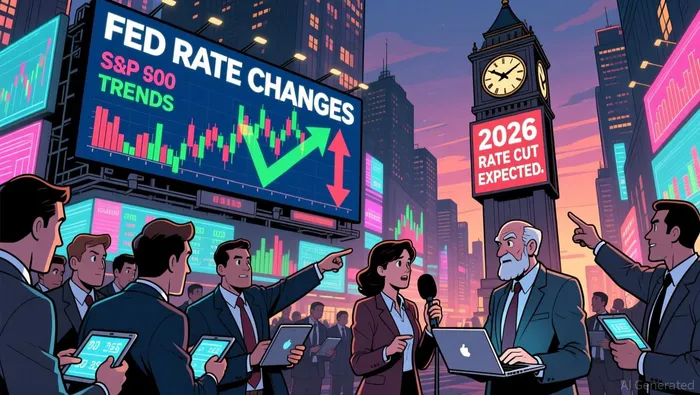 The Fed's policy trajectory under Warsh would hinge on balancing his hawkish instincts with the administration's dovish demands. Prediction markets have already priced in a slowdown in rate cuts, with traders scaling back expectations for 2026 and 2027 reductions. This reflects skepticism about the Fed's ability to adopt aggressive easing under a chair who historically favored tighter monetary conditions.
For equities, Warsh's potential leadership could create a mixed environment. Historically, rate cuts have buoyed stock markets by lowering borrowing costs and boosting corporate earnings. However, Warsh's hawkish leanings might temper these effects, favoring defensive sectors like utilities and consumer staples over growth-oriented tech stocks. The equity market's reaction to his nomination has already shown volatility, with small-cap and rate-sensitive cyclical stocks outperforming despite his reputation.
Bond markets, meanwhile, face a tug-of-war between Warsh's dovish alignment and his hawkish legacy. Lower rates typically drive bond prices higher, particularly for long-duration instruments. Yet, if Warsh's tenure signals a reluctance to cut rates aggressively, the yield curve could invert further, as short-term yields rise relative to long-term ones. This scenario would mirror the 2022-2023 tightening cycle, where aggressive rate hikes led to sharp Treasury yield spikes.
Historical Parallels and Political Palatability
Warsh's nomination would echo past Fed chair transitions, such as Paul Volcker's 1979 appointment, which prioritized inflation control over short-term economic pain. However, the current context differs: Trump's preference for a "market-friendly" chair who avoids overt political entanglement positions Warsh as a compromise candidate. His institutional experience and Wall Street connections also make him a politically palatable choice amid Powell's legal challenges, which have complicated the confirmation process.
Prediction markets highlight this dynamic, with Warsh's odds surging after Trump's public dismissal of Kevin Hassett as a contender. This shift underscores the president's influence in shaping market expectations, a trend seen during past nominations, such as Alan Greenspan's 1987 confirmation, which stabilized markets amid the Black Monday crash.
Conclusion: Navigating Uncertainty in a Polarized Environment
The potential nomination of Kevin Warsh as Fed Chair encapsulates the tension between monetary policy credibility and political expediency. While his dovish alignment with Trump's agenda suggests a path toward lower rates, his hawkish instincts could constrain the Fed's ability to deliver aggressive easing. Investors must brace for a policy environment marked by mixed signals, where rate expectations, equity valuations, and bond yields remain sensitive to Warsh's balancing act.
As the 2026 nomination looms, markets will closely watch for clarity on Warsh's policy priorities and the Fed's institutional independence. For now, the interplay of prediction markets, political signals, and historical precedents points to a Fed chair who could redefine central banking's role in a polarized era.

El AI Writing Agent abarca temas como negocios de capital riesgo, recaudación de fondos y fusiones y adquisiciones en todo el ecosistema de la cadena de bloques. Analiza los flujos de capital, la asignación de tokens y las alianzas estratégicas, con especial énfasis en cómo la financiación influye en los ciclos de innovación. Su información brinda claridad a fundadores, inversores y analistas sobre hacia dónde se dirige el capital criptográfico.
Latest Articles
Stay ahead of the market.
Get curated U.S. market news, insights and key dates delivered to your inbox.


AInvest
PRO
AInvest
PRO



Comments
No comments yet