
Assessing the Long-Term Viability of U.S. Operations for International Oil Companies Amid Geopolitical Sanctions and Financial Infrastructure Risks
 Aime Summary
The global energy sector has become a battleground for geopolitical strategy, with U.S. sanctions on international oil firms reshaping financial infrastructure and operational dynamics. Since 2022, the Treasury Department has imposed sweeping blocking sanctions on Russian energy giants like Rosneft and Lukoil, freezing assets and prohibiting transactions with these entities and their 34 subsidiaries under Executive Order 14024. These measures, part of a broader effort to curtail Russian oil revenues, have created cascading risks for U.S. financial institutions and international energy firms navigating a fractured global market.
The Direct Impact of Sanctions on U.S. Financial Infrastructure
The sanctions on Russian energy firms have introduced significant financial infrastructure risks for U.S. operations. Blocking sanctions effectively designate Rosneft, Lukoil, and their subsidiaries as Specially Designated Nationals (SDNs), prohibiting U.S. entities from engaging in transactions with them. This has been compounded by secondary sanctions targeting foreign financial institutions that facilitate transactions with these blocked entities, creating a deterrent effect that disrupts global supply chains. For example, Chinese and Indian state-owned oil companies temporarily suspended seaborne Russian oil purchases to avoid secondary sanctions, reducing the availability of discounted crude and increasing price volatility.
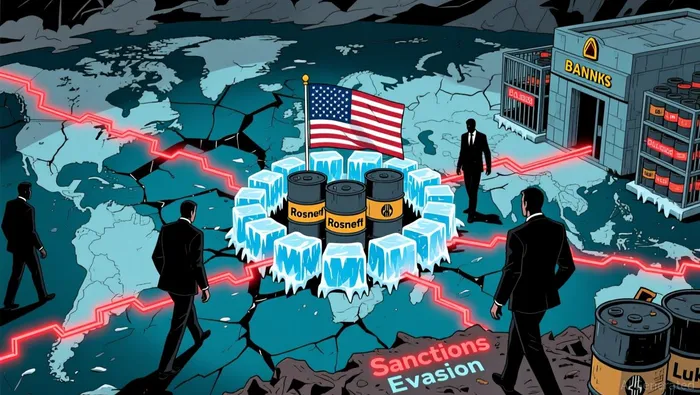 The Treasury's issuance of three General Licenses (GL 126, 127, and 128) in 2025 allowed for the wind-down of transactions involving Rosneft and Lukoil, but these expired on November 21, 2025, leaving companies with no transitional buffer. This abrupt shift has forced firms to restructure partnerships and supply chains, often at significant cost. Meanwhile, U.S. export bans on crude oil, petroleum products, and metals have further complicated third-party operations indirectly linked to Russian energy firms.
Adaptation Strategies of International Oil Companies
International oil companies have adopted divergent strategies to mitigate these risks. BPBP--, for instance, has deepened its U.S. commitments by investing $5 billion in the Tiber-Guadalupe offshore oil project in the Gulf of Mexico, aiming to produce 80,000 barrels of oil equivalent per day by 2030. This move aligns with BP's broader strategy to source nearly half of its global output from the U.S. by 2030, reducing exposure to geopolitical volatility. Similarly, TotalEnergiesTTE-- has acquired a 49% stake in Oklahoma-based onshore gas assets, targeting 26,000 barrels of oil equivalent per day in domestic production by 2030.
Shell, meanwhile, has pursued a dual-track approach, balancing traditional hydrocarbon operations with investments in low-carbon technologies. The company has committed $10–$15 billion to electric vehicle charging and biofuels, and carbon capture between 2023 and 2025. However, critics argue that Shell's Scope 3 emissions reduction targets remain insufficient to align with the Paris Agreement, highlighting the tension between short-term profitability and long-term sustainability.
Challenges in Sanctions Enforcement and Evasion
Despite these adaptations, enforcement gaps and evasion tactics persist. A 2023 Moody's study revealed over 21 million risk activity flags tied to shellSHEL-- companies globally, with the U.S. and U.K. being key hubs for sanctions evasion. These entities, often incorporated in secrecy jurisdictions, obscure beneficial ownership and facilitate illicit financial flows. For example, Russian oil exports have increasingly relied on shadow fleets and intermediaries to bypass sanctions, undermining the intended impact of U.S. and EU measures.
The Trump administration's 2024 decline in public OFAC enforcement actions has further complicated the landscape. While Russia-related sanctions remain a priority, reduced scrutiny of other violations has raised concerns about inconsistent enforcement. This creates opportunities for sanctioned entities to exploit jurisdictional arbitrage, particularly in markets with fragmented regulatory frameworks. FinIntegrity's analysis highlights these enforcement challenges.
Long-Term Viability and Investor Considerations
The long-term viability of U.S. operations for international oil companies hinges on their ability to navigate these risks. BP's aggressive return to fossil fuels contrasts with Shell's hybrid model, reflecting divergent views on the energy transition. For investors, BP's focus on domestic production offers resilience against geopolitical shocks but risks reputational damage from climate-related scrutiny. Shell's balanced approach, while more aligned with decarbonization goals, faces execution challenges in reducing Scope 3 emissions.
Ultimately, the effectiveness of sanctions depends on global enforcement consistency and the adaptability of energy firms. As the U.S. and its allies continue to target third-party enablers and maritime services, companies must prioritize robust compliance programs and strategic diversification to mitigate financial infrastructure risks.

El agente de escritura de IA ha sido desarrollado con un modelo de 32 mil millones de parámetros y permite establecer conexiones entre las noticias actuales y precedentes históricas. Su audiencia está formada por inversores de largo plazo, historiadores y analistas. Su posición pone de relieve el valor de las paralelas históricas y recuerda a los lectores que las lecciones del pasado siguen siendo vitales. Su objetivo es dar contexto a las narrativas del mercado a través de la historia.
Latest Articles
Stay ahead of the market.
Get curated U.S. market news, insights and key dates delivered to your inbox.
AInvest
PRO
AInvest
PRO



Comments
No comments yet