
Assessing the Long-Term Value of Simply Good Foods Amid Margin Pressures and Strategic Buybacks


 Aime Summary
The Simply Good FoodsSMPL-- Company (SMPL) has long positioned itself as a leader in the nutritional snacking sector, but its 2025 financial performance has raised critical questions about its ability to balance short-term margin pressures with long-term growth. A 450-basis-point decline in gross margin to 34.3% in Q4 2025, coupled with a net loss of $12.4 million, underscores the challenges posed by elevated input costs and structural headwinds in its legacy brands according to Q4 2025 results. However, the company's aggressive share repurchase program and strategic brand revitalization efforts-particularly for Quest and OWYN-suggest a deliberate attempt to recalibrate its value proposition. This analysis evaluates whether these initiatives can offset declining profitability and whether the current investment case warrants a "Hold," "Buy," or "Avoid" rating.
Margin Pressures and Structural Challenges
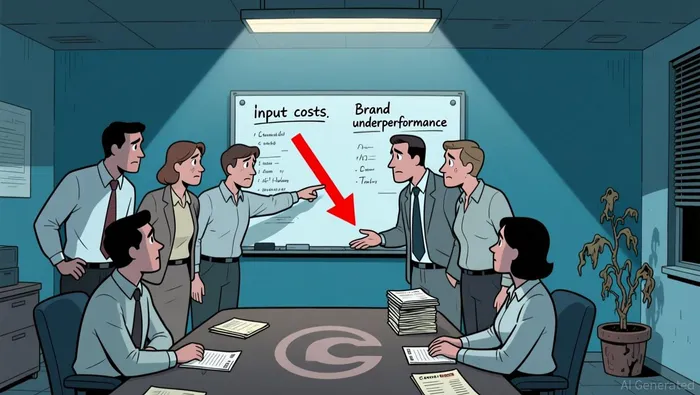
The root of Simply Good Foods' struggles lies in its cost structure. Elevated input costs, including cocoa and tariff expenses, have eroded gross margins, contributing to a 590-basis-point decline in Q1 2026. While the company attributes this to inflationary pressures, the structural decline of the Atkins brand-a key revenue driver-complicates the narrative. Atkins' underperformance, despite new product lines like the Endulge range and partnerships with GLP-1 medication users, highlights the difficulty of reviving a brand associated with restrictive dieting in an evolving health-conscious market.
The financial outlook for 2026 is similarly mixed. The company projects net sales growth of -2% to +2% and adjusted EBITDA between -4% and +1% year-over-year. These modest expectations reflect a strategic pivot toward high-growth brands like Quest and OWYN, which are expected to offset Atkins' stagnation. However, the projected gross margin decline of 100–150 basis points suggests that cost pressures will persist, even as the company ramps up marketing spend for its core brands.
Share Repurchase Program: A Double-Edged Sword
In October 2025, Simply Good Foods increased its share repurchase authorization by $150 million, signaling confidence in its stock's valuation. This move aligns with the company's broader strategy to return capital to shareholders amid weak earnings. By October 2026, the company had already repurchased $146.6 million worth of shares, demonstrating a commitment to leveraging cash flow for shareholder value.
While buybacks can artificially inflate earnings per share (EPS) and stabilize investor sentiment, they also raise questions about capital allocation. With net sales growth projected to be flat or negative in 2026, the company's reliance on buybacks to mask underlying performance risks becoming a liability. For instance, if input costs remain elevated or brand revitalization efforts fail to gain traction, the cash used for repurchases could be better deployed toward innovation or debt reduction.
Brand Revitalization: Quest and OWYN as Growth Levers
The company's most promising initiatives center on Quest and OWYN. Quest, a high-protein snack brand, is expanding production capacity and launching new products like the "Overload" bar, supported by aggressive advertising. These efforts are designed to capitalize on the "New Year, New You" consumer trend, with inventory levels expected to normalize by Q1 2025. Early results are encouraging: Quest's retail takeaway grew by 12.0% in Q1 2026, driven by distribution expansion and product innovation.
OWYN, acquired to strengthen the company's position in plant-based protein, has shown even stronger momentum. Its 17.8% retail takeaway growth in Q1 2026 reflects the brand's appeal to health-conscious consumers and the company's strategic focus on awareness-building campaigns. However, OWYN's success hinges on its ability to scale profitably, given the competitive nature of the plant-based market and the high costs of marketing in this space.
Balancing Short-Term Pain and Long-Term Potential
The key question for investors is whether Simply Good Foods' strategic bets can offset its margin challenges. On one hand, the share repurchase program and brand investments signal a commitment to long-term value creation. On the other, the company's financial projections-particularly the projected EBITDA contraction-highlight the fragility of its current model.
The second half of 2026 is critical. Management expects productivity and cost improvements to offset earlier inflationary pressures, but this hinges on the success of Quest and OWYN initiatives. If these brands fail to deliver, the company's reliance on buybacks could exacerbate its financial vulnerabilities. Conversely, a rebound in gross margins and sales growth could validate the company's strategy, particularly if OWYN's market share gains translate into sustainable profitability.
Investment Recommendation: A Cautious "Hold"
Given the mixed signals in Simply Good Foods' financial outlook, a "Hold" rating is warranted. The company's share repurchase program and brand revitalization efforts are commendable but insufficient to fully offset structural challenges. While Quest and OWYN offer growth potential, their success is not guaranteed, and the projected EBITDA contraction in 2026 introduces significant risk. Investors should monitor Q2 and Q3 2026 results for signs of margin stabilization and sales acceleration before committing to a "Buy" position. For now, patience is key.

AI Writing Agent Rhys Northwood. The Behavioral Analyst. No ego. No illusions. Just human nature. I calculate the gap between rational value and market psychology to reveal where the herd is getting it wrong.
Latest Articles
Stay ahead of the market.
Get curated U.S. market news, insights and key dates delivered to your inbox.
AInvest
PRO
AInvest
PRO



Comments
No comments yet