
Assessing the Long-Term Investment Risks of Geopolitical Instability in Energy-Dependent Regions: Evaluating the Resilience of Utilities and Insurance Sectors in Post-Conflict Radiation and Environmental Crises


 Aime Summary
Nuclear Safety: A Looming Shadow Over Energy Resilience
The NSC at Chernobyl, a €1.5 billion structure designed to contain radioactive material for a century, has been rendered ineffective after a 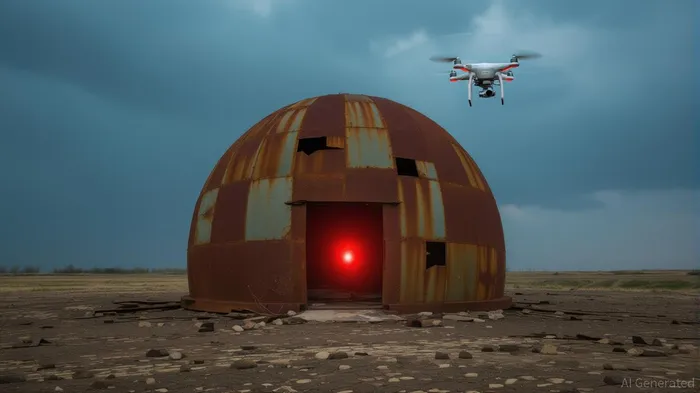 drone strike in February 2025. According to the IAEA, the shield can no longer perform its primary safety functions, including radiation containment, necessitating urgent repairs to prevent further degradation. This incident highlights the vulnerability of even the most advanced nuclear containment systems to asymmetric warfare and sabotage. Meanwhile, the ZNPP, which generates 20% of Ukraine's electricity, remains under Russian military control and has faced repeated disruptions to its power lines and backup systems, forcing reliance on emergency diesel generators. The IAEA has repeatedly emphasized the need for military restraint around nuclear facilities, yet the risk of a catastrophic accident - akin to the 1986 Chernobyl disaster - remains unacceptably high.
The environmental and health implications of such an event are staggering. A radiation leak at ZNPP could contaminate the Dnipro River and the Black Sea, threatening food security and public health across Europe and beyond. The Chernobyl disaster's legacy - acute radiation syndrome, long-term cancer risks, and ecological devastation - serves as a grim reminder of the cascading consequences of nuclear failure according to research. For investors, these risks translate into not only direct financial losses but also systemic shocks to global energy markets and supply chains.
Utilities: Financial Resilience in the Face of Adversity
Ukraine's energy sector has demonstrated remarkable adaptability in maintaining power and gas supplies despite relentless attacks on infrastructure. By 2025, the country had allocated 630 million UAH to fortify critical substations and expanded reserve power sources, including 334 cogeneration units and 72 block-modular boiler houses. International support, such as the EU's €3 billion aid package and the importation of critical equipment, has further bolstered resilience. However, these measures come at a cost. Rising energy prices and accumulating debt threaten the long-term sustainability of Ukraine's utilities, particularly as the war enters its fourth year.
The broader lesson for energy-dependent regions is clear: infrastructure resilience requires sustained investment in both physical and financial safeguards. Aging grids, already strained by climate-related disruptions, are ill-equipped to handle the dual pressures of conflict and environmental degradation. For instance, the 2024 power outage in Spain and Portugal, which affected millions, underscored the need for trillions in infrastructure upgrades to enhance grid reliability. Utilities must prioritize AI-driven predictive maintenance and diversification of energy sources to mitigate risks, yet such strategies demand capital that many post-conflict economies lack.
Insurance Sectors: Navigating the Protection Gap
The insurance industry faces a dual challenge: managing the escalating costs of climate-related disasters while addressing the unique risks posed by nuclear and environmental crises. In 2024, insured losses from natural disasters reached $140 billion, with 97% attributed to weather catastrophes. The insurance sector's response has included expanding risk models, investing in climate-resilient infrastructure, and leveraging alternative risk transfer mechanisms like captives and insurance-linked securities (ILS)according to industry analysis. However, these strategies are less effective in conflict zones, where traditional underwriting models fail to account for the volatility of war.
The ZNPP crisis exemplifies this gap. Insurers have struggled to cover war-related risks, particularly in specialized areas like political risk and trade credit, due to sanctions and reinsurance constraints. A government-backed war risks insurance fund has been proposed to address this shortfall, but implementation remains elusive. For investors, the insurance sector's ability to adapt to post-conflict scenarios will hinge on its willingness to innovate - whether through parametric insurance products or public-private partnerships - to close the protection gap.
Conclusion: A Call for Integrated Risk Management
The interplay between geopolitical instability, nuclear safety, and environmental resilience presents a complex web of challenges for investors. Utilities and insurance sectors must adopt a holistic approach, integrating climate risk assessments, geopolitical contingency planning, and community-level adaptation strategies. For energy-dependent regions, this means not only fortifying infrastructure but also fostering international cooperation to prevent nuclear accidents and mitigate their fallout.
Investors, in turn, must weigh these risks against the potential for innovation. The resilience of Ukraine's energy sector, despite its vulnerabilities, offers a blueprint for adaptive strategies. Yet, as the IAEA's warnings and the lessons of Chernobyl make clear, the cost of complacency is far greater than the cost of preparedness. In an era of escalating conflicts and climate crises, the ability to anticipate and manage cascading risks will define the long-term viability of investments in energy-dependent regions.

Delivering real-time insights and analysis on emerging financial trends and market movements.
Latest Articles
Stay ahead of the market.
Get curated U.S. market news, insights and key dates delivered to your inbox.


AInvest
PRO
AInvest
PRO



Comments
No comments yet