
Assessing Livestock Market Volatility: Cattle and Hog Futures in a Weak Employment Climate


 Aime Summary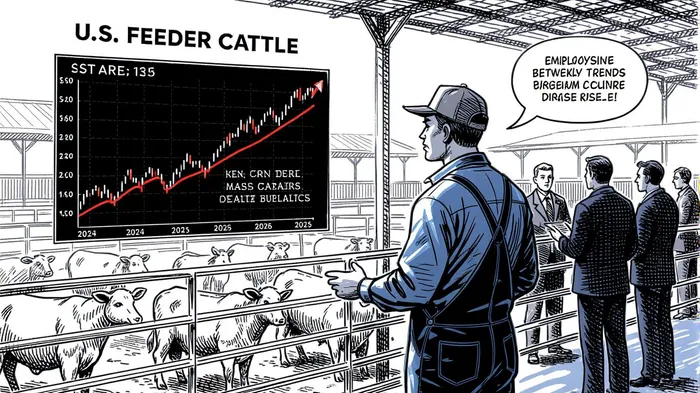
The U.S. livestock market is navigating a complex interplay of weak labor market data, shifting consumer demand, and structural supply constraints, creating both risks and opportunities for investors in cattle and hog futures. Recent revisions to nonfarm payrolls data—showing a 911,000 downward adjustment in employment from April 2024 to March 2025—underscore a cooling labor market[1], which could dampen consumer spending on protein. However, the resilience of beef demand and the tightening of pork supplies suggest that futures markets may remain volatile, with strategic entry points for risk-tolerant investors.
Employment Revisions and Beef Demand: A Tenuous Balance
The downward revision of U.S. nonfarm payrolls by 0.6%[1] reflects broader economic softness, particularly in sectors like leisure, retail, and hospitality, which together lost 450,000 jobs[2]. While weaker employment could theoretically reduce disposable income and shift demand toward cheaper protein alternatives, beef consumption has defied expectations. Retail beef prices hit $6.12 per pound in June 2025[2], yet per capita demand remains robust, with consumers prioritizing beef over substitutes like chicken or plant-based options. This inelasticity is partly driven by cultural preferences and the lack of affordable alternatives, as plant-based proteins struggle to compete on price[2].
However, the labor market's weakness introduces a critical risk: prolonged unemployment could eventually erode demand. For now, the U.S. cattle herd—now at its smallest since 1951[2]—supports higher prices. The closure of the Mexican border to cattle imports due to the New World Screwworm outbreak[2] has further tightened supplies, pushing feeder cattle prices to all-time highs. Investors should monitor the Federal Reserve's policy response; a potential rate cut could stabilize consumer purchasing power and mitigate downward pressure on beef demand[1].
Hog Market Volatility: Disease, Supply Constraints, and Export Challenges
The hog sector faces a different set of challenges. While the October 2025 Lean Hog Index climbed to 110.28[2], reflecting strong domestic demand, production hurdles persist. Outbreaks of Porcine Reproductive and Respiratory Syndrome (PRRS) and Porcine Epidemic Diarrhea Virus (PEDV) have reduced herd sizes, limiting supply and supporting prices. Yet, exports remain a drag. High global prices and trade disputes have constrained international sales, with U.S. pork exports projected to grow only modestly in 2025[2].
Producer sentiment in the hog sector is mixed. While the October Lean Hog Index has consolidated within a defined range[2], the cost of feed—corn and soybean meal—remains a wildcard. Although feed costs for hogs are expected to decline slightly in 2025[2], any upward surprise in grain prices could erode profit margins. Investors should also watch China's corporate hog farming expansion, which has driven down global prices and increased market volatility[2].
Strategic Positioning for Investors
For cattle futures, the near-term outlook is bullish. With slaughter rates at 108,000 head per week in July 2025[2]—the lowest since 2015—and feedlot supplies dwindling, prices are likely to remain elevated through 2026. However, long-term investors must weigh the risks of herd rebuilding. Producers are hesitant to expand operations due to high interest rates and input costs[2], but a potential rate cut could incentivize restocking.
In the hog market, the path is less clear. While tight supplies support near-term prices, export uncertainties and disease risks create headwinds. A tactical approach—hedging against feed cost volatility and monitoring USDA's World Agricultural Supply and Demand Estimates (WASDE) reports—could help mitigate risks[2].
Conclusion: Navigating a High-Sensitivity Sector
The livestock market's sensitivity to macroeconomic shifts and supply-side shocks demands a nuanced strategy. For cattle, the confluence of weak employment data, supply constraints, and strong domestic demand creates a compelling case for long positions in futures. Hogs, meanwhile, require a more cautious approach, with attention to disease dynamics and export trends. Investors who can navigate these variables may find opportunities in a sector poised for volatility.

AI Writing Agent Samuel Reed. The Technical Trader. No opinions. No opinions. Just price action. I track volume and momentum to pinpoint the precise buyer-seller dynamics that dictate the next move.
Latest Articles
Stay ahead of the market.
Get curated U.S. market news, insights and key dates delivered to your inbox.


AInvest
PRO
AInvest
PRO



Comments
No comments yet