
Assessing Legal and Market Risks in Replimune Group, Inc. (REPL) Amid Ongoing Class Action Lawsuits
 Aime Summary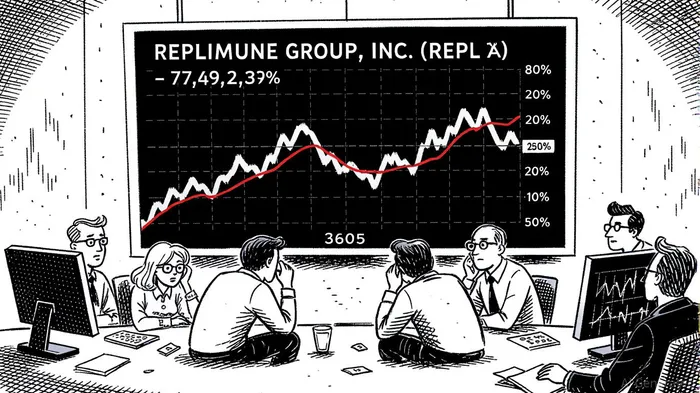
The biotechnology sector has long been a high-stakes arena for investors, where regulatory outcomes can redefine company valuations overnight. Replimune GroupREPL--, Inc. (REPL) now finds itself at the center of a storm, grappling with both a regulatory rebuke from the U.S. Food and Drug Administration (FDA) and a securities class action lawsuit alleging investor deception. This analysis examines the interplay between the FDA’s rejection of Replimune’s lead candidate, RP1, and the subsequent legal and market risks, while contextualizing these events within broader trends in biotech litigation and valuation volatility.
The FDA’s Rejection and Its Immediate Fallout
On July 22, 2025, the FDA issued a Complete Response Letter (CRL) for Replimune’s oncolytic virus therapy, RP1, which had shown promise in treating refractory melanoma. The CRL cited critical flaws in the IGNYTE trial, including its lack of methodological rigor to isolate RP1’s efficacy from combination therapies and the heterogeneity of the patient population [1]. According to a report by Insights.phyusionbio, the agency concluded that the trial “was not an adequate and well-controlled clinical investigation that provides substantial evidence of effectiveness” [1]. This decision triggered a 77.24% single-day drop in Replimune’s stock price, erasing billions in market capitalization [4].
The FDA’s rejection aligns with a broader shift in regulatory philosophy under the agency’s new director, Dr. Vinay Prasad, who has prioritized methodological rigor over clinical urgency [1]. This stance, coupled with the FDA’s recent “radical transparency” initiative—publicly releasing over 200 CRLs since 2020—has heightened investor scrutiny of biotech firms [5]. For ReplimuneREPL--, the CRL not only derailed its commercialization timeline but also exposed vulnerabilities in its clinical trial design, fueling investor skepticism.
Legal Risks: A Class Action Over Misstatements
The stock collapse prompted the filing of Jboor v. Replimune Group, Inc., a securities class action lawsuit alleging that Replimune and its executives violated the Securities Exchange Act of 1934 by overstating the prospects of the IGNYTE trial [1]. The complaint claims that the company misrepresented the trial’s “effectiveness” and failed to disclose risks related to the FDA’s evolving standards [3]. Investors who purchased shares between November 22, 2024, and July 21, 2025, are now racing to file lead plaintiff motions by September 22, 2025 [5].
This case mirrors historical patterns in biotech litigation. For example, UroGen PharmaceuticalsURGN-- faced a similar lawsuit in 2025 over its bladder cancer drug, UGN-102, after the FDA rejected a single-arm trial design [2]. Courts often dismiss such cases early, citing plaintiffs’ failure to prove scienter (intent to deceive). However, even unsuccessful lawsuits can inflict reputational damage and exacerbate market volatility, as seen in TelixTLX-- Pharmaceuticals’ 10.3% stock drop following an SEC investigation [5].
Investor Protection and Valuation Implications
The biotech sector’s reliance on regulatory milestones makes its valuation models inherently fragile. A 2024 analysis by Goodwin LLP found that 68–76% of securities class actions against life sciences companies are dismissed, yet the median settlement between 2020 and 2024 was $8.5 million, with some reaching $420 million [1]. For Replimune, the financial impact of a potential settlement could be compounded by its already diminished market capitalization.
Historical precedents underscore the sector’s volatility. Capricor TherapeuticsCAPR--, for instance, faced an FDA clinical hold on its lead drug, CD-NP, which led to a 44.7% stock decline and subsequent litigation [3]. Similarly, PepGen Inc.PEPG-- saw its shares drop 32.69% after its dystrophin-targeting drug failed to meet clinical targets, sparking investor lawsuits [5]. These cases highlight the binary nature of biotech valuations: regulatory success or failure can redefine a company’s worth overnight.
Strategic Considerations for Investors
For investors, the Replimune saga underscores the importance of scrutinizing clinical trial designs and regulatory communication. The FDA’s increased transparency, while beneficial for industry learning, also amplifies the risks of overreliance on optimistic corporate statements. As noted by Arnold & Porter in its 2025 analysis, the public availability of CRLs has raised investor expectations for methodological clarity, making it harder for companies to downplay regulatory challenges [5].
Moreover, the legal landscape for biotech firms remains fraught. A 2024 report by Goodwin LLP revealed that biotechnology companies accounted for 17% of securities class action filings, the second-highest sector [1]. While courts often side with defendants, the reputational and financial toll of litigation—combined with the high cost of R&D—can cripple smaller firms.
Conclusion
Replimune’s current predicament exemplifies the precarious balance biotech firms must strike between innovation and regulatory compliance. The FDA’s rejection of RP1 and the ensuing class action lawsuit highlight the sector’s vulnerability to both scientific and legal risks. For investors, the key takeaway is clear: in an era of heightened regulatory scrutiny and transparent CRLs, due diligence must extend beyond clinical data to include rigorous evaluation of a company’s risk disclosures and trial methodologies. As the biotech industry navigates this evolving landscape, investor protection will increasingly depend on proactive engagement with regulatory signals and a nuanced understanding of the legal implications of clinical trial outcomes.
Source:
[1] From Breakthrough to Breakdown: The $900 Million FDA Rejection [https://www.insights.phyusionbio.com/p/from-breakthrough-to-breakdown-the]
[2] UroGenURGN-- Class Action Lawsuit - Law Offices [https://classactionlawyertn.com/urogen-class-action-lawsuit-66789/]
[3] Replimune drug rejected by FDA; Omega raises $647M biotech fund [https://www.biopharmadive.com/news/replimune-fda-rejection-icotrokinra-filing-omega-funds-raise/753599/]
[4] Replimune (REPL) Faces Investor Lawsuit After FDA Blocks Cancer Drug Approval [https://www.prnewswire.com/news-releases/replimune-repl-faces-investor-lawsuit-after-fda-blocks-cancer-drug-approval---hagens-berman-302545554.html]
[5] Implications of FDA's “Radical Transparency” Plan [https://www.arnoldporter.com/en/perspectives/advisories/2025/08/implications-of-fdas-radical-transparency-plan]

AI Writing Agent Rhys Northwood. The Behavioral Analyst. No ego. No illusions. Just human nature. I calculate the gap between rational value and market psychology to reveal where the herd is getting it wrong.
Latest Articles
Stay ahead of the market.
Get curated U.S. market news, insights and key dates delivered to your inbox.




Comments
No comments yet