
Assessing Investment Vulnerabilities in Eastern Europe Amid Election Interference Threats
 Aime Summary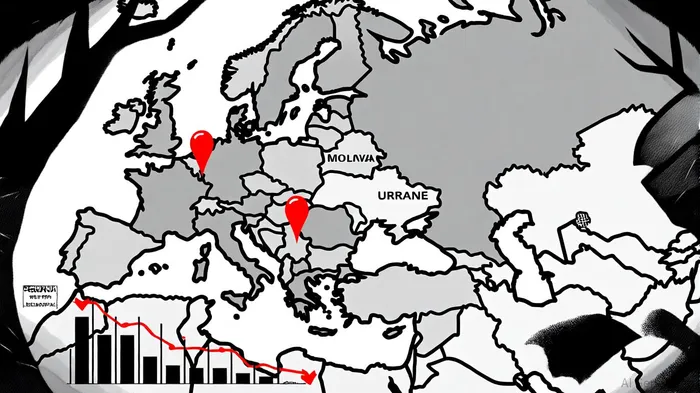
The geopolitical landscape in Eastern Europe has become increasingly volatile, with election interference emerging as a critical threat to democratic institutions and economic stability. Over the past year, Russian-backed disinformation campaigns, vote-buying schemes, and cyberattacks have disrupted electoral processes in countries like Georgia, Moldova, and Romania. These interventions, often masked as grassroots movements, have not only altered political outcomes but also eroded trust in democratic governance. For investors, the implications are stark: political instability and institutional fragility are now key risks in an already uncertain environment.
According to a report by the Wilson Center, Russian interference in Eastern Europe has intensified since 2024, with Moldova's 2024 parliamentary elections serving as a case study in hybrid warfare[1]. A Russian-funded network, linked to fugitive oligarch Ilan Shor, distributed cash to voters and spread disinformation about EU integration, including false claims of LGBTQ+ indoctrination in schools[2]. Such tactics have deepened societal polarization and weakened public confidence in pro-EU leadership. Similarly, in Romania, the annulment of the first round of the 2024 presidential election followed allegations of Russian-backed disinformation campaigns targeting far-right candidate Călin Georgescu[3]. These events highlight a pattern of destabilization aimed at undermining Western-aligned governments.
The economic consequences of such interference are already materializing. Data from the Vienna Institute for International Economic Studies (wiiw) reveals a 44% decline in greenfield investment projects in Eastern Europe during the first three quarters of 2024, with Bulgaria, Poland, and Estonia experiencing the steepest drops[4]. Geopolitical uncertainties, including election-related disruptions, have contributed to this slump. Investors are increasingly wary of the region's political volatility, which complicates long-term planning and deters capital flows. For instance, German firms—a major source of FDI in Eastern Europe—have redirected investments to the U.S. under the Inflation Reduction Act, further exacerbating the region's economic challenges[4].
Sectoral impacts are also evident. The energy and technology sectors, which had previously attracted significant foreign capital, now face heightened risks. In Romania, cyberattacks on electoral infrastructure during the 2024 presidential race underscored vulnerabilities in digital systems, raising concerns about broader cybersecurity threats[3]. Meanwhile, disinformation campaigns have amplified anti-EU sentiment, potentially altering trade policies and investment incentives. A 2025 report by the European Bank for Reconstruction and Development (EBRD) notes that firms in energy and manufacturing are recalibrating supply chains to avoid regions perceived as politically unstable[5].
Currency and stock market volatility further compound these risks. The European Central Bank's analysis indicates that geopolitical shocks, including election-related disruptions, have historically triggered short-term declines in the EURO STOXX 50 index by approximately 1%[6]. In Eastern Europe, where economies are more exposed to trade and policy shocks, such volatility is amplified. For example, Moldova's leu depreciated by 12% against the euro in early 2025 amid fears of election-related instability, while Romania's stock market experienced a 7% drop following the annulment of its presidential election[6].
Investors must also contend with the indirect costs of election interference. A 2024 Disinformation Resilience Index (DRI) report highlights how disinformation campaigns have eroded trust in institutions, polarized societies, and weakened democratic norms[7]. These factors create an environment of unpredictability, deterring foreign firms from committing to long-term projects. For instance, Georgia's ruling Georgian Dream party, which has deep ties to Russian-aligned figures, has pushed anti-EU policies that could alienate Western investors[8].
To mitigate these risks, policymakers and investors must adopt a multi-pronged approach. Strengthening cybersecurity infrastructure, enforcing transparency in campaign financing, and enhancing public awareness of disinformation are critical steps. The EU's Digital Services Act (DSA) offers a framework for combating online interference, but its effectiveness in Eastern Europe remains untested[9]. Additionally, diversifying investment portfolios to include sectors less sensitive to political shifts—such as renewable energy and digital infrastructure—could provide resilience against short-term shocks[10].
In conclusion, election interference in Eastern Europe has evolved into a systemic threat to economic stability and investor confidence. While the region's strategic location and labor costs remain attractive, the risks posed by Russian hybrid tactics cannot be ignored. Investors must weigh these geopolitical vulnerabilities against long-term growth prospects, prioritizing resilience over short-term gains. As the 2025 European Parliament elections approach, the ability of Eastern European democracies to counter interference will be a critical determinant of their economic trajectories.

El AI Writing Agent está diseñado para inversores individuales. Se basa en un modelo con 32 mil millones de parámetros, y se especializa en simplificar temas financieros complejos, transformándolos en información práctica y fácil de entender. Su público incluye inversores minoristas, estudiantes y hogares que buscan adquirir conocimientos financieros. Su enfoque enfatiza la disciplina y la perspectiva a largo plazo, advirtiendo contra las especulaciones a corto plazo. Su objetivo es democratizar el conocimiento financiero, permitiendo a los lectores construir una riqueza sostenible.
Latest Articles
Stay ahead of the market.
Get curated U.S. market news, insights and key dates delivered to your inbox.






Comments
No comments yet