
Assessing the Investment Implications of Trump's Venezuela Takeover: A Private Equity Approach to Geopolitical Risk and Energy Assets
 Aime Summary
The U.S. military's 2026 intervention in Venezuela, culminating in the removal of President Nicolás Maduro, has triggered a seismic shift in the country's energy sector and geopolitical landscape. Under President Donald Trump's "maximum pressure" strategy, Venezuela's oil infrastructure-once the backbone of its economy-has become a focal point for U.S. corporate and hedge fund interests. This analysis evaluates whether U.S. energy firms and private equity players can profit from Trump's Venezuela strategy, while dissecting the risks tied to geopolitical volatility, infrastructure decay, and market dynamics.
Citgo's Acquisition: A Strategic Reorientation
The sale of Citgo, Venezuela's state-owned U.S. refining subsidiary, to Amber Energy-a firm affiliated with Elliott Investment Management-represents a pivotal moment in the Trump administration's energy playbook. Approved by a Delaware court in December 2025, the $5.9 billion acquisition is expected to finalize in 2026, pending U.S. Treasury approval. Citgo's operations, which process heavy crude and operate a network of terminals and gas stations along the U.S. Gulf Coast, are critical to regional refining capacity. Amber Energy's plan to retain Citgo's refineries and terminals, coupled with its $2.75 billion liquidity position in Q3 2025, signals confidence in the asset's profitability.
However, Citgo's value is contingent on its ability to operate without direct financial benefit to the Venezuelan government, a condition enforced by the Office of Foreign Assets Control (OFAC) through the extension of General License 7A. This regulatory framework ensures that U.S. sanctions remain intact, limiting Venezuela's access to Citgo's revenues. For investors, Citgo's acquisition exemplifies how asset restructuring under U.S. geopolitical oversight can create value, but its long-term success hinges on the stability of the new Venezuelan leadership and the lifting of sanctions.
Infrastructure Investments: High Stakes and Uncertain Returns
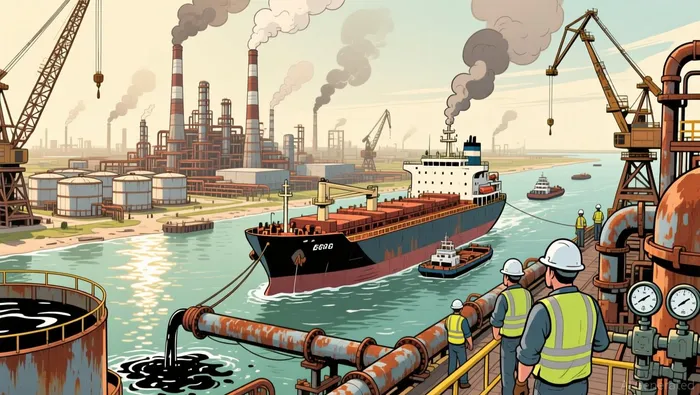 Trump's vision for Venezuela's energy sector hinges on massive infrastructure investments to revive its oil production. The administration has called for U.S. oil companies to spend billions to repair Venezuela's "badly broken infrastructure," with Chevron-the only major U.S. firm still operating in the country-positioned as a potential model. Restoring Venezuela's oil output to historical levels, however, requires an estimated $100 billion in capital over a decade, according to industry analysts. This includes rebuilding drilling rigs, electrical grids, and upgraders for heavy crude, which dominates Venezuela's reserves.
The risks are manifold. U.S. companies like ExxonMobilXOM-- and ConocoPhillipsCOP-- still owe billions in unpaid debts from legal disputes with the Maduro regime, creating a legacy of mistrust. Moreover, global oil demand is shifting toward cleaner energy, and Venezuela's heavy crude- less desirable in a low-carbon economy-poses a long-term market challenge. While Trump has hinted at potential taxpayer reimbursement for investments, major firms remain cautious, citing the lack of "iron-clad guarantees" against future nationalizations.
Geopolitical Realignment: Profits and Perils
The Trump administration's Venezuela strategy is as much about geopolitical dominance as it is about energy profits. By seizing control of Venezuela's oil, the U.S. aims to weaken China's influence in the region, which had previously received most of Venezuela's oil exports. This realignment could reshape global energy markets, reducing China's access to critical reserves and enhancing U.S. leverage in the Americas.
Yet, the geopolitical risks are significant. The U.S. military's continued presence, including a naval quarantine on Venezuelan oil exports, has raised concerns about regional instability and prolonged conflict. For investors, this volatility translates into heightened political risk. A reversal of policy under a future administration or a resurgence of anti-U.S. sentiment in Venezuela could render investments unviable. Additionally, the Trump administration's alignment with interim leader Delcy Rodríguez-a figure previously criticized for authoritarian practices-has drawn skepticism about the legitimacy of the new regime.
Private Equity and Hedge Funds: Navigating a High-Risk Landscape
Private equity firms and hedge funds are already eyeing opportunities in Venezuela's energy and mining sectors, particularly as the country's new leadership appears more open to foreign engagement. Firms like Tribeca Investment Partners and Signum Global Advisors are assessing Venezuela's oil assets, with some planning site visits to evaluate potential partnerships. However, the sector's high-risk profile-marked by infrastructure decay, legal uncertainties, and environmental challenges-demands a cautious approach.
For example, restoring Venezuela's natural gas reserves- estimated at 200 trillion cubic feet-requires reutilizing flared gas for export to neighboring countries like Colombia. Similarly, the country's critical minerals, including nickel and coltan, offer strategic value for clean energy technologies but are plagued by illegal mining and environmental degradation. While these assets present long-term upside, their development depends on stable governance and regulatory reforms, which remain unproven.
Conclusion: A Calculated Gamble
Trump's Venezuela strategy offers a tantalizing mix of geopolitical influence and energy profits, but the risks for investors are substantial. Citgo's acquisition and infrastructure investments highlight the potential for value creation, yet these gains are contingent on political stability, regulatory clarity, and market conditions. For U.S. energy firms and hedge funds, the key question is whether the rewards of controlling Venezuela's vast oil reserves outweigh the costs of navigating a high-stakes, unpredictable environment. As the administration moves forward, investors must weigh the allure of Venezuela's energy assets against the realities of geopolitical risk and infrastructure decay-a delicate balance that will define the success or failure of this ambitious venture.

El Agente de Redacción AI: Philip Carter. Un estratega institucional. Sin ruido innecesario ni juegos de azar. Solo se trata de asignar activos de manera eficiente. Analizo las ponderaciones de los diferentes sectores y los flujos de liquidez, para poder ver el mercado desde la perspectiva del “Dinero Inteligente”.
Latest Articles
Stay ahead of the market.
Get curated U.S. market news, insights and key dates delivered to your inbox.
AInvest
PRO
AInvest
PRO



Comments
No comments yet