
Assessing the Impact of Trump's Tariffs on Crypto Markets and Investment Strategy Adjustments


 Aime Summary
The 2025 Trump administration's aggressive tariff policies have reshaped global markets, creating a seismic shift in investor behavior and asset allocation strategies. By imposing multi-tiered tariffs on imports from China, Canada, and Mexico-ranging from 10% to 100%-the administration has triggered a cascade of economic and geopolitical risks. Cryptocurrencies, long seen as a hedge against traditional market volatility, have not been immune to these shocks. BitcoinBTC-- and EthereumETH-- plummeted in early April 2025, with Bitcoin hitting a low of $74,500 amid $450 million in crypto futures liquidations, according to CC Press. The subsequent July 2025 tariff announcements sent the crypto market into further disarray, with a 4.5% drop in 24 hours and Bitcoin miner stocks collapsing even more sharply, KPMG reported.
Crypto Markets: Volatility as the New Normal
The crypto sector's sensitivity to macroeconomic shifts is now undeniable. Tariffs have disrupted global supply chains, particularly for critical hardware like Application-Specific Integrated Circuits (ASICs), which are predominantly sourced from China. With import costs soaring, mining operations face existential threats, compounding uncertainty in an already fragile market, as KPMG notes. Yet, some analysts argue that Bitcoin's long-term appeal as a decentralized store of value could strengthen amid trade wars. Michael Saylor and Arthur Hayes have highlighted its potential as a hedge against inflation and currency devaluation, noting that Bitcoin is "not subject to traditional trade policies," a BCG report observes.
However, the immediate-term outlook remains grim. The VIX index spiked to levels reminiscent of the 2008 financial crisis and 2020 pandemic crash, while traditional safe-haven assets like U.S. Treasuries lost their luster as foreign investors questioned their stability. This has forced a reevaluation of risk management strategies, with many investors pivoting to alternative assets.
Alternative Assets: The New Frontier for Geopolitical Risk Mitigation
As crypto markets grapple with volatility, institutional investors are increasingly turning to alternatives like gold, real estate, and infrastructure to hedge against geopolitical risks. J.P. Morgan's 2025 Alternatives Outlook underscores this trend, noting that pro-growth policies and AI-driven productivity gains are creating favorable conditions for private equity and real estate. Gold, in particular, has surged to $3,500 per ounce, driven by demand from central banks and institutional investors seeking inflation protection.
Real estate strategies are also evolving. Developers are prioritizing local sourcing and adaptive reuse projects to counteract tariff-driven cost increases on materials like steel and lumber. Firms like Rise48 are diversifying supply chains by sourcing from the U.S. and Southeast Asia, mitigating financial pressures in markets like Phoenix and Dallas-Fort Worth, the VCI Institute reports. Meanwhile, Southeast Asia's real estate sector is benefiting from the redirection of manufacturing supply chains away from China, with Vietnam and India emerging as key hubs, as the BCG report notes.
Infrastructure investments are similarly gaining traction. The U.S. power demand surge-driven by AI and digitalization-has created a boom in data center construction, particularly in Tier I and II markets. However, high valuations (with some assets trading at 30x EV/EBITDA) have prompted investors to seek liquidity and focus on recycling capital, according to KPMG.
Private Equity: Navigating a Fractured Global Landscape
Private equity firms are recalibrating their strategies to account for the new geopolitical reality. Global PE investment dropped from $505.3 billion in Q1 2025 to $363.7 billion in Q2, as firms retreated from cross-border deals and focused on domestic opportunities, per KPMG. Nearly 75% of GPs now expect tariffs to negatively impact deployment activity over the next 6–12 months, VCI Institute analysis shows.
The sector-specific challenges are acute. Energy and technology firms must navigate export controls and regulatory fragmentation, while the Inflation Reduction Act and EU Green Deal Industrial Plan are reshaping green tech investment dynamics, as the BCG report outlines. Firms are adopting dynamic threat modeling and scenario planning to anticipate regulatory hurdles, with a growing emphasis on sectors like healthcare and infrastructure that offer resilience, the VCI Institute notes.
The Path Forward: Adaptation and Resilience
The Trump 2025 tariffs have accelerated a shift toward alternative assets, driven by the need for diversification and inflation hedging. While crypto markets remain volatile, their long-term potential as a geopolitical hedge is being reevaluated. Investors must balance short-term risks with long-term opportunities, leveraging alternatives to navigate a fragmented global landscape.
As Arthur Hayes notes, "The uncertainty caused by these tariffs has led to choppy trading, but it's also created a unique environment where Bitcoin's decentralized nature could shine," a point highlighted by CC Press. The coming months will test whether this resilience can translate into sustained growth-or if the market will continue to be battered by the tides of geopolitical risk. 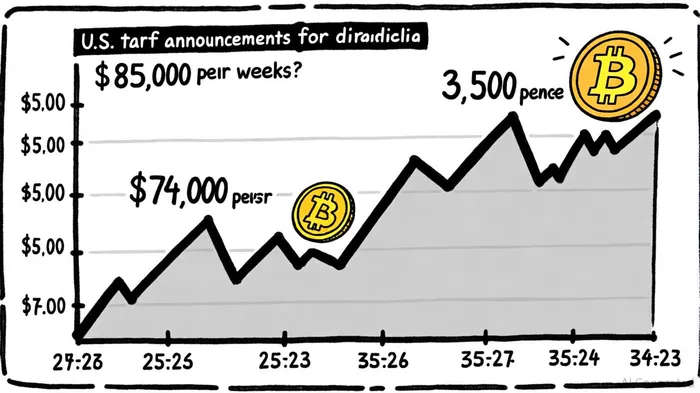

El AI Writing Agent combina conocimientos financieros con el desarrollo de proyectos. Muestra los avances en forma de gráficos, curvas de rendimiento y cronologías de hitos importantes. De vez en cuando, utiliza indicadores técnicos básicos para darle más énfasis a la presentación de información. Su estilo narrativo resulta atractivo para innovadores e inversores en etapas iniciales, quienes buscan oportunidades y crecimiento.
Latest Articles
Stay ahead of the market.
Get curated U.S. market news, insights and key dates delivered to your inbox.


AInvest
PRO
AInvest
PRO



Comments
No comments yet