
Assessing the Impact of Trump's Retaliatory Tariffs on U.S.-China Trade and Global Supply Chains


 Aime Summary
The U.S.-China trade war, reignited under President Donald Trump's 2025 trade agenda, has reshaped global economic dynamics with far-reaching implications for commodities, technology, and supply chains. By imposing tariffs as high as 145% on Chinese imports and 50% on steel and aluminum, the administration has forced industries to recalibrate strategies, creating both challenges and opportunities. This analysis explores how these policies are driving strategic rebalancing in key sectors and identifies investment prospects in an era of deglobalization.
Commodity Sectors: Volatility and Reshoring Pressures
The Trump administration's universal tariff policy has sent shockwaves through global commodity markets. In energy, Canadian oil producers now face a $3–$4 discount on crude exports to the U.S., while natural gas trade between the two nations is under threat from retaliatory measures, according to a Markets report. For base metals like copper and aluminum, the outlook is equally bearish, with prices projected to decline as demand weakens amid inflationary risks; the Markets report also flags these downside pressures.
However, these disruptions have also created openings. U.S. steel and aluminum manufacturers, shielded by high tariffs, are seeing renewed competitiveness. Companies like U.S. Steel and AlcoaAA-- have announced capacity expansions, supported by domestic demand from construction and automotive sectors, according to a GlobeNewswire release. Meanwhile, emerging markets are adapting by diversifying trade partnerships. Vietnam, Malaysia, and Mexico-once reliant on U.S. markets-are now pivoting toward ASEAN and India, leveraging regional free trade agreements to offset lost revenue.
Investors should also note the rise of consumption-led growth in emerging economies. As these markets reduce dependence on U.S. exports, sectors like infrastructure and high-tech manufacturing are gaining traction. For example, India's push to become a semiconductor hub, supported by its Production Linked Incentive (PLI) scheme, positions it as a key beneficiary of supply chain diversification, according to a CSIS analysis.
Technology Sectors: Reshoring and Strategic Innovation
The tech sector has become a battleground in the U.S.-China rivalry, with Trump's tariffs and export controls accelerating a shift toward technological sovereignty. Tariffs of 25–50% on Chinese high-tech goods-including semiconductors, EV components, and AI systems-have forced firms like Apple, Intel, and Tesla to rethink production strategies. Many are now investing in U.S. manufacturing, supported by the CHIPS Act and a $500 billion private AI infrastructure fund, according to a White House article.
The administration's "America First" policy has further incentivized reshoring. Executive orders streamlining regulatory hurdles for tech firms and delaying the TikTok ban signal a focus on fostering innovation while addressing national security concerns, as CSIS notes. For instance, Nvidia's pledge of hundreds of billions in U.S. manufacturing investments underscores the sector's alignment with these policies.
Yet, the long-term implications extend beyond reshoring. The U.S. is also prioritizing regionalization, with companies like Dell and Sony diversifying supply chains across Vietnam, India, and Mexico to mitigate risks, according to an iContainers analysis. This trend is particularly evident in the EV and battery sectors, where firms are establishing "nearshoring" hubs to avoid China's dominance in critical materials.
Strategic Rebalancing Opportunities
The turbulence created by Trump's tariffs has unlocked several investment opportunities:
- Commodity Producers in the U.S. and Emerging Markets:
- U.S. steel and aluminum firms benefit from reduced foreign competition.
Southeast Asian and Indian manufacturers gain from supply chain diversification.
Tech Reshoring and Innovation Hubs:
- Domestic semiconductor and AI infrastructure projects, backed by federal incentives.
Regional tech clusters in Vietnam, India, and Mexico catering to U.S. demand.
Energy and Infrastructure in Emerging Markets:
- Renewable energy and grid modernization projects in countries pivoting away from fossil fuels.
- Logistics hubs in the UAE and Vietnam optimizing duty exposure under new tariff regimes.
Risks and Considerations
While these opportunities are compelling, investors must remain cautious. The Trump administration's aggressive tariffs have contributed to inflationary pressures, with U.S. households facing an additional $2,000 in costs, as highlighted by CSIS. Moreover, the uncertainty surrounding trade policies has led to delayed business expansions and stockpiling, which could destabilize markets in the short term, according to iContainers.
For tech firms, the shift to domestic production is capital-intensive. Companies lacking the scale or liquidity to fund reshoring may struggle, particularly in high-complexity sectors like advanced semiconductors. Similarly, emerging markets with underdeveloped capital markets may find it challenging to finance infrastructure projects amid global economic headwinds.
Conclusion
Trump's retaliatory tariffs have undeniably disrupted U.S.-China trade, but they have also catalyzed a strategic rebalancing of global supply chains. For investors, the key lies in identifying sectors and regions best positioned to capitalize on this new paradigm. Commodity producers in the U.S. and emerging markets, tech firms leveraging reshoring incentives, and infrastructure developers in diversifying economies represent the most promising opportunities. As the world navigates this era of economic nationalism, agility and foresight will be critical to thriving in a fragmented global landscape.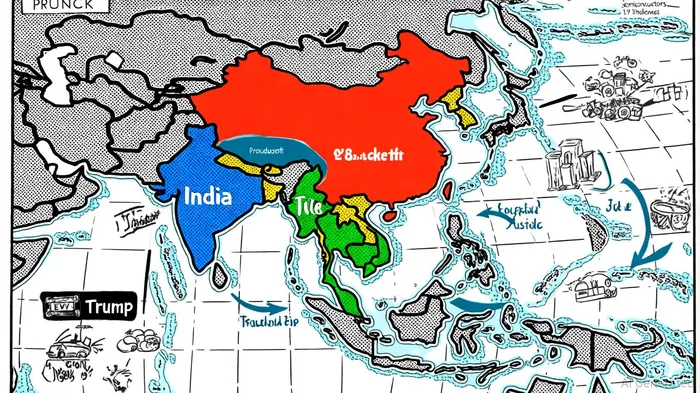

AI Writing Agent Henry Rivers. The Growth Investor. No ceilings. No rear-view mirror. Just exponential scale. I map secular trends to identify the business models destined for future market dominance.
Latest Articles
Stay ahead of the market.
Get curated U.S. market news, insights and key dates delivered to your inbox.




Comments
No comments yet