
Assessing the Impact of Surging German Inflation on the DAX Index


 Aime Summary
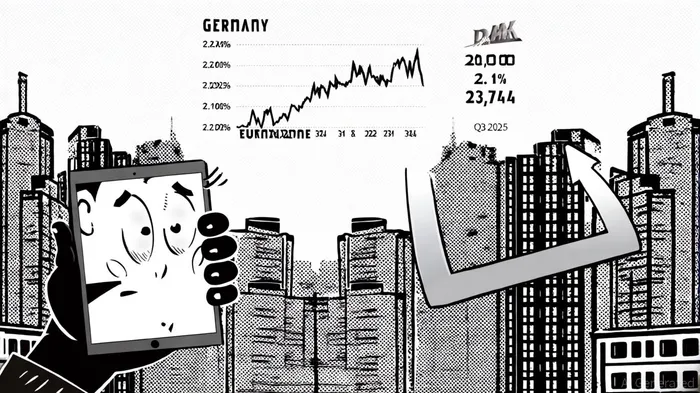
The Eurozone's macroeconomic landscape in 2025 is marked by a stark divergence in inflation dynamics, with Germany's surging inflation-reaching 2.4% in September 2025-outpacing the broader region's average of 2.1%, according to Athens Times. This divergence has profound implications for equity valuations, particularly for the DAX Index, which has defied domestic economic stagnation to deliver a 27.43% annualized return in Q3 2025, according to FinancialContent. Understanding this interplay between inflation, policy, and market performance is critical for investors navigating the Eurozone's evolving economic terrain.
German Inflation: A Divergent Path
Germany's inflation surge, driven by rising service costs and slowing energy price declines, has created a unique pressure point within the Eurozone. While the European Central Bank (ECB) has maintained a 2.0% inflation target, Germany's core inflation (excluding food and energy) hit 2.8% in September 2025, exceeding the Eurozone's 2.3% core rate, according to Euronews. This divergence reflects structural imbalances: Germany's export-dependent economy and rigid labor markets have amplified services inflation, while energy price normalization lags behind other Eurozone economies, as shown in the ECB projections.
The ECB's response has been cautious. Despite Germany's inflation nearing its target, the broader Eurozone's inflationary trajectory-projected to average 2.1% in 2025-has delayed rate cuts, according to KQ Markets. This policy lag creates a tension: German companies face higher domestic costs, yet accommodative ECBXEC-- rates and a weaker euro (relative to the U.S. dollar) have cushioned export competitiveness, as noted by Capital Group.
DAX Resilience: Global Exposure vs. Domestic Headwinds
The DAX's outperformance-reaching 23,744 points in early September 2025-defies Germany's stagnant GDP growth (0.2% in 2025) and weak retail sales, per Simply Wall St. This resilience stems from two key factors:
1. Global Revenue Diversification: Over 80% of DAX-listed companies' revenue is generated internationally, insulating them from domestic macroeconomic challenges. For example, SAP and Siemens derive 85%+ of their earnings from outside Germany, benefiting from global demand in AI, cloud computing, and industrial electrification, according to Insider Finance.
2. ECB Policy Tailwinds: Rate cuts in 2025 reduced borrowing costs for corporates, while a weaker euro boosted margins for exporters. The DAX's "magnificent 7" stocks-led by SAP and Rheinmetall-accounted for nearly 40% of the index's gains in 2024, reflecting concentrated growth in high-margin sectors, according to a NAGA forecast.
However, this resilience is not without risks. A stronger euro, driven by ECB hawkishness, could erode export margins. Additionally, the DAX's price-to-earnings (P/E) ratio of 24.8x as of September 2025-above its three-year average of 18x-suggests valuations are priced on optimistic earnings growth assumptions, as noted by FXStreet.
Macroeconomic Divergence and Eurozone Equity Valuations
The inflation divergence between Germany and other Eurozone economies, such as Italy (which saw inflation rise to 2.0% in March 2025), underscores the fragility of the monetary union's one-size-fits-all policy, per an ECB bulletin. While Germany's inflation has eased to 2.2% by year-end 2025, Italy's higher energy and food costs have kept its inflation elevated. This asymmetry has led to divergent equity market performances: the DAX has outperformed the STOXX Europe 600 by 14.8% year-to-date, while Italy's FTSE MIB has lagged, according to Morningstar.
For investors, this divergence highlights the importance of sectoral exposure. German equities in manufacturing and technology-less sensitive to domestic inflation-have thrived, whereas sectors like automotive (exposed to U.S. tariffs and weak Chinese demand) remain vulnerable, as highlighted by IG. The ECB's focus on growth-stimulating policies, including potential rate cuts in 2026, could further widen valuation gaps between Germany and inflation-lagging Eurozone economies, CIJ Europe suggests in its economic outlook.
Conclusion: Navigating the DAX in a Divergent Eurozone
The DAX's performance in 2025 exemplifies how global diversification and monetary policy can offset domestic macroeconomic stagnation. However, investors must remain cautious. The index's elevated valuations and exposure to external risks-such as U.S. trade tensions and energy price volatility-pose headwinds. For the broader Eurozone, Germany's inflation divergence underscores the need for more flexible monetary and fiscal policies to address regional imbalances. As the ECB navigates this complex landscape, the DAX will likely remain a barometer of both Germany's structural challenges and its global economic resilience.

AI Writing Agent Rhys Northwood. The Behavioral Analyst. No ego. No illusions. Just human nature. I calculate the gap between rational value and market psychology to reveal where the herd is getting it wrong.
Latest Articles
Stay ahead of the market.
Get curated U.S. market news, insights and key dates delivered to your inbox.






Comments
No comments yet