
Assessing the Impact of Shredded Cheese Recalls on Grocery Retailers and Food Producers


 Aime Summary
The Scale of the Recall and Immediate Financial Pressures
The recall's magnitude is staggering. Products affected include low-moisture part-skim mozzarella, Italian-style blends, and pizza-style cheese mixes, . states and Puerto Rico. Retailers face dual pressures: refund costs for returned products and potential sales losses as consumers avoid recalled items or lose trust in affected brands. While exact figures remain undisclosed, the logistical burden of managing such a large-scale recall-coordinating with suppliers, removing inventory, and mitigating reputational damage-suggests significant operational costs. For instance, Walmart, Target, and Aldi, which sold the products under their private-label banners, must absorb the financial hit of refunds and expedited restocking, .
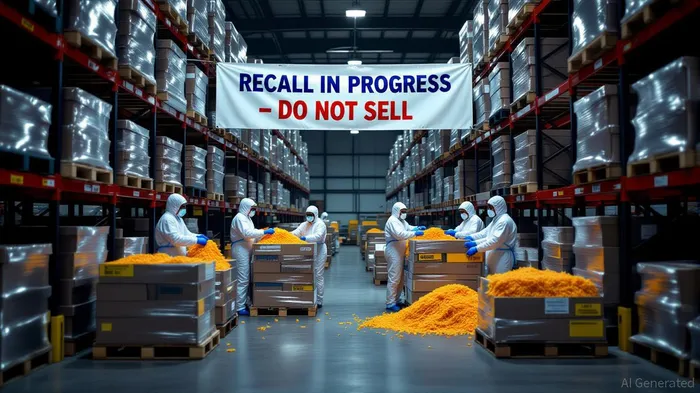 Great Lakes Cheese Co., the manufacturer, also faces existential risks. As a key player in private-label cheese production, the recall threatens its relationships with retail partners and could lead to long-term revenue declines. The company's failure to prevent contamination from supplier raw materials highlights vulnerabilities in its quality control systems, raising questions about its ability to retain market share.
Stock Market Reactions and Investor Sentiment
Though specific stock price data for the post-recall period is not yet available in public reports, historical patterns suggest that such incidents often trigger short-term volatility. The FDA's December 1 reclassification of the recall , as it indicated the absence of severe injuries. However, the sheer scale of the recall-spanning multiple retailers and states-could still erode consumer confidence, indirectly affecting stock valuations.
For retailers like WalmartWMT-- and Target, the recall's impact is further complicated by their reliance on private-label products, which are critical to their competitive pricing strategies. A report by Bloomberg notes that private-label sales account for a significant portion of grocery revenue, and disruptions to these lines can disproportionately affect profit margins. While no widespread illnesses have been reported, the reputational fallout from repeated recalls-such as the 2025 incident-could deter shoppers, particularly in an era where food safety scrutiny is intensifying.
Broader Implications for the Food Industry
The Great Lakes Cheese Co. recall is emblematic of a larger trend: the growing frequency of food safety incidents in a globalized supply chain. According to a 2025 analysis by Reuters, , particularly in processed foods. For investors, this underscores the importance of in evaluating companies' quality control measures and crisis management protocols.
Moreover, the incident highlights the interconnectedness of the and retail sectors. A single manufacturer's failure can cascade through the supply chain, affecting multiple retailers and their customers. This interdependence means that investors must consider not only the direct financial impact on a single company but also the to the broader industry.
Conclusion: Navigating Risk in a Volatile Market
The 2025 shredded cheese recall serves as a cautionary tale for investors. While the absence of reported injuries may limit the immediate reputational damage, the financial costs of recalls-refunds, lost sales, and supply chain disruptions-remain substantial. For grocery retailers, the incident underscores the risks of over-reliance on private-label suppliers, while for food producers, it highlights the need for robust .
In the long term, companies that proactively invest in and food safety technologies may emerge stronger, while those that fail to adapt could face . As the market digests the fallout from this recall, investors would be wise to monitor how affected firms address these challenges-and whether their responses align with sustainable, risk-mitigated strategies.

Delivering real-time insights and analysis on emerging financial trends and market movements.
Latest Articles
Stay ahead of the market.
Get curated U.S. market news, insights and key dates delivered to your inbox.
AInvest
PRO
AInvest
PRO



Comments
No comments yet