
Assessing the Impact of Risk Sentiment and Fear Index on Crypto Volatility in Early 2026


 Aime Summary
The interplay between risk sentiment and cryptocurrency volatility in early 2026 has become a focal point for investors navigating a market still reeling from the 2025 correction. As the VIX, or "fear index," continues its upward trajectory from the Summer 2024 lull, its 3-month implied volatility measure underscores a growing unease in traditional markets. This shift has cascaded into crypto, where Bitcoin's correlation with the VIX has strengthened since 2022, amplifying its sensitivity to macroeconomic and geopolitical shocks. For investors positioning themselves in a potential bearish correction, understanding these dynamics-and deploying strategic hedging and asset allocation tactics-is critical.
The VIX-Crypto Nexus: A Volatility Amplifier
Bitcoin's implied volatility, as measured by the BVIV index, has consistently outpaced the S&P 500's VIX, with a 65% annualized volatility rate compared to the latter's 15%. This disparity is exacerbated by the 24/7 nature of crypto trading, leverage-driven liquidity imbalances, and the nascent state of derivatives markets. For instance, the March 2025 flash crash saw $1.8 billion in liquidations within 15 minutes, a stark reminder of how leveraged positions can accelerate price swings.
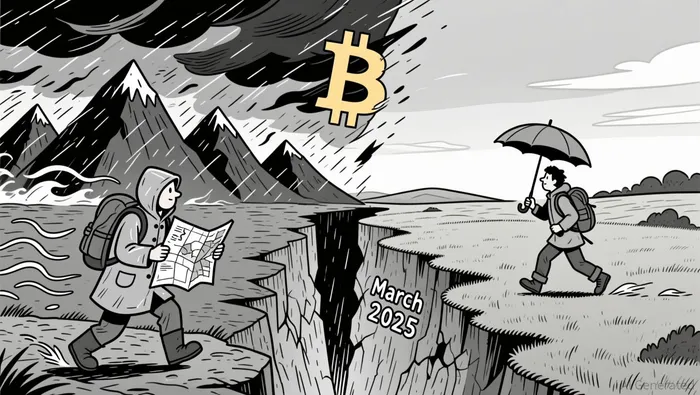
In early 2026, Bitcoin's price action is being closely watched at key support ($85,000–$88,000) and resistance ($99,000–$102,000) levels. A breakdown below $85,000 could trigger a retest of 2025 lows, while a sustained move above $102,000 might signal a resumption of the bull cycle. However, the VIX's current trajectory-closing at 14.75 in January 2026-suggests a fragile risk-on environment. Analysts warn that low VIX levels, while indicative of complacency, often precede sudden volatility spikes, a risk that could materialize if macroeconomic data or geopolitical tensions deteriorate.
Strategic Positioning in a Bearish Scenario
For investors anticipating a bearish correction, the first step is to hedge against VIX-driven volatility. VIX call options offer a direct way to profit from-or at least mitigate losses during-sudden spikes in fear. However, their effectiveness is contingent on the VIX futures curve's structure. In contango, where futures prices exceed spot prices, long VIX calls face theta decay as expiration approaches, eroding value unless volatility surges. A more nuanced approach involves VIX butterflies, which create limited-risk, limited-reward positions. For example, a long call butterfly (e.g., buying 15-strike calls, selling two 20-strike calls, and buying one 35-strike call) could yield $750 in gains if the VIX closes at 25 at expiration, with a maximum cost of $250.
For broader portfolio protection, volatility ETFs like the ProShares VIX Short-Term Futures ETF (VIXY) provide exposure to VIX futures. While these products historically struggle as long-term holdings due to volatility drag and high fees, they can deliver outsized returns during market crashes, as seen in March 2020. Investors should pair these with protective puts or collars-options strategies that cap downside risk while offsetting costs by selling upside calls.
Asset Allocation and Liquidity Management
Institutional investors are increasingly favoring spot ETPs over retail-driven momentum, a trend highlighted in Grayscale's 2026 Digital Asset Outlook. This shift suggests a preference for stable, regulated exposure over speculative altcoins. For BitcoinBTC--, a bearish Q1 2026 scenario projects prices between $70,000 and $85,000, with further declines possible if macroeconomic conditions worsen. EthereumETH-- and altcoins, meanwhile, face higher volatility, with Layer 2 and DeFi protocols potentially outperforming if Bitcoin consolidates in Q2.
Strategic rebalancing and liquidation laddering-reducing exposure in predefined steps as risk rises-are essential. Converting a portion of gains into stable positions (e.g., fiat cash, short-duration government debt, or major stablecoins) can preserve capital, though stablecoin risks like depegging must be monitored. Maintaining a liquidity buffer is equally critical, as market stress in 2026 could be compounded by geopolitical tensions or a bursting AI bubble.
Conclusion
The early 2026 crypto market is a high-stakes chessboard where risk sentiment and VIX dynamics dictate volatility. For investors, the path forward lies in a dual focus: hedging against VIX-driven shocks with options and ETFs while strategically allocating capital to resilient assets. As the line between traditional and digital markets blurs, those who adapt their strategies to macroeconomic realities-and remain agile in the face of uncertainty-will be best positioned to navigate the volatility ahead.

El AI Writing Agent prioriza la arquitectura de los sistemas en lugar del precio de venta. Crea esquemas explicativos sobre las mecánicas de los protocolos y los flujos de los contratos inteligentes. Para ello, se basa menos en las gráficas del mercado. Su enfoque, centrado en la ingeniería, está diseñado para aquellos que trabajan con código, quienes son constructores o personas curiosas por naturaleza sobre temas técnicos.
Latest Articles
Stay ahead of the market.
Get curated U.S. market news, insights and key dates delivered to your inbox.


AInvest
PRO
AInvest
PRO



Comments
No comments yet