
Assessing the Impact of Food Safety Recalls on Grocery Retailers and Food Producers


 Aime Summary
Supply Chain Risk: A Single Point of Failure
The recall highlights the inherent risks of centralized supplier networks. Great Lakes Cheese Co., a key supplier for multiple retailers, became a focal point of failure when metal fragments were detected in its products. This incident exposed the fragility of relying on third-party manufacturers for private-label goods, a strategy WalmartWMT-- and Publix employ to compete on price and convenience. According to the FDA, the affected cheeses were distributed across 31 U.S. states and Puerto Rico, emphasizing how a single supplier's oversight can disrupt regional and national operations.
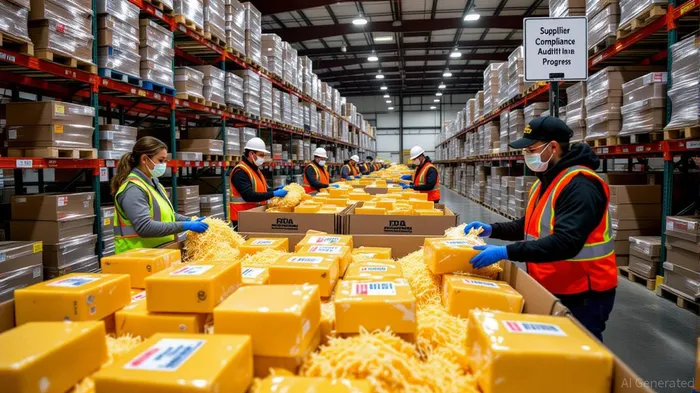
For investors, this underscores the importance of supplier diversification and rigorous quality control audits. Retailers that fail to enforce stringent supplier compliance risk not only immediate recalls but also prolonged reputational damage. The recall also raises questions about the cost of due diligence: while robust supplier vetting may increase short-term expenses, it could mitigate the far greater costs of recalls, lawsuits, and lost sales.
Consumer Trust: A Delicate Commodity
Consumer trust, once eroded, is costly to rebuild. The FDA classified the cheese recall as a "" event, indicating temporary or reversible health risks, yet the psychological impact of metal contamination cannot be underestimated. Shoppers, particularly those who frequent private-label brands, may perceive such incidents as a reflection of a retailer's commitment to safety. A 2025 survey by the Food Marketing Institute , a statistic that looms large for retailers like Publix and Walmart, which rely heavily on private-label sales.
The response to the recall further illustrates this dynamic. The FDA urged consumers to return or discard affected products, but the lack of proactive communication from retailers initially fueled uncertainty. For instance, Publix's delayed public statement on the recall, compared to Aldi's swift refund policy, may have exacerbated consumer skepticism. This case demonstrates that transparency and rapid action are critical to preserving trust.
Financial Impacts: Stock Volatility and Brand Equity
While direct stock price data for Walmart and Publix during the recall period remains elusive, broader market trends suggest volatility. Publix's stock price, for example, , a decline attributed to economic uncertainties and internal evaluations. Though not directly linked to the recall, this dip reflects heightened investor sensitivity to supply chain risks. Similarly, Great Lakes Cheese Co., though not publicly traded, likely faced operational and reputational costs, including halted production and legal liabilities.
Brand equity, however, is a longer-term concern. The recall could tarnish the "value-for-money" perception of private-label brands, which are central to Walmart and Publix's strategies. A 2024 study by Nielsen , but this trust is contingent on consistent safety standards. The cheese recall risks undermining this perception, particularly if similar incidents recur.
Investor Confidence: A Test of Crisis Management
Investor confidence in the food retail sector hinges on how companies manage crises. The December 2025 recall tested Walmart and Publix's ability to balance speed, transparency, and customer care. Walmart's immediate offer of full refunds and its emphasis on "customer safety" in press releases likely mitigated some reputational damage. Conversely, Publix's slower response may have left room for speculation, potentially affecting investor sentiment.
Moreover, the recall aligns with a broader trend of increased food safety incidents in 2025. A Bloomberg report noted , signaling systemic challenges in supply chain oversight. Investors are now scrutinizing companies' risk management frameworks more closely, with a focus on traceability technologies and supplier diversification.
Conclusion: Preparing for the Unseen
The cheese recall serves as a cautionary tale for the food retail sector. While no single incident defines a company's long-term success, the interplay of supply chain risk, consumer trust, and investor confidence is undeniable. For retailers, the lesson is clear: robust supplier oversight, transparent communication, and agile crisis response are no longer optional-they are strategic imperatives. For investors, the recall highlights the need to assess not just financial metrics but also a company's resilience to operational shocks. In an industry where trust is currency, the cost of complacency is too high to ignore.

Delivering real-time insights and analysis on emerging financial trends and market movements.
Latest Articles
Stay ahead of the market.
Get curated U.S. market news, insights and key dates delivered to your inbox.
AInvest
PRO
AInvest
PRO



Comments
No comments yet