
Assessing the Impact of Food Safety Recalls on Grocery Retailer Stocks
 Aime Summary
Supply Chain Risk Management: A Double-Edged Sword
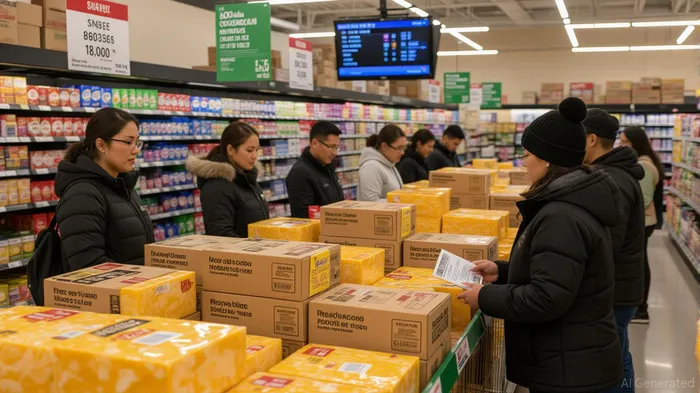
The recall, initiated by Great Lakes Cheese Co. and reclassified as a Class II event by the FDA, underscored the fragility of centralized supplier networks. With products distributed under 31 private-label brands across 31 states and Puerto Rico, the incident highlighted how a single supplier's failure can cascade across multiple retailers according to the report. ALDI, Walmart, and TargetTGT-- have long emphasized supply chain transparency as a risk-mitigation strategy. For instance, ALDI's swift enabled rapid removal of affected products, a practice honed through prior recalls like the 2025 Welby Vitamin B12 incident. Walmart and Target, meanwhile, have embedded sustainability initiatives such as and Target Zero into their supplier contracts, requiring partners to disclose environmental and social impacts. These measures, while effective in reducing reputational damage, also reveal the sector's growing reliance on supplier accountability-a strategy that can backfire when a key node in the supply chain fails.
Investor Sentiment and Stock Volatility: Mixed Signals
The December 2025 recall coincided with divergent stock performance for Walmart and Target. , 2025, , a fluctuation that may have been influenced by its simultaneous announcement to shift stock listings to Nasdaq-a move framed as a "tech-forward approach" to attract growth-oriented investors according to market analysis. By contrast, , reflecting broader challenges in discretionary spending and margin pressures according to financial reports. While the recall itself did not appear to trigger significant short-term volatility-no injuries were reported, and the FDA classified the risk as moderate according to public statements-investor sentiment was shaped more by macroeconomic factors. Walmart's Q3 2025 results, , , , signaling undervaluation but also near-term fragility according to Zacks investment analysis.
Long-Term Brand Resilience: Strategic Preparedness Matters
The recall's long-term impact on brand equity will hinge on how effectively retailers communicate and execute crisis management. ALDI's emphasis on " through rapid action" according to company statements and Walmart's omnichannel dominance-bolstered by initiatives like Walmart+-position them to recover faster than peers. Target, however, faces a steeper climb, as its recent struggles with margin pressures and supply-chain inefficiencies could amplify consumer skepticism. The absence of reported injuries in this recall is a critical factor; without direct harm to consumers, the reputational fallout remains limited. Yet, the incident underscores the need for retailers to diversify supplier relationships and invest in real-time quality monitoring systems to prevent future disruptions.
Conclusion: Balancing Crisis and Opportunity
Food safety recalls are inevitable in a globalized supply chain, but their impact on retailer stocks depends on pre-existing strategic foundations. ALDI, Walmart, and Target have demonstrated varying degrees of preparedness, with Walmart's tech-driven resilience and ALDI's agile recall protocols offering blueprints for mitigating losses. For investors, the December 2025 recall serves as a reminder that while short-term volatility is often driven by broader market forces, long-term brand equity is shaped by a company's ability to align supply chain transparency with consumer trust. In an era where supply chain disruptions are the new normal, the retailers that thrive will be those that treat food safety not as a compliance burden, but as a competitive advantage.

Delivering real-time insights and analysis on emerging financial trends and market movements.
Latest Articles
Stay ahead of the market.
Get curated U.S. market news, insights and key dates delivered to your inbox.
AInvest
PRO
AInvest
PRO



Comments
No comments yet