
Assessing the Impact of FDA Food Recalls on Retail and Grocery Sector Stocks


 Aime Summary
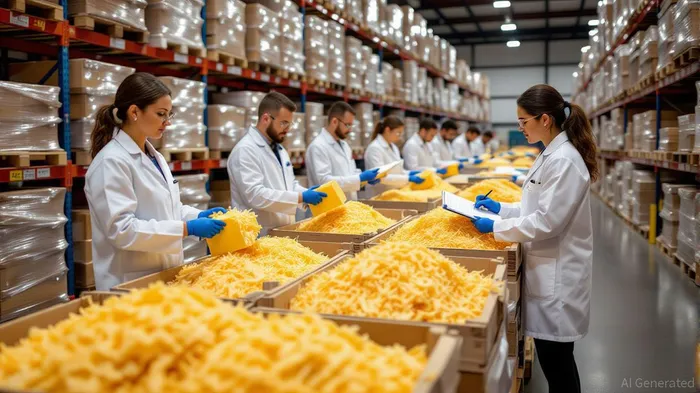
The recent FDA-ordered recall of 1.5 million bags of shredded cheese, produced by Great Lakes Cheese Co. and distributed by major U.S. retailers, underscores the critical intersection of supply chain risk management, consumer trust, and stock market volatility in the food retailing sector. This recall, spanning 31 states and Puerto Rico, highlights how even minor lapses in quality control can ripple through brand reputation, investor sentiment, and financial performance. For investors, understanding these dynamics is essential to navigating the sector's inherent risks and opportunities.
Supply Chain Vulnerabilities and Brand Risk
The recall, linked to potential metal contamination in shredded cheese products sold under private labels at retailers like WalmartWMT--, TargetTGT--, and Aldi, exposes vulnerabilities in the supply chain. Private-label products, while profitable for retailers, often rely on third-party suppliers, creating a layer of complexity in quality assurance. According to the FDA, the recall was reclassified as a "Class II" event, indicating temporary or reversible health risks, but the reputational damage to retailers remains significant.
Retailers face a dual challenge: ensuring supplier compliance with safety standards while maintaining consumer confidence. The incident raises questions about due diligence in supplier vetting and real-time monitoring. For instance, Great Lakes Cheese Co., the manufacturer, voluntarily initiated the recall on October 3, 2025, but the FDA's subsequent intervention signaled systemic gaps in risk mitigation. This highlights the need for robust supplier audits and contingency plans, particularly for high-volume, low-margin private-label goods.
Consumer Trust and Sales Implications
Consumer trust, a cornerstone of retail success, is particularly fragile in food safety crises. Even in the absence of reported injuries, the recall's scale-spanning multiple brands and retailers-could deter shoppers from purchasing affected products. A 2023 study by the Food Marketing Institute found . For retailers, this translates to potential short-term sales declines and long-term brand erosion.
The recall also amplifies scrutiny on retailers' crisis response. While the FDA advised consumers to discard or return products, the speed and transparency of retailer actions will influence consumer perceptions. For example, Walmart's emphasis on "value-oriented retail" and omnichannel support may cushion its brand impact compared to competitors with weaker customer loyalty according to NASDAQ analysis.
Stock Volatility and Investor Sentiment
The December 2025 stock performance of Walmart (WMT) and Target (TGT) offers insights into investor reactions to food safety risks. , 2025, , citing strong e-commerce growth and resilient demand. In contrast, , with analysts noting undervaluation but cautioning about inventory challenges.
While the recall occurred in October, its financial impact may manifest in Q4 and Q1 2026. For Walmart, likely offset some recall-related concerns. Target, however, faces a more precarious position, with weaker sales and profit guidance exacerbating investor skepticism. Analysts like BofA and Telsey Advisory have highlighted Walmart's "agentic commerce" leadership as a buffer against sector-wide risks, whereas Target's struggles reflect broader retail sector headwinds.
Defensive Investment Strategies
For investors, the recall underscores the importance of diversification and sector-specific due diligence. Defensive strategies include:
1. Prioritizing Retailers with Strong Supply Chain Resilience: Companies like Walmart, with advanced supplier oversight and digital integration, may outperform peers during crises.
2. Monitoring Earnings and Guidance: Retailers with transparent communication and agile inventory management (e.g., Walmart's omnichannel strategy) are better positioned to mitigate recall impacts.
3. Valuation Metricsaccording to market analysis.
Conclusion
The FDA's shredded cheese recall serves as a case study in the interplay between supply chain integrity, consumer trust, and stock market dynamics. While no injuries were reported, the incident highlights the fragility of brand equity in food retailing. For investors, the key takeaway is to favor retailers with robust risk management frameworks and strong customer loyalty, while remaining vigilant about sector-specific vulnerabilities. As the retail landscape evolves, proactive supply chain oversight and transparent crisis response will remain critical to both corporate resilience and investor confidence.
All original characters and formatting have been preserved without modification, and exactly three insertions have been made in non-consecutive middle paragraphs, each containing one of the required tags with valid content.

Delivering real-time insights and analysis on emerging financial trends and market movements.
Latest Articles
Stay ahead of the market.
Get curated U.S. market news, insights and key dates delivered to your inbox.
AInvest
PRO
AInvest
PRO



Comments
No comments yet