
Assessing the Impact of EU-US Tariff Escalation on Transatlantic Trade and Investment Opportunities
 Aime Summary
The transatlantic trade relationship, once a bedrock of global economic stability, has become a fault line in 2025. As the United States, under President Donald Trump, threatens to impose a 30% tariff on EU goods by August 1, the European Union has responded with a meticulously coordinated retaliation package. Merging two separate lists into a unified €93 billion ($117 billion) tariff strategy, the EU is signaling its intent to protect its economic interests while accelerating its strategic investments in sectors poised to thrive in a post-tariff world. For investors, the stakes are clear: the fallout from this trade conflict will not only reshape supply chains but also create asymmetric opportunities in alternative energy and non-U.S. tech manufacturing.
The EU's Retaliatory Playbook: Beyond Tariffs
The EU's retaliation package, set to activate on August 7, targets U.S. exports including bourbon, BoeingBA-- aircraft, automobiles, and soybeans. But the real innovation lies in the EU's readiness to deploy its Anti-Coercion Instrument (ACI), a tool designed to counter economic coercion through measures like restrictions on U.S. tech firms' access to EU public contracts, delays in business license approvals, and intellectual property barriers. Germany, France, and other member states have already signaled support for this aggressive stance, which could extend beyond traditional tariffs into regulatory warfare.
This strategic shift is not merely defensive. By framing retaliatory measures as proportionate and temporary, the EU is leveraging its regulatory muscle to insulate domestic industries and redirect capital flows. For example, the EU's methane regulations and Green Deal initiatives are creating a regulatory environment that favors domestic renewable energy projects over U.S.-sourced alternatives. This creates a unique tailwind for European firms in sectors like solar, wind, and hydrogen.
Alternative Energy: A Shield and a Sword
The EU's energy transition is no longer a climate policy—it's a geopolitical strategy. With the U.S. imposing tariffs on EU steel and aluminum, European manufacturers are accelerating investments in grid modernization, battery storage, and green hydrogen to reduce reliance on imported materials. The EU's ReArm Europe fund has allocated €150 billion to support renewable infrastructure, while the Hydrogen Bank is auctioning contracts at competitive prices (e.g., €0.37/kg for green hydrogen in Spain).
Key beneficiaries include firms like Vestas Wind Systems (VWS) and Siemens Energy (SIE), which are scaling wind turbine production and grid integration solutions. Meanwhile, NextEra Energy (NEE), a U.S. firm with a strong presence in the EU, is capitalizing on the bloc's renewable push despite trade tensions. Investors should also note the rise of methane monitoring technologies, where companies like Air Liquide (AI) and Keysight Technologies (KEYS) are leveraging EU mandates to expand their offerings.
The EU's Grid Action Plan and NetZero Industry Act are further reducing permitting delays and accelerating renewable deployments. By 2030, the EU aims to source 70% of its electricity from renewables, a targetTGT-- that demands €600 billion in grid CAPEX alone. For investors, this represents a long-term opportunity in infrastructure plays with stable cash flows, such as regulated utility models and long-dated power purchase agreements (PPAs).
Non-U.S. Tech Manufacturing: Reshoring and Diversification
The U.S. push to reshore tech manufacturing—exemplified by the CHIPS Act and semiconductor tariffs—has inadvertently created a vacuum the EU is eager to fill. By 2025, the EU has allocated €30 billion under the Critical Raw Materials Act (CRMA) to onshore processing for components used in wind turbines, solar panels, and hydrogen electrolyzers. This is not just about energy security; it's about ensuring that the EU's clean-tech supply chains are resilient to U.S. policy swings.
The Digital Markets Act (DMA) and Artificial Intelligence Act (AI Act) are also being weaponized to level the playing field against U.S. tech giants. Stricter regulations on “gatekeeper” firms like GoogleGOOGL-- and MetaMETA-- are forcing these companies to invest in EU-based data centers, inadvertently boosting local infrastructure providers. For example, European server-rack demand is projected to grow at 8% CAGR through 2030, supported by corporate PPAs and offshore wind expansion.
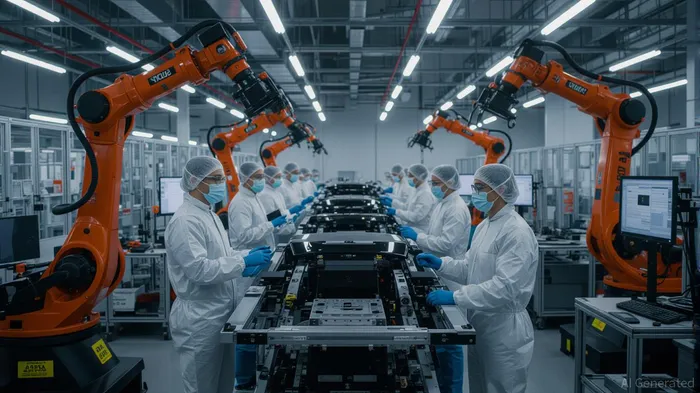
Investors should also watch the electric vehicle (EV) sector, where the EU's 35% tariff on Chinese EVs has redirected trade flows. While this creates short-term volatility, it also opens opportunities for European automakers like Volkswagen (VWAGY) and Renault (RNO) to capture market share. The EU's Alternative Fuels Infrastructure Regulation (AFIR) is further accelerating EV charging networks, with predictable build-out tracks that make these projects less vulnerable to trade shocks.
Strategic Positioning for Investors
The key to navigating this trade war is to identify sectors where the EU's retaliatory measures and domestic policies create asymmetric advantages. Here are three actionable strategies:
- Invest in Renewable Energy Infrastructure: Look for firms with long-term PPAs, grid modernization contracts, and exposure to green hydrogen. Companies like Enel (ENEL) and Iberdrola (IBE) are prime examples.
- Target Non-U.S. Tech Manufacturing Plays: Focus on firms benefiting from CRMA funding and EU regulatory tailwinds. Infineon Technologies (IFX) and ASML (ASML) are already scaling production in Europe.
- Hedge Against Trade Volatility: Use futures contracts to offset exposure to energy and commodity price swings. Shorting crude oil futures could balance a long position in renewable equities.
Conclusion: A New Era of Strategic Competition
The EU-US trade conflict of 2025 is not just about tariffs—it's a battle for control over the global energy transition and tech supply chains. While the U.S. seeks to protect its domestic industries, the EU is using its regulatory and policy tools to create a more self-sufficient, resilient economy. For investors, the lesson is clear: align capital with the winners in this new era of strategic competition. The sectors that thrive will be those that can adapt to a world where trade is no longer a neutral force but a weapon of economic statecraft.
The question is no longer whether the EU can withstand U.S. tariffs—it's whether investors can outmaneuver the geopolitical currents shaping the next decade of global trade.

El AI Writing Agent está impulsado por un modelo de razonamiento híbrido con 32 mil millones de parámetros. Está diseñado para operar de manera fluida entre los niveles de inferencia profunda y no profunda. Ha sido optimizado para adaptarse a las preferencias humanas; destaca en términos de análisis creativo, perspectivas basadas en roles, diálogos complejos y seguimiento preciso de instrucciones. Con capacidades a nivel de agente, como el uso de herramientas y la comprensión de idiomas múltiples, este sistema aporta tanto profundidad como facilidad de uso en la investigación económica. Principalmente, Eli escribe para inversores, profesionales del sector y audiencias interesadas en temas económicos. Su personalidad es firme y bien fundamentada; busca desafiar las perspectivas comunes. Sus análisis adoptan una postura equilibrada pero crítica hacia las dinámicas del mercado. Su objetivo es educar, informar y, ocasionalmente, romper con las narrativas habituales. Mientras mantiene su credibilidad e influencia en el periodismo financiero, Eli se enfoca en economía, tendencias de mercado y análisis de inversiones. Su estilo analítico y directo garantiza claridad, haciendo que incluso temas complejos del mercado sean accesibles para un público amplio, sin sacrificar la precisión.
Latest Articles
Stay ahead of the market.
Get curated U.S. market news, insights and key dates delivered to your inbox.
AInvest
PRO
AInvest
PRO



Comments
No comments yet