
Assessing the Impact of Recent Cheese Recalls on Grocery Retailers and Food Safety Stocks


 Aime Summary
The Retailer Reckoning: Sales Disruptions and Brand Vulnerability
The scale of the 2025 cheese recalls is staggering. , including products sold under Aldi's Happy Farms, Walmart's Great Value, and Target's Good & Gather brands, were pulled from shelves due to potential metal contamination according to NPR reports. These recalls, distributed across 31 states and Puerto Rico, directly impacted the sales performance of major retailers. For instance, WalmartWMT--, TargetTGT--, and Aldi faced significant inventory write-offs and reputational damage, as consumers were advised to dispose of or return the affected products.
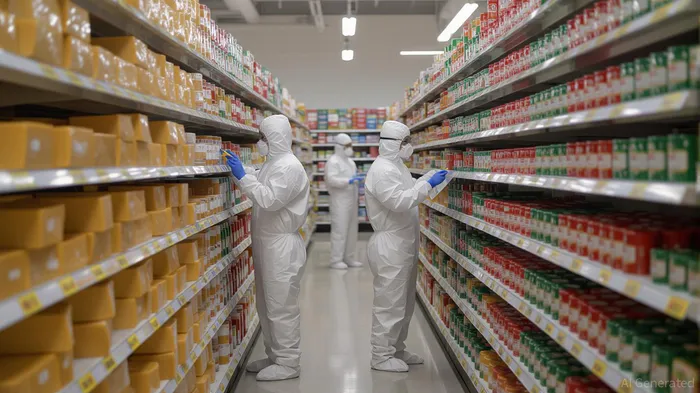
The Ambriola Company's recall of select cheese products-distributed under labels like Boar's Head and Locatelli-further compounded the crisis. While no illnesses have been reported, the FDA's "most serious warning" for these recalls underscores the agency's zero-tolerance stance toward foodborne pathogens. Such actions signal a regulatory environment where even minor lapses in safety protocols can trigger large-scale disruptions, forcing retailers to reassess their supplier vetting processes and contingency planning.
Regulatory Risk and the Cost of Compliance
The 2025 recalls highlight a broader trend: a surge in food safety incidents driven by cost-cutting measures and supply chain fragility. report, nearly 400 dairy-related recalls occurred in Q1 2025 alone, with microbiological contamination and foreign material intrusion accounting for the majority of cases. These incidents have prompted the FDA to adopt a more aggressive posture, including expanded traceability requirements and stricter penalties for non-compliance.
For retailers, the financial toll is twofold. Direct costs, such as product recalls and refunds, according to CRC Group analysis, while indirect costs-loss of consumer confidence and long-term brand damage-remain harder to quantify. The challenge lies in balancing cost efficiency with safety, a tension exacerbated by economic pressures like tariffs and inflation. As one analyst notes, "The industry is caught between the need to reduce margins and the imperative to maintain safety-a precarious tightrope walk."
Food Safety Stocks: Innovation as a Lifeline
The crisis has, paradoxically, created opportunities for food safety technology firms. Companies like OSI Systems, which provides X-ray and metal detection solutions, have seen their stock prices surge. In November 2025, OSI Systems , with analysts raising price targets to $292 amid strong demand for its contamination detection systems. The firm's recent $500 million convertible notes offering further signals investor confidence in its ability to capitalize on the recall-driven demand for advanced safety protocols.
3M's SafeCount division, another key player in food safety, has also benefited from the heightened focus on contamination prevention. While specific post-2025 recall data is sparse, the broader industrial sector's resilience. However, the sector remains volatile, with investors wary of over-reliance on cyclical demand from recall events.
The Alternative Protein Sector: A New Frontier
The cheese recalls have also accelerated interest in alternative proteins, as investors seek to mitigate supply chain risks associated with traditional dairy. Plant-based and fermentation-derived proteins, such as those produced by Beyond Meat and Impossible Foods, are increasingly viewed as resilient alternatives. Yet, the sector's financial performance has been mixed.
Beyond Meat, for example, reported a third-quarter 2025 loss , . Analysts attribute this to weak demand in U.S. retail and foodservice channels, compounded by non-cash impairment charges and operational challenges in China. Meanwhile, -remains private and has yet to file for an IPO, with leadership opting to wait for favorable market conditions.
Despite these hurdles, the sector's long-term potential remains compelling. Innovations like mycelium-based proteins, which offer high nutritional value and clean-label appeal, are gaining traction. As one industry report notes, "The alternative protein sector is not a silver bullet, but it represents a critical diversification strategy in an era of supply chain fragility."
Investor Sentiment and Sector Valuations
The 2025 recalls have reshaped investor sentiment, with food safety stocks and alternative proteins emerging as key beneficiaries. However, the broader food and beverage sector has faced headwinds. In Q1 2025, , driven by economic pressures and regulatory scrutiny. While the number of recall events declined slightly in Q3 2025, according to CRC Group analysis.
For investors, the key takeaway is clear: resilience in the food supply chain requires a dual focus on technological innovation and regulatory compliance. Companies that can integrate advanced detection systems, such as and , while adhering to evolving FDA guidelines, are likely to outperform peers. Conversely, those reliant on cost-cutting measures at the expense of safety face existential risks.
Conclusion: A Call for Systemic Resilience
The 2025 cheese recalls are a wake-up call for the food industry. They expose the fragility of a supply chain increasingly strained by economic and regulatory pressures. For grocery retailers, the path forward lies in strengthening supplier relationships and investing in real-time contamination detection. For investors, the focus must shift toward companies that prioritize safety as a competitive advantage rather than a compliance burden.
In this new reality, the alternative protein sector offers a glimpse of hope-a testament to the power of innovation in addressing systemic risks. Yet, as the cheese recalls demonstrate, no amount of technological advancement can fully replace the need for vigilance, transparency, and consumer trust.

Delivering real-time insights and analysis on emerging financial trends and market movements.
Latest Articles
Stay ahead of the market.
Get curated U.S. market news, insights and key dates delivered to your inbox.
AInvest
PRO
AInvest
PRO



Comments
No comments yet