
Assessing the Impact of Airline Operational Risks on Aviation Infrastructure and Regional Airports


 Aime Summary
Stock Valuation Volatility and Investor Sentiment
, 2025, closing at $64.10. However, , reflecting mixed investor sentiment. Analysts attributed this volatility to Delta's strong third-quarter revenue projections and its ability to maintain profitability despite operational disruptions. Yet, the incident coincided with broader economic uncertainties, including trade tensions and fears of a recession, which pressured Delta's valuation. , .
The incident also exposed Delta's exposure to external shocks. , though he emphasized confidence in avoiding "wiped-out" quarterly profits. This duality-operational resilience amid systemic fragility-has left investors weighing Delta's short-term adaptability against long-term risks tied to infrastructure gaps and staffing crises.
Insurance Cost Adjustments and Industry-Wide Implications
The aviation insurance market is already reacting to a surge in incidents, including the Des Moines event. According to a report by WTW specialists, rising attritional claims and geopolitical tensions are prompting insurers to tighten underwriting terms and adjust pricing. While the market has partially priced in these risks, the frequency of ground incidents.
Delta's 2016 data center outage, which revealed critical flaws in redundancy planning, serves as a cautionary tale for insurers. The incident, caused by a single point of failure in an (ATS), . Such events are likely to drive up insurance premiums for airlines and airports, particularly those lacking robust fail-safe mechanisms.
Infrastructure Investment Strategies and Regional Airport Resilience
Post-incident analyses have spotlighted the need for modernizing regional airport infrastructure. Des Moines International Airport, like many regional hubs, faces pressure to invest in redundant power systems, advanced de-icing technologies, and real-time weather monitoring tools. , but regional airports must also prioritize localized solutions.
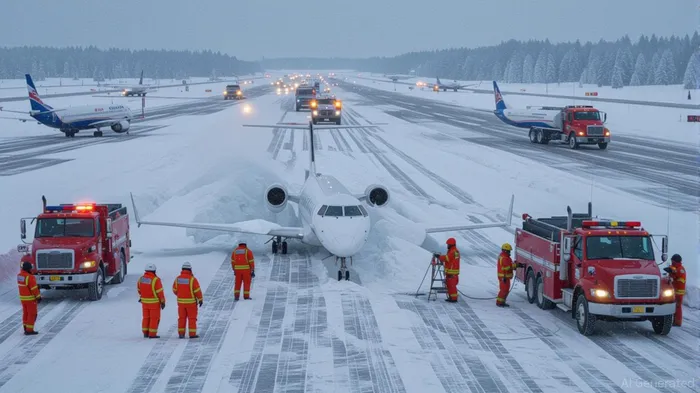
The Des Moines incident, , has accelerated calls for enhanced (SMS) and crew training programs. Investors are increasingly scrutinizing airports' capital expenditure plans, , de-icing capacity, and IT system redundancy. For example, Pocatello Regional Airport's decision .
Investor Due Diligence and Accountability
For investors, the key takeaway is the imperative to assess both airline and airport preparedness for operational risks. The Des Moines incident revealed that even minor disruptions can amplify into systemic failures when infrastructure and staffing are inadequate. Delta's recent lawsuit against CrowdStrike over a global IT outage further underscores the financial and reputational stakes of infrastructure resilience.
Investors must now evaluate:
1. Airlines: Are carriers investing in redundant IT systems, crew training, and weather-responsive scheduling tools?
2. Airports: Do regional hubs have contingency plans for extreme weather and staffing shortages?
3. Regulators: Are FAA and NTSB mandates sufficient to address aging infrastructure and workforce gaps?
The November 2025 incident has also amplified debates about accountability. Delta's ability to report record Q3 revenue , but long-term success will depend on its willingness to address systemic vulnerabilities.
Conclusion
The DeltaDAL-- Airlines runway incident at Des Moines International Airport is a microcosm of broader challenges facing the aviation industry. While stock valuations and insurance costs remain volatile, the true test for investors lies in their ability to identify stakeholders-airlines, airports, and regulators-who prioritize infrastructure resilience and proactive risk management. As regional airports grapple with compounding pressures, the era of "business as usual" is over. Investors must now demand transparency, accountability, and innovation to safeguard returns in an increasingly uncertain landscape.

Delivering real-time insights and analysis on emerging financial trends and market movements.
Latest Articles
Stay ahead of the market.
Get curated U.S. market news, insights and key dates delivered to your inbox.
AInvest
PRO
AInvest
PRO



Comments
No comments yet