
Assessing the Impact of the Airbus Flight Control Glitch on Aviation Sector Stocks


 Aime Summary
The Technical Crisis and Operational Response
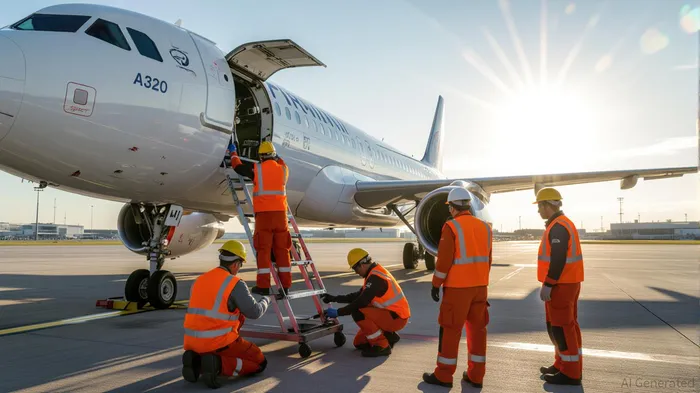
The glitch, first identified during an October 2025 JetBlueJBLU-- flight that experienced an uncommanded pitch down, was traced to a software flaw susceptible to intense solar radiation. Airbus issued an emergency Alert Operators Transmission (AOT) requiring immediate software updates or hardware replacements, with older aircraft needing physical computer replacements. , the logistical challenge of addressing such a large fleet during peak holiday travel-particularly in the U.S., Japan, and Australia-posed significant risks.
Airlines like American, DeltaDAL--, and United demonstrated agility, completing updates on most affected aircraft before Thanksgiving travel peaks. American Airlines reported , , minimizing disruptions. Conversely, carriers such as Avianca and Air New Zealand faced more pronounced operational setbacks, including canceled flights and halted ticket sales. The incident underscored the sector's reliance on standardized aircraft systems and the cascading risks of technical failures in a globally interconnected industry.
Market Volatility and Investor Sentiment
The stock market's reaction to the crisis was mixed, reflecting both the scale of the recall and the airlines' ability to mitigate its impact. While Airbus's stock remained relatively stable, airline equities experienced short-term turbulence. , though analysts noted this was driven by broader recovery signals. , attributed in part to the recall and concurrent government shutdown concerns. American AirlinesAAL-- (AAL), the largest operator of A320s, avoided major stock price swings, with management emphasizing that most updates were completed ahead of deadlines.
Analysts highlighted the sector's resilience, noting that the relatively simple fix-software reversion or hardware swaps-prevented prolonged disruptions. "The timing was unfortunate, but the rapid response by airlines and regulators limited the fallout," said , an aviation consultant on the Airbus recall. However, the incident compounded existing challenges, including labor shortages and engine repair delays, raising questions about long-term operational risks.
Broader Implications for Aviation Infrastructure
The Airbus crisis has reignited debates about the vulnerability of fly-by-wire systems to environmental factors like solar radiation. While Airbus CEO Guillaume Faury emphasized safety as the priority, the incident exposed gaps in redundancy protocols for software-dependent aircraft. For investors, the event underscores the importance of monitoring technological dependencies in aviation infrastructure.
Moreover, the recall highlighted the sector's capacity for coordinated action. Regulatory bodies such as the FAA and EASA, alongside airlines and manufacturers, demonstrated a unified approach to crisis management. This collective response, while reassuring, also raises questions about the cost of such interventions and their long-term impact on airline profitability.
Conclusion
The Airbus A320 software glitch of November 2025 serves as a stark reminder of the delicate balance between technological advancement and operational resilience in aviation. While the immediate financial impact on airline stocks was muted-thanks to swift fixes and limited long-term disruptions-the incident has broader implications for risk management in an industry increasingly reliant on digital systems. For investors, the episode reinforces the need to assess not only the technical robustness of aviation infrastructure but also the sector's ability to adapt to unforeseen challenges. As climate-related and technological risks grow, the aviation sector's capacity to innovate and collaborate will remain critical to sustaining both operational and financial stability.

Delivering real-time insights and analysis on emerging financial trends and market movements.
Latest Articles
Stay ahead of the market.
Get curated U.S. market news, insights and key dates delivered to your inbox.




Comments
No comments yet