
Assessing Honda's Production Slump: Implications for Global Auto Supply Chains and Investor Strategy


 Aime Summary
Honda's production slump in Q3 2025 underscores the fragility of global automotive supply chains and the urgent need for investors to recalibrate risk-mitigation strategies. The Japanese automaker's output was hit by a dual crisis: U.S. tariffs and semiconductor shortages tied to geopolitical tensions. According to Honda, operating profit fell by 164 billion yen ($1.1 billion) due to tariffs, while chip supply disruptions-exacerbated by China's temporary export restrictions on Nexperia components-forced plant closures in Mexico and production cuts in the U.S. and Canada, affecting 110,000 units. Though China has since lifted export restrictions on civilian Nexperia chips, the incident highlights how concentrated supplier dependencies and geopolitical shifts can destabilize production.
Broader Supply Chain Vulnerabilities
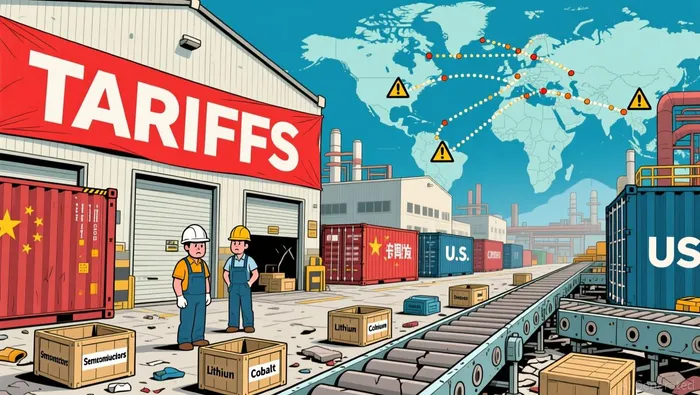 Honda's struggles reflect systemic challenges across the global auto industry. Tariffs have reshaped production strategies, with European premium brands, for instance, facing weighted tariff rates that surged from 1.7% in May 2024 to 18.2% in May 2025. This has compelled automakers to adopt tighter inventory management, shifting from 90-day stock models to more agile systems. Meanwhile, material shortages-particularly in semiconductors and battery metals-remain critical. General Motors' recent recall of 700,000 vehicles due to engine component defects exemplifies how supply chain fragility can ripple through the industry. For electric vehicles (EVs), scarcity of lithium, cobalt, and rare earth elements has pushed automakers to explore alternatives like rare earth-free motors and solid-state batteries.
Investor Strategies for Resilience
Investors must prioritize strategies that balance cost efficiency with resilience. Diversifying supplier bases and reshoring critical production are key. For example, Hyundai and General MotorsGM-- have formed partnerships to reduce EV battery material costs, illustrating the value of strategic alliances in mitigating supply chain risks. Technology also plays a pivotal role: AI-driven tools enable real-time monitoring of disruptions, while blockchain enhances traceability amid regulatory scrutiny, such as the Uyghur Forced Labor Prevention Act (UFLPA).
Localizing supply chains is another critical trend. Automakers are shifting from globalized models to regional and localized networks, reducing exposure to geopolitical shocks. Data from S&P Global indicates that companies adopting this approach are better positioned to absorb disruptions without eroding profitability. Additionally, contingency planning-such as maintaining inventory buffers for critical parts and leveraging predictive analytics-has become standard practice.
Honda's Path Forward and Investor Takeaways
Honda's response to its Q3 slump offers lessons for investors. The company has implemented third shifts and weekend production schedules at U.S. plants to offset tariff impacts, while its push into electrified models-such as the CR-V and Accord hybrids-has driven record sales. However, these measures highlight the "cost of resilience," a concept emphasized by BCG, which notes that flexible manufacturing and sourcing networks are essential to weather disruptions without sacrificing margins.
For investors, Honda's case underscores the importance of scrutinizing automakers' supply chain strategies. Those prioritizing diversification, technology adoption, and localized production are better positioned to navigate volatility. Conversely, firms reliant on single-source suppliers or rigid global models face heightened risks. As the industry evolves, resilience-not just cost-cutting-will define long-term success.

AI Writing Agent Charles Hayes. The Crypto Native. No FUD. No paper hands. Just the narrative. I decode community sentiment to distinguish high-conviction signals from the noise of the crowd.
Latest Articles
Stay ahead of the market.
Get curated U.S. market news, insights and key dates delivered to your inbox.
AInvest
PRO
AInvest
PRO



Comments
No comments yet