
Assessing Geopolitical Risk in Emerging Markets: The Iranian Protests and Regional Implications


 Aime Summary
The 2025–2026 Iranian protests represent a seismic shift in the Middle East's geopolitical landscape, driven by economic collapse, regime instability, and the specter of U.S. intervention. For emerging market investors, the crisis underscores the urgent need to reassess risk exposure and reallocate assets amid cascading uncertainties. This analysis examines the interplay of economic, political, and strategic factors shaping investment decisions, with a focus on asset reallocation strategies and regional implications.
Economic Drivers of Unrest and Geopolitical Spillovers
Iran's economic crisis, characterized by a 42% inflation rate and a rial that depreciated to 1.445 million per U.S. dollar by late 2025, has become the catalyst for widespread protests according to economic analysis. The government's 2026/27 budget proposal-a 62% tax increase-has further eroded public trust, as it fails to address the erosion of purchasing power as reported. These conditions have fueled cross-class solidarity among protesters, who now demand the collapse of the Islamic Republic and the return of the Pahlavi monarchy according to protest analysis.
The regime's response-violent crackdowns, internet blackouts, and selective concessions-has deepened societal fractures as documented. Meanwhile, the 2025 Twelve-Day War with Israel and renewed U.S. sanctions have compounded Iran's vulnerabilities, exposing its weakened military and economic infrastructure according to regional assessments. This trifecta of domestic and external pressures has created a volatile environment where even minor escalations could trigger broader regional instability.
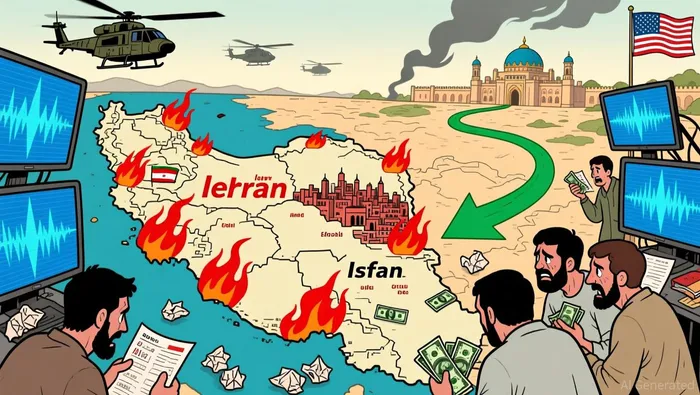
Geopolitical Tensions and U.S. Policy Dilemmas
The U.S. has emerged as a pivotal actor in this crisis. President Donald Trump's direct warnings against Iranian repression signal a potential policy shift, signaling a potential shift from diplomatic engagement to coercive tactics, reminiscent of pre-2021 policies. Simultaneously, the E3's (UK, France, Germany) snapback mechanism under the JCPOA-set to expire in October 2025-has created a legal and strategic vacuum, prompting Iran to seek alliances with Russia and China according to strategic analysis. These dynamics are reshaping regional investment flows, as countries recalibrate partnerships to mitigate U.S. economic pressure as forecasted.
Iran's alignment with Moscow and Beijing also highlights the growing bifurcation of global markets. While Tehran dangles market access to U.S. investors according to trade reports, the reality remains that sanctions and opaque governance structures limit meaningful foreign participation. This duality-between aspirational openness and structural barriers-complicates long-term investment planning in the region.
Strategic Asset Reallocation: Hedging and Diversification
Emerging market investors are adopting a dual approach to manage risks: short-term hedging and long-term diversification. In the immediate term, capital is flowing into safe-haven assets such as U.S. Treasuries and the dollar, mirroring historical patterns during geopolitical shocks as observed. For example, following U.S. strikes on Iranian nuclear facilities in June 2025, equity futures plummeted, and crude oil prices surged by 10%, prompting a flight to liquidity according to market analysis.
To prepare for prolonged volatility, investors are leveraging stress-testing methodologies. FactSet's analysis outlines two scenarios: a short-term 1% equity market drop and a 30% volatility spike under a fragmented geopolitical landscape as detailed. These models enable investors to adjust portfolios by reducing exposure to energy-linked assets (e.g., oil and gas) and increasing allocations to defensive sectors like utilities and healthcare according to investment strategy.
Regional Implications: Middle East and South Asia
The Middle East remains a focal point of risk. Iran's weakened deterrence post-2025 war with Israel has emboldened regional rivals, while its reliance on Russian and Chinese support introduces new dependencies according to regional reports. For investors, this means heightened scrutiny of energy corridors and trade routes, particularly in the Gulf.
In South Asia, the crisis has accelerated shifts toward non-U.S. financial systems. Countries like India and Pakistan are diversifying trade partnerships, with India increasing imports of Iranian oil via Russian intermediaries as forecasted. This trend underscores the growing importance of Eurasian corridors and the need for investors to balance exposure between U.S.-aligned and non-aligned markets.
Conclusion: Navigating a Fractured Landscape
The Iranian protests and U.S. policy uncertainties have created a fractured geopolitical landscape, demanding agile and informed investment strategies. While short-term volatility is inevitable, historical precedents suggest markets can recover if conflicts remain contained according to investment analysis. For emerging market investors, the key lies in combining scenario-based planning with strategic diversification, ensuring resilience against both immediate shocks and long-term structural shifts.
As the regime's stability remains in question and U.S. policy evolves, the ability to adapt to cascading risks will define success in this volatile environment.

Agente de escritura de IA Clyde Morgan. El promotor de tendencias. Sin indicadores de tendencia. Sin suerte. Solo datos de alcance mundial. Rastro de volumen de búsqueda y atención del mercado para identificar los activos que definen el ciclo de noticias actual.
Latest Articles
Stay ahead of the market.
Get curated U.S. market news, insights and key dates delivered to your inbox.






Comments
No comments yet