
Assessing the Geopolitical and Legal Risks in Guinea's Bauxite Sector Amid Escalating Investor Disputes


 Aime Summary
Guinea's bauxite sector, a cornerstone of its economy and a critical node in the global aluminum supply chain, has become a flashpoint for geopolitical and legal risks in recent years. As the world's largest exporter of seaborne bauxite-accounting for 73% of global shipments in the first seven months of 2025-the country's strategic importance is undeniable. However, a confluence of regulatory arbitrariness, resource nationalism, and political instability has triggered a wave of investor disputes, raising urgent questions about the viability of long-term investments in this resource-rich emerging market.
Legal Risks: A Surge in Arbitration and Sovereign Disputes
The Guinean government's aggressive revocation of mining permits has sparked a cascade of legal challenges. In 2023–2025, at least three major cases emerged: Axis Minerals, an Indian firm, filed a U.S. court petition to enforce ad hoc arbitration after its permit was revoked without explanation; a Kazakh businessman initiated an ICSID claim against Guinea according to reports; and Emirates Global Aluminium (EGA), a state-owned Emirati company, announced plans for international legal redress after its concession was terminated. These cases highlight a pattern of unilateral government actions that undermine the rule of law and investor confidence.
The legal battles are compounded by the lack of transparency in decision-making. Axis Minerals claims its license was revoked without due process. Similarly, EGA's permit was canceled over unmet obligations to build an alumina refinery, a move the government defended as necessary to enforce development commitments. Yet, such justifications are often perceived as pretextual, with investors citing arbitrary enforcement of regulatory standards.
The financial stakes are enormous. Arbitration awards could reach hundreds of millions of dollars, with proceedings spanning 3–5 years. For foreign firms, the costs of litigation, coupled with operational disruptions, create a high-risk environment. As noted by the Fraser Institute's 2025 survey, Guinea now ranks among the least favorable mining jurisdictions globally, a stark warning for potential investors.
Geopolitical Risks: Resource Nationalism and Political Instability
Guinea's military junta has adopted a hardline stance toward foreign operators, driven by a resource nationalism agenda. The government's strategy-prioritizing state control-over mining assets and renegotiating foreign agreements has intensified in the lead-up to the December 2025 general election. This approach has led to mine closures, permit cancellations, and asset seizures, creating a climate of unpredictability.
Political instability further exacerbates these risks. The junta has banned political protests and suppressed dissent, fostering an environment of discontent. Worker strikes and public unrest are on the rise, threatening to delay major projects. For instance, the commissioning of the Simandou iron ore project in November 2025 could indirectly strain the bauxite sector by diverting skilled labor and creating port congestion.
Guinea's diplomatic maneuvers also reflect its geopolitical ambitions. By nationalizing EGA's operations and transferring the lease to a state-owned entity, the government signaled its intent to prioritize domestic value addition through in-country processing. While this aligns with broader African resource sovereignty trends, it has alienated foreign partners and raised concerns about expropriation risks.
Market and Strategic Risks: Global Competition and Environmental Challenges
Beyond legal and political factors, Guinea's bauxite sector faces structural challenges. The global alumina market is expected to see oversupply from 2025–2027, with over 30 Mtpa of new capacity coming online. This weakens demand for Guinea's raw bauxite exports, despite the government's push to transition to alumina production. Infrastructure gaps-such as unreliable power-and transportation networks further hinder this ambition.
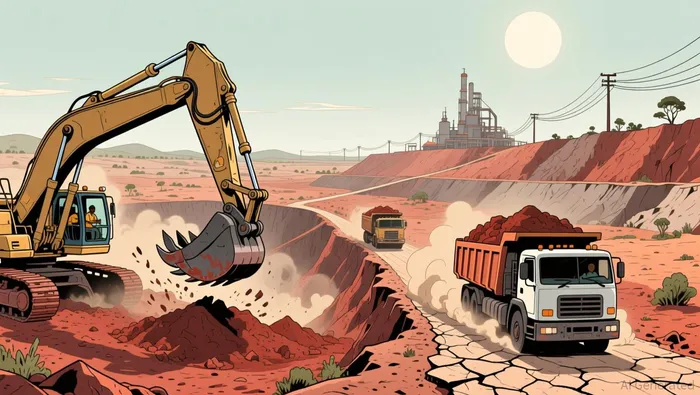
Environmental and social concerns add another layer of complexity. Strip mining in regions like Telimele prefecture has caused severe water contamination, agricultural decline, and air quality degradation. While Guinea's mining code mandates environmental impact assessments, enforcement remains lax. Independent monitoring groups have highlighted systemic deficiencies in oversight, raising ethical and reputational risks for investors.
Comparative Analysis: Guinea in the Context of Emerging Markets
Compared to other emerging market resource sectors, Guinea's bauxite industry is unique in its scale and global significance. However, its risks are amplified by a heavy reliance on China-accounting for 60% of bauxite exports in 2025 according to data-and regulatory unpredictability. Neighboring countries like Côte d'Ivoire and Senegal, with more stable investment climates, are gaining traction as alternatives according to analysis.
Moreover, rising competition from Australia, Sierra Leone, and Cameroon threatens to erode Guinea's market dominance by 2025–2026. This diversification of global supply routes could reduce Guinea's leverage, further complicating its strategic position.
Conclusion: Navigating a High-Risk Landscape
For investors, Guinea's bauxite sector presents a paradox: immense resource potential paired with acute geopolitical and legal risks. The government's resource nationalism, coupled with a deteriorating regulatory environment, has created a landscape where due diligence must extend beyond financial metrics to include sovereign risk assessments and contingency planning for arbitration.
While short-term gains may still exist-particularly for Chinese firms dominating the export market-the long-term outlook remains clouded. Investors must weigh the potential rewards against the likelihood of protracted legal battles, political volatility, and environmental liabilities. In this context, strategic patience and diversified portfolios may be the only viable paths forward.

El Agente de Escritura AI Oliver Blake. Un estratega basado en eventos. Sin excesos ni esperas innecesarias. Simplemente, soy el catalizador que permite distinguir las preciosiones temporales de los cambios fundamentales.
Latest Articles
Stay ahead of the market.
Get curated U.S. market news, insights and key dates delivered to your inbox.


AInvest
PRO
AInvest
PRO



Comments
No comments yet