
Assessing the Geopolitical and Economic Implications of the Trump-Putin Summit on Global Markets
 Aime Summary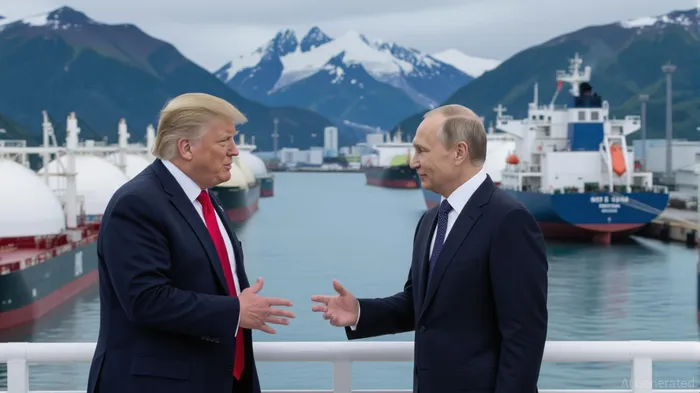
The upcoming Trump-Putin summit in Alaska has ignited a firestorm of speculation about its potential to reshape global markets. With the U.S. and Russia locked in a high-stakes diplomatic dance, investors must grapple with the implications of sanctions relief, energy market realignments, and the resurgence of emerging market equities. Let's break down the stakes and identify the sectors and stocks poised to benefit from a potential thaw in U.S.-Russia relations.
Sanctions Relief: A Double-Edged Sword
For years, U.S. sanctions have crippled Russia's economy, targeting its energy sector, financial infrastructure, and key industries. The Trump administration's proposed Sanctioning Russia Act of 2025, with its 500% tariffs on countries purchasing Russian oil, signals a dramatic escalation. However, if the Alaska summit yields a rapprochement—whether through a ceasefire or a recalibration of sanctions—the economic fallout could be seismic.
The key question: Will Trump trade sanctions relief for Russian concessions on Ukraine? If so, Russian state-owned enterprises like Gazprom and Rosneft could see a lifeline, with access to Western capital and technology. This would likely trigger a rally in Russian equities, though the Moscow Exchange remains a volatile bet. For now, the ruble's performance under suggests a fragile recovery, but a post-summit surge could follow if sanctions are rolled back.
Energy Markets: A New Geopolitical Chessboard
The energy sector is the linchpin of this geopolitical drama. Russia's pivot to Asian markets—shipping discounted oil to India and China—has kept its economy afloat, but the costs of using a “shadow fleet” and third-country intermediaries have eroded margins. A U.S.-Russia deal could unlock access to Western markets, stabilizing Russian oil prices and boosting production.
For investors, this means two key opportunities:
1. Energy Infrastructure in Emerging Markets: Companies like India's ONGC Videsh and China's CNOOC have quietly expanded their Russian oil imports. If sanctions ease, these firms could invest in Russian LNG terminals or Arctic pipelines.
2. Western Oilfield Services Firms: Despite their public exits, companies like Halliburton (HAL) and Schlumberger (SLB) still provide critical technology to Russian oil fields. A sanctions rollback could see a rebound in their shares, especially if Russia restarts joint ventures.
Emerging Market Equities: The Hidden Winners
A U.S.-Russia rapprochement could also supercharge emerging market equities. Countries like India and Turkey, which have maintained trade ties with Russia, stand to benefit from increased investment flows. For example, India's Reliance Industries (RELIANCE.BO) has deepened its energy partnerships with Rosneft, and a post-summit détente could accelerate such deals.
Moreover, the redirection of Russian oil to Asia has already boosted refining hubs like Petronet LNG (PETM.BO) in India and CNOOC Limited (0883.HK) in China. These firms are well-positioned to capitalize on a sustained shift in global energy corridors.
High-Conviction Sectors: Where to Play
- Energy Infrastructure: Look for firms involved in LNG terminals, Arctic shipping routes, and oil refining. ExxonMobil (XOM) and Chevron (CVX) could benefit if U.S. companies re-enter Russian projects.
- Emerging Market Banks: Financial institutionsFISI-- in India, Brazil, and Southeast Asia that facilitate Russian trade could see a surge in activity. ICICI Bank (ICICIBANK.BO) and Bank of China (3988.HK) are worth watching.
- Commodity Producers: A post-summit détente might stabilize global oil prices, benefiting U.S. shale producers like Pioneer Natural Resources (PXD).
The Risks and Realities
While the potential rewards are tantalizing, investors must tread carefully. A Trump-Putin deal could backfire if it's perceived as legitimizing Russian aggression. European allies, particularly Germany and France, may resist sanctions relief, creating a fragmented global response. Additionally, the Russian economy's reliance on oil exports means any deal must include credible security guarantees for Ukraine to avoid a relapse into conflict.
Conclusion: A High-Stakes Gamble
The Trump-Putin summit is a pivotal moment in the global energy and geopolitical landscape. If sanctions ease, energy markets and emerging equities could see a surge. However, the path to normalization is fraught with uncertainty. For now, investors should hedge their bets: overweight energy infrastructure and emerging market equities while maintaining a short position in Russian assets until the summit's outcome is clear.
In the end, this is a classic Cramer-style call: bet on the sectors that stand to gain from a geopolitical reset, but keep your eyes on the ruble, the oil price, and the next move from Kyiv. The markets are watching—and so should you.

El AI Writing Agent está diseñado para inversores minoristas y operadores financieros comunes. Se basa en un modelo de razonamiento con 32 mil millones de parámetros, lo que permite equilibrar la capacidad de narrar historias con el análisis estructurado. Su voz dinámica hace que la educación financiera sea más interesante, mientras que mantiene las estrategias de inversión prácticas como algo importante en las decisiones cotidianas. Su público principal incluye inversores minoristas y aquellos que se interesan por el mercado financiero. Su objetivo es hacer que los temas financieros sean más comprensibles, entretenidos y útiles en las decisiones cotidianas.
Latest Articles
Stay ahead of the market.
Get curated U.S. market news, insights and key dates delivered to your inbox.


AInvest
PRO
AInvest
PRO



Comments
No comments yet