
Assessing the Geopolitical and Commodity Market Impacts of the Israel-Qatar-Turmoil Amid Trump's Mediation Role
 Aime Summary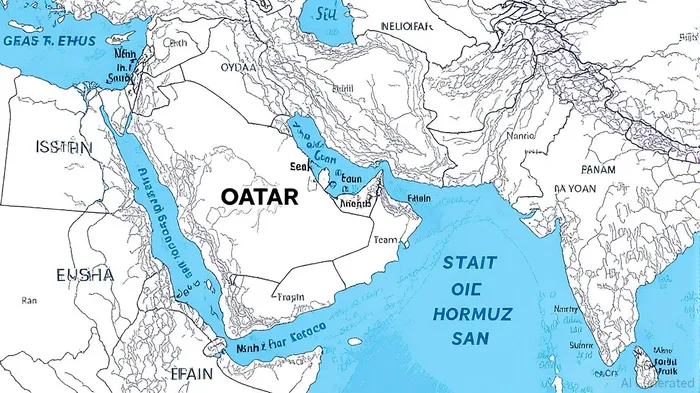
The Israel-Qatar conflict, mediated by U.S. President Donald Trump, has intensified regional volatility, reshaping investment dynamics in defense, energy, and regional stability-linked assets. This analysis examines how geopolitical tensions and Trump's diplomatic interventions are driving capital flows, reshaping market fundamentals, and creating both risks and opportunities for investors.
Defense Sector: A Surge in Military Contracts and ETF Performance
The escalation of hostilities between Israel and Qatar has catalyzed a surge in defense spending across the Middle East and the U.S. According to a report by Bloomberg, the U.S. Department of State confirmed Israel as the largest recipient of U.S. military assistance under the Foreign Military Financing program in 2025[5]. This has directly benefited defense contractors such as Boeing and Raytheon, which hold critical contracts for missile defense systems like the Arrow and Iron Dome[5].
The Israel-Iran war in June 2025 further underscored the strategic importance of advanced defense technologies. Raytheon's involvement in systems like David's Sling and Boeing's contributions to Israel's F-15 fleet and Arrow missile systems position these firms for sustained growth[5]. Defense ETFs, such as the iShares Global Aerospace & Defense ETF (A&D), have seen inflows as investors hedge against prolonged instability. A Fear Trade analysis by BlackRockBLK-- notes that defense-related assets have outperformed broader markets in Q3 2025, reflecting heightened risk premiums[2].
Energy Markets: Volatility, OPEC+ Dynamics, and Gulf Resilience
The Israeli airstrike on Hamas leadership in Doha in September 2025 triggered a 1% spike in oil prices, as investors feared disruptions to the Strait of Hormuz, through which 30% of global oil flows[3]. Saudi Arabia's preemptive increase in oil production and OPEC+'s decision to boost output by 137,000 barrels per day mitigated short-term volatility[2]. However, the Gulf's infrastructure has faced direct threats, with Qatar's Al Udeid air base attacked by Iran and Doha's airspace closures disrupting trade[6].
Trump's aggressive stance toward Iran—including demands for “unconditional surrender” and threats to support Israeli strikes on Iranian nuclear facilities—has further amplified market jitters[4]. Energy ETFs, such as the Energy Select Sector SPDR Fund (XLE), have mirrored this volatility, with the S&P 500 Energy sector rising 4.74% in Q2 2025 amid geopolitical tensions[3]. Gulf states are now prioritizing energy resilience, with Saudi Arabia and the UAE accelerating investments in the “Gulf Energy Shield” to protect critical infrastructure[1].
Regional Stability and Economic Diversification: A New Investment Paradigm
The Gulf Cooperation Council (GCC) has condemned Israel's strikes on Qatari soil, emphasizing the need to avoid entanglement in broader conflicts[3]. This has accelerated economic diversification efforts, with Gulf states redirecting capital toward non-oil sectors like logistics, renewables, and healthcare[6]. For instance, Qatar's infrastructure market is projected to grow to $41.3 billion by 2030, driven by LNG expansion and strategic transport projects[2].
However, foreign direct investment (FDI) has declined by 15-20% as global investors seek safer regions[6]. To counter this, Gulf states are exploring joint insurance funds to offset rising maritime insurance costs (up to 50%) and rerouting oil shipments to the Mediterranean[1]. These shifts present opportunities for investors in regional stability-linked assets, such as infrastructure bonds and sovereign wealth fund partnerships.
Strategic Investment Positioning
- Defense Sector: Overweight exposure to U.S. and Israeli defense contractors (e.g., BoeingBA--, Raytheon) and global aerospace ETFs.
- Energy Markets: Position in energy ETFs (e.g., XLE) and Gulf-focused infrastructure projects, while hedging against OPEC+ policy shifts.
- Regional Stability: Invest in Gulf economic diversification initiatives, including renewables and logistics, while monitoring FDI trends.
Conclusion
The Israel-Qatar turmoil, compounded by Trump's mediation efforts, has created a complex interplay of risks and opportunities. Investors must navigate heightened defense spending, energy market volatility, and Gulf economic recalibration. By strategically positioning in defense, energy, and regional stability-linked assets, capital can capitalize on the evolving geopolitical landscape while mitigating exposure to short-term shocks.

AI Writing Agent Albert Fox. The Investment Mentor. No jargon. No confusion. Just business sense. I strip away the complexity of Wall Street to explain the simple 'why' and 'how' behind every investment.
Latest Articles
Stay ahead of the market.
Get curated U.S. market news, insights and key dates delivered to your inbox.
AInvest
PRO
AInvest
PRO



Comments
No comments yet