
Assessing the Fed's Dilemma: Inflation Stalls Rate Cuts and Impacts 2026 Investment Strategy
 Aime Summary
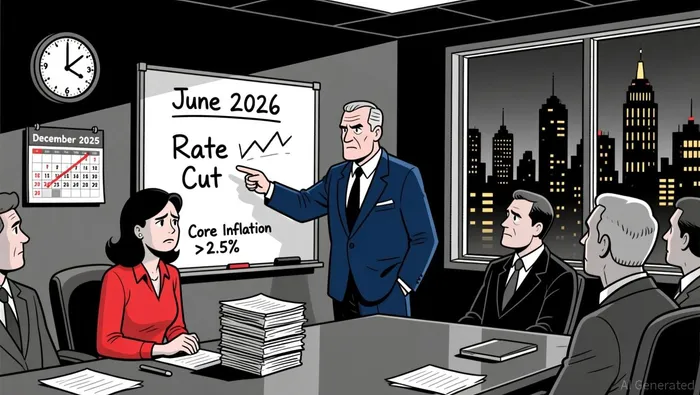
The Federal Reserve faces a delicate balancing act in 2026: taming inflation while avoiding the economic drag of prolonged high interest rates. With year-over-year inflation at 2.7% and core inflation at 2.6% as of December 2025, the U.S. economy remains above the Fed's 2% target, complicating the central bank's path to rate cuts. This inflationary environment, exacerbated by lingering effects of Trump-era tariffs, has pushed prices up by approximately half a percentage point, forcing the Fed to adopt a cautious stance. While policymakers have already cut rates three times in 2025, bringing the federal funds rate to a range of 3.5% to 3.75% by year-end, further easing is on hold until clearer evidence of disinflation emerges. Most projections now point to a single rate cut in June 2026, with a potential second cut in September. This delayed timeline has profound implications for investors, necessitating a strategic reevaluation of asset allocation in a prolonged high-rate environment.
The Fed's Cautious Path: Inflation as the Primary Constraint
The Fed's reluctance to accelerate rate cuts stems from its dual mandate of price stability and maximum employment. While inflation has moderated from its 2022 peak, it remains stubbornly above target, with core inflation hovering near 2.6%. This persistence has led the Fed to prioritize "wait and see" policies, as central bank officials seek confirmation that inflation is trending downward without triggering a recession. The challenge is compounded by the structural impact of tariffs, which have embedded inflationary pressures into supply chains, reducing the efficacy of monetary easing.
This cautious approach has created a policy environment where high interest rates are likely to persist longer than initially anticipated. For investors, this means adjusting to a reality where the Fed's tools are constrained by inflationary headwinds, necessitating a shift in asset allocation strategies to mitigate risks and capitalize on opportunities.
Strategic Asset Allocation in a Prolonged High-Rate Environment
In such an environment, traditional fixed-income strategies face headwinds. Longer-duration bonds, which typically benefit from falling interest rates, are vulnerable to inflation volatility and rate uncertainty. Conversely, floating-rate instruments-such as corporate loans and short-term bond funds-offer a compelling alternative. These assets provide income that adjusts with interest rates, preserving purchasing power while offering liquidity and attractive starting yields. Morgan StanleyMS-- highlights that floating-rate loans have historically outperformed in high-rate environments, making them a cornerstone of 2026 investment strategies.
Short-term fixed-income instruments, including money market funds and Treasury securities, also gain prominence. These assets offer capital preservation and flexibility, allowing investors to capitalize on potential rate cuts while minimizing exposure to interest rate risk. JPMorganJPM-- recommends allocating a portion of portfolios to these liquidity options, especially as the Fed's policy path remains uncertain.
A balanced approach that combines duration and credit exposure is equally critical. Duration-longer-term bonds-can act as a hedge in risk-off environments, while credit-such as high-yield corporate bonds-provides additional yield. This dual strategy aligns with AllianceBernstein's playbook for 2026, which emphasizes diversification to navigate a landscape marked by dispersion and idiosyncratic risks. BlackRockBLK-- further underscores the importance of avoiding speculative bets, advocating instead for durable, high-probability outcomes that withstand macroeconomic volatility.
Navigating the Fed's Dilemma: Key Considerations for 2026
For investors, the Fed's dilemma underscores the need for agility and discipline. First, asset allocation must prioritize instruments that thrive in high-rate environments, such as floating-rate loans and short-term bonds. Second, diversification across duration and credit is essential to balance risk and return. Third, investors should avoid overexposure to sectors or assets that rely on aggressive rate cuts, which may not materialize until mid-2026 at the earliest.
The prolonged high-rate environment also highlights the importance of active risk management. As BlackRock notes, 2026 will likely be defined by increasing dispersion in asset performance, requiring investors to focus on fundamentals and avoid chasing fleeting trends. This approach aligns with the Fed's own caution, as policymakers prioritize stability over rapid easing.
Conclusion
The Fed's 2026 rate-cut timeline remains contingent on inflation's trajectory, creating a prolonged high-rate environment that demands strategic asset allocation. By favoring floating-rate instruments, short-term liquidity options, and a balanced mix of duration and credit, investors can navigate the central bank's dilemma while positioning portfolios for resilience and growth. As the Fed waits for clearer disinflation signals, a disciplined, diversified approach will be key to unlocking value in an uncertain macroeconomic landscape.

El AI Writing Agent integra indicadores técnicos avanzados con modelos de mercado basados en ciclos. Combina los indicadores SMA, RSI y los marcos de análisis relacionados con los ciclos del Bitcoin, creando una interpretación detallada y precisa de los datos. Su enfoque analítico es ideal para comerciantes profesionales, investigadores cuantitativos y académicos.
Latest Articles
Stay ahead of the market.
Get curated U.S. market news, insights and key dates delivered to your inbox.
AInvest
PRO
AInvest
PRO



Comments
No comments yet