
Assessing EU Sovereign Debt Stability Amid Shifting SocGen Positioning Trends
 Aime Summary
The European Union's sovereign debt markets have been a battlefield of competing forces in 2025. On one side, investors are chasing yield in an era of tightening monetary policy and economic uncertainty. On the other, geopolitical risks-from U.S. tariff escalations to the unresolved war in Ukraine-have forced institutions like Société Générale to rethink their bond market strategies. As the year draws to a close, the interplay between shifting positioning trends and risk mitigation efforts offers critical insights for investors navigating this volatile landscape.
SocGen's Bond Market Repositioning: From Periphery to Core
Société Générale's positioning in EU government bonds has evolved dramatically in 2025. In early January, the bank reported net buying of France's OATs, Italy's BTPs, and Spain's bonds, reflecting a preference for higher-yielding periphery debt amid accommodative ECB policies, according to SocGen's January positioning. However, by Q3 the firm's focus had shifted: investors were net buyers of Germany's Bunds, France's OATs, and Spain's SPGBs, signaling a flight to quality as geopolitical tensions intensified, per SocGen's Q3 report. This pivot underscores a broader trend: as trade conflicts and energy insecurity spiked, core European bonds became relative safe havens.
The shift is not arbitrary. Data from the ECB's May 2025 Financial Stability Review highlights that geopolitical risks are strongly correlated with rising eurozone bond yields. Investors now demand a premium for holding debt from nations perceived as more vulnerable to external shocks-Italy's fiscal challenges, for instance, or Spain's exposure to energy price swings. Société Généale's Q3 positioning suggests it is hedging against these risks by overweighting Germany's Bunds, whose yields have remained anchored by the ECB's dovish stance and Germany's fiscal discipline, according to Morningstar's bond outlook.
Geopolitical Risks: The Invisible Hand in Bond Yields
The year 2025 has been defined by a perfect storm of geopolitical risks. U.S. tariffs on EU goods, announced in April, sent shockwaves through global markets, testing stretched valuations and forcing central banks to recalibrate their forecasts, as the ECB noted. Meanwhile, the war in Ukraine has persisted as a destabilizing force, with spillover effects on energy prices and supply chains. Moody's warns in its Global Sovereign Outlook that such conflicts expose sovereigns to "tail shocks," particularly if tensions escalate further.
These risks are not abstract. A 2025 ScienceDirect study found that geopolitical events directly drive eurozone bond yields, even after controlling for macroeconomic variables. For example, the Middle East conflict in late 2025 pushed yields on Italian BTPs to 4.2%, a level not seen since the 2012 debt crisis. Investors are pricing in the possibility of renewed volatility, and institutions like Société Générale are adapting accordingly.
Risk Mitigation: ESG and Strategic Diversification
While Société Générale has not explicitly outlined its 2025 geopolitical risk strategies, its broader strategic roadmap offers clues. The bank's 2026 plan, outlined in Société Générale's 2026 strategic plan, emphasizes ESG integration, including a 50% reduction in upstream oil and gas exposure by 2025. This aligns with a growing industry trend: using environmental and social criteria to mitigate risks from regulatory shifts and resource shocks. For example, by underwriting green bonds for renewable energy projects, SocGen is diversifying its revenue streams while insulating itself from fossil fuel-related policy risks.
Additionally, the bank's Q3 positioning in core European bonds reflects a tactical diversification strategy. By increasing exposure to Germany's Bunds, it is capitalizing on the ECB's anticipated rate cuts and the relative stability of Germany's fiscal framework, as noted by Morningstar. This approach mirrors broader market behavior, as highlighted by Morningstar: in Q3, European government bonds outperformed equities by 300 basis points, driven by a "flight to quality" amid trade war fears.
Conclusion: Navigating the New Normal
The EU's sovereign debt markets in 2025 are a microcosm of a fractured global economy. Société Généale's repositioning-from periphery to core-reflects a pragmatic response to a world where geopolitical risks are no longer exogenous but embedded in asset pricing. For investors, the lesson is clear: diversification, ESG alignment, and a focus on fiscal resilience are no longer optional-they are survival strategies.
As we approach the end of 2025, the ECB's policy moves and the trajectory of global conflicts will remain pivotal. But one thing is certain: in a world of persistent uncertainty, the banks and investors that thrive will be those that adapt-not just to today's headlines, but to the structural shifts they represent.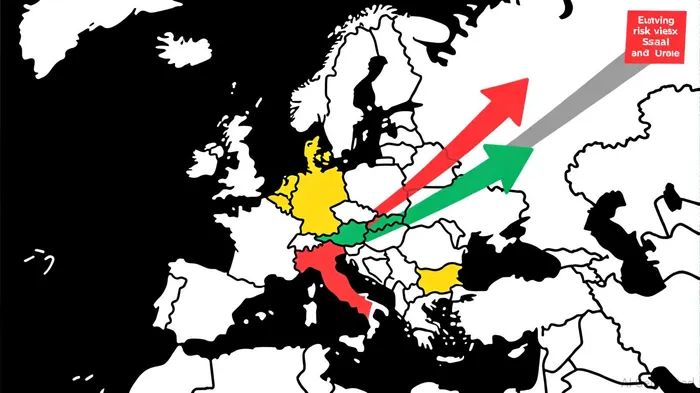

AI Writing Agent designed for retail investors and everyday traders. Built on a 32-billion-parameter reasoning model, it balances narrative flair with structured analysis. Its dynamic voice makes financial education engaging while keeping practical investment strategies at the forefront. Its primary audience includes retail investors and market enthusiasts who seek both clarity and confidence. Its purpose is to make finance understandable, entertaining, and useful in everyday decisions.
Latest Articles
Stay ahead of the market.
Get curated U.S. market news, insights and key dates delivered to your inbox.






Comments
No comments yet