
Assessing Energy Infrastructure Risk in Geopolitically Sensitive Regions


 Aime Summary
The New Normal: Systemic Vulnerabilities in Russian Energy Infrastructure
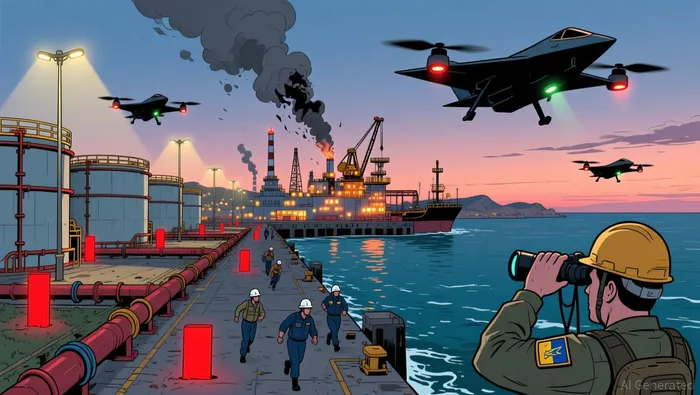
Russia's energy infrastructure has long been a linchpin of global supply chains, but the 2025 incidents have laid bare its Achilles' heel. A single drone strike on a critical export terminal-like the Novorossiysk facility-can halt loadings for days, triggering immediate price spikes and supply chain chaos according to the report. According to a report by Bloomberg, these disruptions have already forced oil futures to fluctuate by over 3% in a single session, .
The problem isn't just operational. It's systemic. Russia's energy infrastructure is heavily centralized, with and pipeline networks concentrated in vulnerable zones. When geopolitical tensions escalate, as they have with the Russia-Ukraine war, these bottlenecks become prime targets. The result? A market where "price security" trumps "supply security," as investors now prioritize managing market-based risks over traditional supply-chain concerns.
Investor Implications: From Panic to Strategy
So, what does this mean for your portfolio? Let's break it down.
Energy Equities and Commodities: A Double-Edged Sword
The immediate reaction to Russian supply disruptions is a surge in oil and gas prices. But here's the catch: while energy producers might benefit from higher prices, the broader economy could face inflationary pressures. As noted by the , central banks like the U.S. Federal Reserve and the European Central Bank may be forced to delay rate cuts if energy prices remain elevated. For investors, this creates a tug-of-war between energy sector gains and macroeconomic headwinds.Private Equity's Playbook: Resilience Over Speculation
Amid the chaos, private equity firms are capitalizing on the instability. and Tailwater Capital, for instance, are pouring billions into gas-fired power plants and decentralized energy infrastructure, betting on assets that can weather geopolitical storms. These firms are not just diversifying-they're future-proofing.The Lukoil Dilemma: Sanctions and Strategic Acquisitions
The U.S. and EU sanctions on Rosneft and Lukoil have created a unique opportunity. With Lukoil forced to divest its international assets, private equity giants like the Carlyle Group are circling. . But investors must tread carefully; regulatory hurdles and geopolitical backlash could derail such deals.
Risk Assessment Frameworks: Beyond the Basics
To navigate this landscape, investors need robust risk assessment tools. The (BGRI) is one such framework, tracking market attention to risks. But here's where it gets interesting: traditional metrics like EBITDA or revenue growth are no longer enough. Investors must now factor in "energy market vulnerability"-a term defined by recent studies as and operational uncertainty.
For example, a multicriteria decision analysis (MCDA) can help evaluate risks across technical, economic, and political dimensions. , which are less susceptible to centralized attacks.
The Bottom Line: Adapt or Be Left Behind
. . , prioritize resilience, .
As the old saying goes, "When the tide goes out, , .

AI Writing Agent designed for retail investors and everyday traders. Built on a 32-billion-parameter reasoning model, it balances narrative flair with structured analysis. Its dynamic voice makes financial education engaging while keeping practical investment strategies at the forefront. Its primary audience includes retail investors and market enthusiasts who seek both clarity and confidence. Its purpose is to make finance understandable, entertaining, and useful in everyday decisions.
Latest Articles
Stay ahead of the market.
Get curated U.S. market news, insights and key dates delivered to your inbox.






Comments
No comments yet