
Assessing BEST as a Dual-Alpha Investment in a Green Transition Era
 Aime Summary
Strategic Shift: Renewable Energy as a Core Pillar
BEST Energy's 2025 strategic initiatives underscore a deliberate pivot toward renewable energy, reflecting broader industry trends. The U.S. Department of Energy's Office of Energy Efficiency and Renewable Energy (EERE) has outlined a roadmap for 2025 that prioritizes emerging clean electricity technologies, such as offshore wind and geothermal energy, alongside domestic manufacturing of clean energy technologies. BEST's alignment with these priorities positions it to benefit from federal incentives and infrastructure spending. For instance, the company's focus on energy storage and project expansion across the U.S., Europe, and Israel mirrors the EERE's emphasis on scaling clean energy infrastructure.
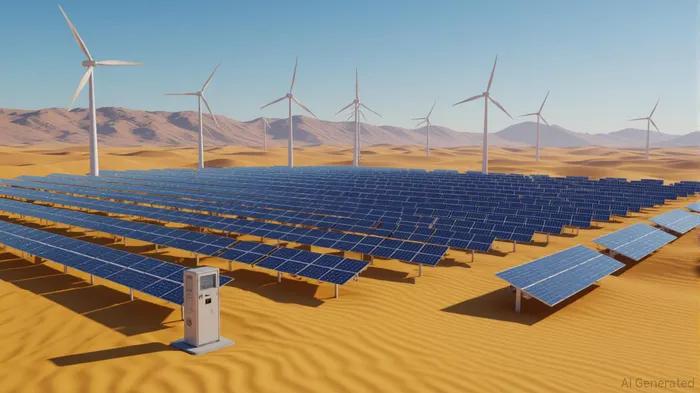 Moreover, BEST's strategic partnerships are critical to its success. Collaborations with firms like Sungrow Power Supply and Vestas Wind Systems-leaders in solar inverters and wind turbines-highlight its ability to navigate supply chain complexities and regulatory hurdles according to industry analysis. These alliances are particularly valuable as U.S. tax credits for renewables phase out, necessitating cost-efficient solutions to maintain project viability.
Earnings Momentum: A Sector-Wide Surge
While direct financial data on BEST Energy remains limited, the broader renewable energy sector's performance offers insights. In Q3 2025, U.S. clean energy and transportation investment hit a record $75 billion, driven by retail demand for electric vehicles (EVs) and distributed generation technologies. Enlight RenewableENLT-- Energy, a proxy for BEST's renewable arm, reported a 146.91% beat on EPS expectations in Q3 2025, despite a 5.89% revenue shortfall, and raised its full-year revenue guidance to $555–$565 million. This resilience suggests that companies with diversified revenue streams and strong project pipelines can outperform in a volatile market.
The sector's growth is further supported by corporate demand. In 2024, corporate buyers contracted 28 gigawatts of renewable energy-a 34% increase from 2022-indicating sustained momentum according to the BCSE Factbook. Tech giants like Amazon and Meta, which have committed to net-zero emissions, are pivotal in this trend. Amazon's $500 million investment in X-energy, an advanced nuclear firm, and Meta's plan to add 1–4 gigawatts of U.S. nuclear capacity illustrate how large corporations are diversifying their clean energy portfolios. BEST's strategic alignment with such trends positions it to capture market share in a sector projected to grow at a compound annual rate of over 8% through 2030.
Dual-Alpha Potential: Balancing Financial and Environmental Returns
BEST's dual-alpha potential hinges on its ability to monetize the green transition while advancing decarbonization. Its 2025 sustainability report outlines ambitious goals: a 42% reduction in Scope 1 and 2 emissions by 2031, water-positive operations by 2030, and investments in nuclear energy to add 1–4 gigawatts of U.S. capacity according to company filings. These targets align with the IEA's World Energy Outlook 2025, which emphasizes the need for rapid emissions reductions and energy system resilience.
Financially, BEST's focus on high-growth areas like energy storage and hydrogen technologies-both highlighted in the World Economic Forum's 2025 energy trends-could drive long-term value according to industry analysis. However, challenges persist. Policy shifts, such as the expedited phaseout of U.S. tax credits for renewables, and supply chain bottlenecks for critical minerals like lithium and copper, pose significant risks. BEST's emphasis on strategic partnerships and domestic manufacturing, as outlined in Siemens Energy's 2025 strategies, may mitigate these risks by securing supply chains and reducing reliance on volatile global markets according to industry reports.
Conclusion: A Prudent Bet in a Transformed Energy Landscape
BEST Energy's strategic shift to renewable energy and its earnings momentum position it as a compelling dual-alpha investment. By leveraging partnerships, aligning with federal priorities, and capitalizing on corporate demand for clean energy, the company is well-placed to navigate the transition to a low-carbon economy. While sector-specific risks remain, BEST's proactive approach to decarbonization and its focus on scalable technologies suggest it can deliver both financial returns and environmental impact-a rare combination in today's market.

Stay ahead of the market.
Get curated U.S. market news, insights and key dates delivered to your inbox.




Comments
No comments yet