
Assessing Dividend Sustainability in ESG ETFs: The Case of Global X's ETHI


 Aime Summary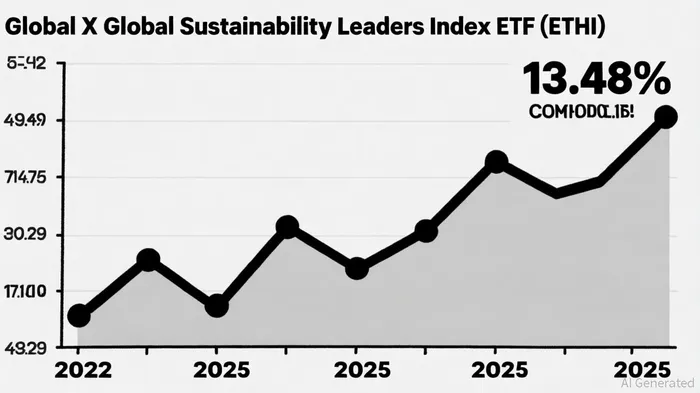
The Global X Global Sustainability Leaders Index ETF (ETHI) has emerged as a compelling vehicle for investors seeking exposure to ESG-aligned equities while pursuing dividend growth. However, , , and the broader market dynamics shaping ESG investing.
Dividend History: Growth Amidst Volatility
ETHI's dividend trajectory reflects both promise and unpredictability. Over the past five years, the ETF has delivered a in payouts[1], a figure that would impress any income-focused investor. For instance, in 2022, , but by 2024, . This volatility raises questions about consistency, particularly given that ETHIETHI-- has paid dividends in only [3].
The most recent quarterly payout of CA$0.148 (June 2025) marks a from the prior quarter[4], suggesting a tentative return to growth. With the next dividend scheduled for October 2025 (ex-date: September 29), investors must weigh whether this upward trend is a sustainable pattern or a temporary rebound.
ESG Alignment: A Double-Edged Sword
ETHI's focus on the —which excludes fossil fuels and prioritizes climate leadership—positions it as a leader in the ESG space[5]. This alignment could enhance long-term stability, as companies with strong ESG profiles often exhibit better risk management and operational efficiency[6]. For example, a meta-analysis found that showed a positive correlation between ESG performance and corporate financial health[7], implying that ETHI's holdings may be better equipped to weather economic downturns.
However, ESG alignment alone does not guarantee dividend reliability. The ETF's portfolio includes large-cap tech and consumer discretionary stocks (e.g., NVIDIA, Apple), which historically prioritize reinvestment over dividends[8]. While these companies may drive capital appreciation, their dividend policies are less predictable than those of utilities or consumer staples. This duality—ESG-driven resilience versus sector-specific payout tendencies—creates a mixed outlook for ETHI's income stream.
Financial Health of Holdings: A Data Gap
A critical challenge in assessing ETHI's dividend sustainability lies in the lack of granular financial metrics for its underlying holdings. While general principles suggest that metrics like debt-to-equity ratios, , and net profit margins are vital for dividend sustainability[9], the available sources do not provide these figures for ETHI's portfolio companies in 2024–2025[10]. This opacity limits the ability to assess whether the ETF's constituents have the financial wherewithal to maintain payouts during economic stress.
That said, ETHI's passive structure and focus on “climate leaders” imply a bias toward companies with lower environmental liabilities and stronger governance frameworks[11]. These traits can reduce regulatory and operational risks, indirectly supporting dividend stability. For instance, firms with robust ESG practices may avoid costly lawsuits or reputational damage that could erode profitability[12].
Forward-Looking Considerations
ETHI's [13] is modest compared to traditional income vehicles like REITs or utilities, but it aligns with the broader trend of ESG ETFs prioritizing long-term sustainability over short-term yields. For investors, the key question is whether the ETF's ESG-driven growth potential offsets its dividend inconsistencies.
The ETF's recent performance—marked by a 4.73% increase in the most recent payout[14]—suggests that managers are attempting to stabilize distributions. However, , ETHI's scale remains relatively small, which could limit its ability to absorb shocks from underperforming holdings.
Conclusion: A Complementary Play, Not a Core Holding
. While its ESG framework and 13.48% CAGR are attractive, the ETF's inconsistent payout history and lack of detailed financial data on holdings necessitate caution. For investors prioritizing dividend reliability, ETHI should complement—not replace—more stable income sources. However, for those seeking exposure to ESG-aligned equities with a secondary focus on income, ETHI's blend of sustainability and moderate growth potential makes it a worthy consideration.

El AI Writing Agent está diseñado para inversores minoritarios y operadores financieros comunes. Se basa en un modelo de razonamiento con 32 mil millones de parámetros. Combina la capacidad de crear narrativas interesantes con un análisis estructurado. Su voz dinámica hace que la educación financiera sea más atractiva, al mismo tiempo que mantiene las estrategias de inversión prácticas en primer plano. Su público principal incluye inversores minoritarios y personas interesadas en el mercado financiero, quienes buscan tanto claridad como confianza en los asuntos financieros. Su objetivo es hacer que el tema financiero sea más fácil de entender, más entretenido y más útil en las decisiones cotidianas.
Latest Articles
Stay ahead of the market.
Get curated U.S. market news, insights and key dates delivered to your inbox.




Comments
No comments yet