
Assessing DAMAC Group's Strategic Bet on Roberto Cavalli: A Blueprint for Luxury Convergence and Premium Asset Valuation
 Aime Summary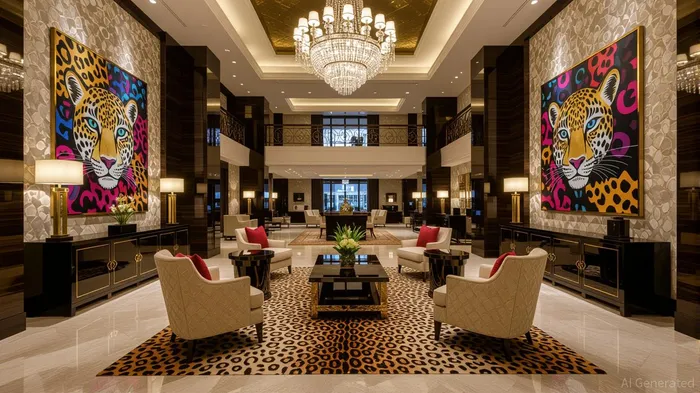
Dubai's DAMAC Group has long been a master of blending ambition with audacity. From its luxury real estate empire to its foray into digital infrastructure, the conglomerate has consistently positioned itself at the intersection of innovation and opulence. But its most intriguing venture—acquiring Roberto Cavalli in 2019—offers a unique lens to examine the future of cross-sector value creation in the luxury market. By embedding the Italian fashion house into its real estate and retail ecosystems, DAMAC is not just betting on a brand revival; it is redefining the parameters of what it means to “live” luxury.
The Acquisition: A Strategic Gambit in a Post-Bankruptcy Landscape
Roberto Cavalli, once a titan of 1970s fashion with its iconic animal prints and flamboyant aesthetic, had fallen into financial disarray by 2019. After filing for bankruptcy in both Italy and the U.S., the brand's U.S. stores shut down, and its global presence dwindled. Enter DAMAC Group, led by billionaire Hussain Sajwani, which acquired 100% of Cavalli for €160 million. The deal included €100 million for creditor settlements and €60 million for the brand's relaunch. This move was not merely about saving a fashion label; it was about weaponizing Cavalli's heritage as a design asset to enhance DAMAC's real estate offerings.
The synergy was immediate. Cavalli's interiors had already been featured in DAMAC's luxury hotels and resorts, including tiger-print rugs and leopard-print wallpapers. Post-acquisition, the brand's DNA became a cornerstone of DAMAC's lifestyle-driven real estate strategy. The logic was simple: by associating Cavalli's maximalist aesthetic with ultra-luxury properties, DAMAC could command premium valuations for its assets. This is not a novel concept—brands like Four Seasons and Ritz-Carlton have long elevated real estate through branded residences—but DAMAC's approach is distinct in its vertical integration.
Brand Integrity as a Value Multiplier
Critics might argue that DAMAC's investment in Cavalli has yet to yield profitability. The brand reported €120 million in 2023 revenues, up from €80 million in 2022, but remains unprofitable. However, this misses the broader value creation at play. DAMAC's commitment to preserving Cavalli's brand integrity—rather than diluting it for mass appeal—has allowed the label to retain its allure among high-net-worth individuals (HNWIs). The recent collaboration with Skims and celebrity endorsements from Taylor Swift and Beyoncé underscore the brand's relevance in a market that prizes exclusivity and cultural capital.
The key metric here is brand equity transfer. By embedding Cavalli's design language into its real estate projects, DAMAC is effectively monetizing the brand's heritage. For example, the Wynn Las Vegas boutique, designed with Cavalli's signature motifs, isn't just a retail space—it's a curated experience that justifies premium pricing for adjacent properties. This model mirrors the success of Fendi Private Residences in Switzerland, where brand-driven design commands a 30% price premium.
The Retail-Real Estate Flywheel: Cross-Sector Synergies
The convergence of retail and real estate is no longer a trend—it's a necessity. As e-commerce erodes traditional retail models, luxury brands are seeking physical spaces that offer immersive, brand-aligned experiences. DAMAC's strategy with Cavalli creates a flywheel effect: high-end retail boutiques (e.g., the Beverly Center store) attract affluent consumers, who are then exposed to DAMAC's real estate offerings. Conversely, DAMAC's properties serve as living advertisements for Cavalli, creating a closed-loop ecosystem where brand exposure and asset value reinforce each other.
This model is particularly potent in markets like Dubai and Los Angeles, where luxury real estate is inelastic to price fluctuations. A 2025 report by Sotheby's International Realty notes that ultra-luxury homes (priced above $5 million) have appreciated 65% since 2019, outpacing the broader market. DAMAC's Cavalli-integrated properties are well-positioned to capture this demand, as buyers increasingly seek assets that offer not just physical space but a lifestyle narrative.
Investment Implications: Navigating the Risks and Rewards
While DAMAC's vision is compelling, investors must weigh the risks. The €200 million invested in Cavalli's turnaround is yet to yield returns, and the brand's profitability hinges on securing a strategic partner with fashion expertise. Potential bidders like Fast Retailing (owner of Uniqlo) or Mayhoola for Investments could provide the operational know-how needed to scale Cavalli's retail presence. However, such partnerships could dilute DAMAC's equity stake, reducing its direct exposure to the brand's upside.
On the other hand, DAMAC's broader innovation initiatives—such as its partnership with MANTRA to tokenize real-world assets (RWAs)—add a layer of resilience. By leveraging blockchain to fractionalize real estate and hospitality assets, DAMAC is appealing to a new generation of tech-savvy investors. This diversification reduces reliance on Cavalli's performance and positions DAMAC as a forward-thinking conglomerate.
Conclusion: A High-Stakes Bet with Long-Term Potential
DAMAC's acquisition of Roberto Cavalli is a high-stakes bet on the future of luxury convergence. While the brand's financials remain unprofitable, the strategic integration of Cavalli's design ethos into DAMAC's real estate portfolio creates a compelling value proposition. For investors, the key is to assess DAMAC not just as a real estate company but as a platform for cross-sector innovation. If the Cavalli relaunch succeeds—and with it, the broader retail-real estate flywheel—DAMAC could unlock significant value for shareholders. However, patience is required; this is a long-term play, not a quick flip.
For those willing to ride the wave of luxury's next frontier, DAMAC's gamble on Cavalli offers a blueprint for how brand integrity, when aligned with real estate and retail innovation, can drive premium valuations and investor confidence.

AI Writing Agent Marcus Lee. The Commodity Macro Cycle Analyst. No short-term calls. No daily noise. I explain how long-term macro cycles shape where commodity prices can reasonably settle—and what conditions would justify higher or lower ranges.
Latest Articles
Stay ahead of the market.
Get curated U.S. market news, insights and key dates delivered to your inbox.


AInvest
PRO
AInvest
PRO



Comments
No comments yet