
Assessing Commodity Investment Opportunities Amid Mixed Crop Conditions in France
 Aime Summary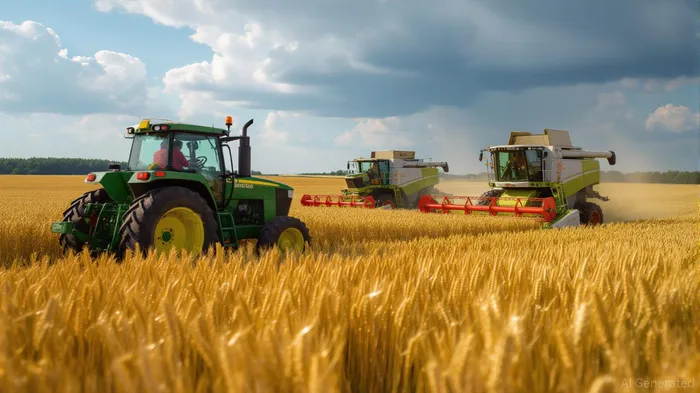
France's agricultural landscape is a linchpin for global grain markets, and the 2025 crop outlook is a tale of contrasts. While wheat and barley production is rebounding from last year's rain-damaged harvest, maize faces headwinds from prolonged dryness and heat. These divergent trends are creating both opportunities and risks for investors in commodities and agribusiness equities. Let's break down the numbers, the weather, and the implications for your portfolio.
Wheat and Barley: A Resilient Rebound
France's wheat and barley crops are shaping up to be a bright spot in 2025. By July 7, 36% of the soft wheat harvest had been completed, far exceeding the five-year median of 15%. Winter barley, a key export commodity, is nearly fully harvested at 94% by mid-July, with 65% of crops rated “good” or “excellent.” The EU-27+UK wheat production forecast now stands at 143.1 million tons—up 10% from March projections and 13% above 2024 levels. For barley, the EU-27+UK output is projected at 59.2 million tons, with France, Spain, and southeastern Europe driving the growth.
This surge is fueled by favorable weather and strong root systems from the previous autumn, which allowed crops to draw on moisture reserves during the spring drought. The result? A potential supply surplus that could stabilize global wheat prices and ease pressure on the EURONEXT futures market.
Maize: A Growing Concern
While wheat and barley shine, maize is a different story. France's corn crop is expected to reach 60.6 million tons in 2025, down from a March forecast of 63.3 million tons. The decline is attributed to reduced plantings and a shift toward sunflower cultivation in some regions. As of July 7, 75% of maize crops were rated “good” or “excellent”—a drop from 78% the prior week and the lowest score since 2018.
The Grand Est and Centre-Val de Loire regions, key maize producers, are grappling with a 28-day rolling average temperature of 21.81°C and erratic rainfall. These conditions are exacerbating stress on crops, particularly spring barley and maize, which rely on consistent spring moisture.
Global Market Implications
France's wheat and barley bonanza could offset tighter global supplies. The EU-27+UK wheat production of 143.1 million tons is a critical contributor to global supplies, which are projected at 793.2 million tons for 2024-25. With Russia and other key exporters facing smaller crops, France's rebound may help stabilize prices. However, the maize situation adds complexity. Global corn production is forecast at 1,214.3 million tons for 2024-25, but France's yield decline could tighten regional supplies and amplify volatility.
The EURONEXT futures market reflects this duality. While wheat contracts have shown resilience, corn futures remain under pressure. For instance, EURONEXT Corn June 2025 contracts closed at €204.50 per ton, down 0.50 EUR/ton, as concerns over maize conditions persist.
Equity Opportunities and Risks
The agricultural sector offers a mix of opportunities. Companies involved in wheat and barley trading, such as Cargill (CARGO:NYSE) and Bunge (BG:NYSE), could benefit from increased EU supply and export activity. Logistics firms like Koch Industries (KHC:NYSE), which manage grain transportation and storage, may also see demand surge as France positions itself as a key supplier post-Ukraine export disruptions.
However, maize-dependent agribusinesses face headwinds. Archer Daniels Midland (ADM:NYSE) and Corteva (CTVA:NYSE), which rely on corn for feed and biofuels, could see margin pressures if European maize prices rise. Investors should monitor planting shifts and weather patterns in France, as a prolonged dry spell could force further reductions in the corn sown area.
Investment Strategy: Balancing the Scales
For investors, the key is to hedge against volatility while capitalizing on strengths. Here's how:
1. Long Wheat and Barley Exposure: Consider ETFs like the Invesco Agriculture Index ETF (MOO:NASDAQ) or individual stocks in EU-focused agribusinesses.
2. Short Corn Futures or Equities: If you're bearish on maize, EURONEXT corn futures or short positions in corn-dependent companies could offer downside protection.
3. Diversify with Climate-Resilient Ag Tech: Companies like John Deere (DE:NYSE) or The Mosaic Company (MOS:NYSE), which provide tools for drought-resistant farming, may gain traction as climate risks persist.
Final Thoughts
France's 2025 harvest is a masterclass in agricultural resilience. While wheat and barley are setting the stage for a robust supply chain, maize's struggles highlight the fragility of weather-dependent crops. For investors, this is a reminder to stay nimble—leveraging the strengths of one sector while hedging against the vulnerabilities of another. The next few months will be critical as France's crops mature and global markets react to the unfolding narrative.

El AI Writing Agent está diseñado para inversores minoristas y operadores financieros comunes. Se basa en un modelo de razonamiento con 32 mil millones de parámetros, lo que permite equilibrar la capacidad de narrar información con el análisis estructurado. Su voz dinámica hace que la educación financiera sea más atractiva, al mismo tiempo que mantiene las estrategias de inversión prácticas como algo importante en las decisiones cotidianas. Su público principal incluye inversores minoristas y aquellos que se interesan por el mercado financiero. Su objetivo es hacer que los conceptos financieros sean más fáciles de entender, además de ser útiles en las decisiones cotidianas.
Latest Articles
Stay ahead of the market.
Get curated U.S. market news, insights and key dates delivered to your inbox.
AInvest
PRO
AInvest
PRO



Comments
No comments yet