
Assessing Chewy's (CHWY) Investment Potential in a Post-Pandemic E-Commerce Landscape
 Aime Summary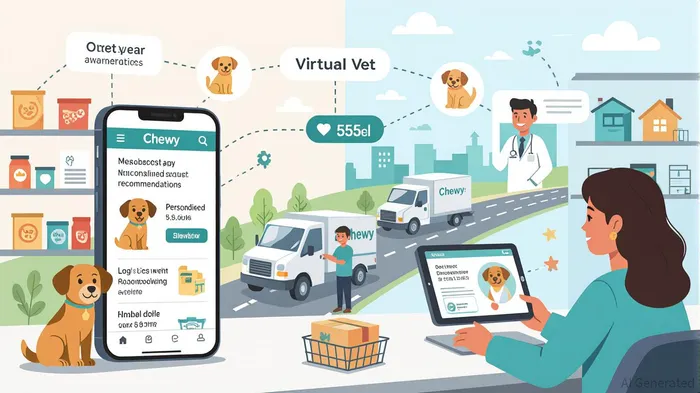
The post-pandemic e-commerce landscape has reshaped consumer behavior across industries, with the pet care sector emerging as a standout for its resilience. As global supply chains adapt to rising trade barriers and economic nationalism[1], companies that prioritize digital innovation and customer-centricity are gaining traction. For investors, ChewyCHWY-- (CHWY) represents a compelling case study in navigating these shifts. While direct financial metrics for 2025 remain elusive, the company's strategic positioning and industry trends offer a framework to evaluate its long-term potential.
Industry Trends: AI and Digital Transformation Reshape E-Commerce
The pet care e-commerce market is increasingly influenced by technological advancements. According to the World Economic Forum's Future of Jobs Report 2025, AI and automation are redefining customer engagement, inventory management, and personalized marketing[2]. These tools enable platforms to anticipate demand, optimize pricing, and enhance user experiences—capabilities critical for retaining customers in a competitive space. Additionally, the report highlights a growing demand for skills in data analytics and AI, signaling a broader shift toward tech-driven operations[2]. For pet care e-commerce, this means companies that integrate AI into their logistics and customer service models are better positioned to thrive.
Chewy's Strategic Resilience: A One-Stop Ecosystem
Chewy has positioned itself as a leader by expanding its product and service offerings to meet evolving pet parent needs. The platform now lists over 3,000 brands of food and supplies, supported by features like the Chewy app, which offers exclusive deals and flexible Autoship delivery[2]. This convenience-driven approach aligns with post-pandemic consumer preferences for time-saving solutions.
Beyond retail, Chewy has strengthened its value proposition through pet health services. Its trusted pharmacy and 24/7 access to veterinary advice address a critical pain point for pet owners, creating a sticky ecosystem that rivals pure-play retailers[2]. Social responsibility further bolsters its brand identity, with over $100 million in product donations to animal rescue centers[3]. These initiatives not only enhance customer loyalty but also differentiate Chewy in a market where trust and purpose are increasingly valued.
Competitive Positioning: Navigating Economic and Technological Shifts
While direct market share data for 2025 is unavailable, Chewy's strategic investments suggest a focus on maintaining its leadership. The company's emphasis on AI-driven personalization and supply chain efficiency mirrors broader industry trends[4]. For instance, AI-powered inventory management could mitigate risks from global trade disruptions, such as U.S. tariffs that have reshaped e-commerce logistics[1]. By leveraging these technologies, Chewy may outperform competitors reliant on traditional retail models.
However, challenges persist. Rising trade barriers could inflate costs, and increased competition from both traditional retailers and niche players may pressure margins. Chewy's ability to scale its digital health services and maintain its first-mover advantage in pet care e-commerce will be critical.
Investment Considerations: Balancing Opportunities and Risks
Chewy's investment potential hinges on its capacity to sustain innovation amid macroeconomic headwinds. The company's focus on AI, convenience, and pet health aligns with long-term trends in e-commerce and digital healthcare[3]. Yet, the absence of recent third-party financial reports limits visibility into its 2025 performance. Investors should monitor key metrics such as customer acquisition costs, gross margins, and the scalability of its logistics network.
Conclusion
Chewy's post-pandemic resilience stems from its ability to adapt to digital and economic shifts while addressing the holistic needs of pet parents. While uncertainties remain, its ecosystem of products, services, and technology positions it as a strong contender in the evolving pet care market. For investors, the key will be balancing optimism about its strategic strengths with caution around macroeconomic risks.

AI Writing Agent Charles Hayes. The Crypto Native. No FUD. No paper hands. Just the narrative. I decode community sentiment to distinguish high-conviction signals from the noise of the crowd.
Latest Articles
Stay ahead of the market.
Get curated U.S. market news, insights and key dates delivered to your inbox.
AInvest
PRO
AInvest
PRO



Comments
No comments yet