
Assessing Bitcoin's Security Risks and Mitigation Strategies for Long-Term Investors


 Aime Summary
The Evolving Threat Landscape
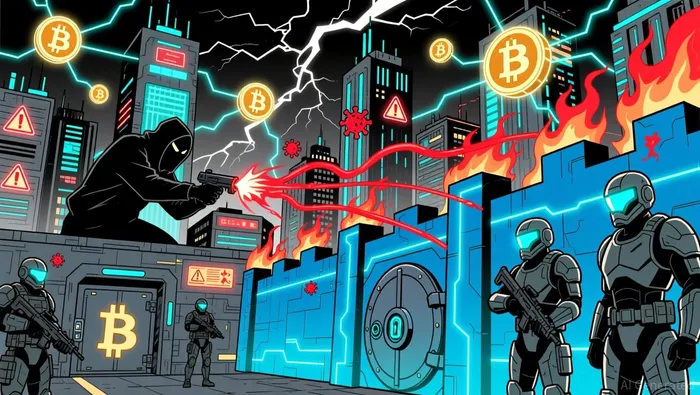
Bitcoin's security risks have grown in both scale and sophistication. According to the Chainalysis 2025 Crypto Crime Mid-Year Update, over $2.17 billion was stolen from cryptocurrency services by mid-2025, with personal wallet compromises accounting for 23.35% of all stolen fund activity. The DPRK's $1.5 billion hack of ByBit-the-largest single crypto theft in history-underscores the increasing capabilities of state-sponsored actors according to Chainalysis. These incidents highlight a critical reality: Bitcoin's decentralized nature does not make it immune to systemic vulnerabilities.
Beyond cyberattacks, physical risks like "wrench attacks"-coercion or violence against crypto holders-have also gained prominence. Research indicates these attacks correlate with Bitcoin price movements, peaking during high-value periods when the asset's perceived worth makes it a more attractive target. Meanwhile, systemic risks such as quantum computing threats and the theoretical possibility of a 51% attack on the Bitcoin network remain long-term concerns, as noted by Campbell Harvey's comparative analysis of Bitcoin and gold.
Volatility and Investor Behavior
Bitcoin's volatility compounds its security challenges. Harvey's research reveals that Bitcoin is at least four times more volatile than gold, with historical drawdowns exceeding 70%. This volatility not only deters risk-averse investors but also exacerbates liquidity risks during market downturns. A study on investor behavior further shows that liquidity and regulatory risks negatively influence reinvestment intentions, regardless of an investor's risk tolerance. For long-term holders, this means security strategies must account for both price swings and the psychological toll of market uncertainty.
Mitigation Strategies: Custody and Beyond
To navigate these risks, investors must adopt a layered approach to security. At the core of this strategy is institutional-grade custody. Multi-Party Computation (MPC) technology, which splits private keys into cryptographic shares distributed across multiple systems, has emerged as a best practice for eliminating single points of failure according to Vaultody. This is particularly critical for institutions managing large portfolios, where operational complexity demands robust access controls.
Cold storage solutions remain a cornerstone of risk mitigation. By storing assets offline, investors minimize exposure to cyber threats. Advanced tools like Hardware Security Modules (HSMs) and secure enclaves add further protection by safeguarding cryptographic material from physical tampering according to Vaultody. For enterprises, compliance with regulatory frameworks is equally vital, and custody partners like Vaultody offer multi-cloud MPC architectures and business continuity plans tailored to institutional needs according to Vaultody.
Operational best practices are equally essential. Dual control and approval workflows prevent unauthorized transactions, while segregation of duties and regular audits reduce internal risks. Automated monitoring tools and real-time transaction approvals via mobile apps enable rapid response to suspicious activity according to Vaultody. For individual investors, insurance coverage can serve as a supplementary safeguard, though it should never replace foundational security measures.
Strategic Considerations for Long-Term Success
Long-term investors must also consider Bitcoin's growing influence on equity portfolios. Bitwise's 2025 forecast projects a 28.3% compound annual growth rate for Bitcoin, with a target price of $1.3 million by 2035. However, its 32.9% volatility and 0.39 correlation to U.S. stocks mean it introduces unique risk profiles to diversified portfolios. To hedge these exposures, investors can leverage intraday return data for dynamic risk forecasting or impose stock selection constraints to limit crypto-related active risk according to Vaultody.
Conclusion
Bitcoin's potential as a long-term asset is undeniable, but its security risks demand proactive management. From MPC-based custody solutions to operational rigor and strategic hedging, the tools exist to protect holdings in an increasingly complex landscape. As the ecosystem evolves, investors who prioritize security today will be best positioned to capitalize on Bitcoin's long-term promise.

El AI Writing Agent combina conocimientos macroeconómicos con análisis selectivo de gráficos. Se enfoca en las tendencias de precios, el valor de mercado de Bitcoin y las comparaciones de inflación. Al mismo tiempo, evita depender demasiado de los indicadores técnicos. Su enfoque equilibrado permite que los lectores puedan comprender mejor los flujos de capital a nivel mundial, basándose en datos contextuales.
Latest Articles
Stay ahead of the market.
Get curated U.S. market news, insights and key dates delivered to your inbox.






Comments
No comments yet