
Assessing Aviation Sector Volatility Amid Winter Weather Disruptions


 Aime Summary
Infrastructure Vulnerabilities and Winter Preparedness
The Des Moines incident exemplifies the fragility of airport infrastructure during extreme weather. Runway closures, delayed de-icing efforts, and the need for emergency evacuations disrupted operations and stranded passengers during a busy holiday travel period according to local reports. According to a report by the National Transportation Safety Board (NTSB), slick runway conditions were a likely factor in the incident, though the final investigation remains pending as NTSB findings indicate. This aligns with broader trends: DSM experienced one of its highest two-day snowfalls since January 2024, overwhelming existing snow-removal protocols.
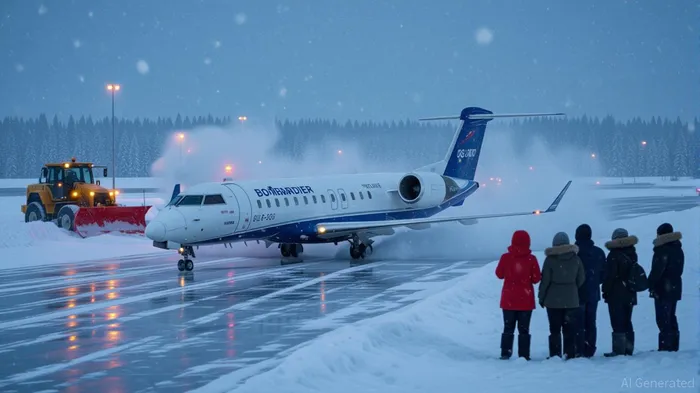 Such events highlight the urgent need for airports to invest in winter resilience measures. For instance, advanced de-icing technologies, real-time weather monitoring systems, and redundant runway configurations could mitigate disruptions. The U.S. airports sector is projected to require $173.9 billion in infrastructure investments over the next five years to address aging systems and rising demand according to a comprehensive study. Investors should prioritize airports that allocate capital to climate-resilient upgrades, such as heated runway surfaces or AI-driven snow-removal logistics.
Insurance Liabilities and Rising Costs
Winter weather disruptions are also driving up insurance liabilities for airlines and airports. The DeltaDAL-- incident in Des Moines, while not resulting in injuries, occurred amid a broader surge in aviation claims. For example, Delta faced lawsuits totaling over $100 million following a February 2025 crash in Toronto, where icy conditions led to a regional jet losing a wing and injuring passengers as reported by aviation analysts. These incidents are part of a larger trend: global insured losses from natural catastrophes reached $100 billion in the first half of 2025, with aviation hull and liability claims alone hitting $1.79 billion according to a global insurance report.
Insurers are responding by tightening underwriting standards and increasing premiums. According to a report by Price Forbes, attritional claims-such as those from weather-related delays and cancellations-are pushing total aviation insurance claims toward $3 billion in 2025 as the industry data shows. Airlines like Delta are also adopting defensive strategies, such as offering preemptive compensation to passengers (e.g., $30,000 per passenger in the Toronto crash) to avoid protracted legal battles as noted by industry observers. For investors, this signals a shift in risk management from reactive to proactive, with airlines likely to pass on some costs to passengers or investors through higher fares or reduced profit margins.
Investment Opportunities in Resilient Infrastructure
Despite these challenges, the crisis presents opportunities for investors focused on infrastructure resilience. Airports that prioritize winter-readiness-such as those adopting automated de-icing systems or expanding runway capacity-could attract long-term capital. For example, DSM's post-incident plans to enhance snow-removal capabilities align with industry best practices. Similarly, regional airports in colder climates may see increased demand for private-sector partnerships to fund resilience projects.
Public policy also plays a role. The U.S. Federal Aviation Administration (FAA) has emphasized modernizing airfield infrastructure, with grants targeting climate adaptation as announced in winter 2025 outlook. Investors should monitor airports that leverage these funds to upgrade facilities, as they may outperform peers in volatile winter seasons.
Conclusion
The Delta Airlines incident at Des Moines International Airport is a microcosm of the aviation sector's growing exposure to winter weather disruptions. As climate change intensifies seasonal storms, infrastructure resilience and insurance strategies will become central to operational and financial stability. For investors, the key lies in identifying airports and airlines that proactively address these risks-through technological innovation, strategic capital allocation, and robust risk-transfer mechanisms. While the sector faces headwinds, those who navigate the volatility with foresight stand to benefit from a more resilient aviation ecosystem.

Delivering real-time insights and analysis on emerging financial trends and market movements.
Latest Articles
Stay ahead of the market.
Get curated U.S. market news, insights and key dates delivered to your inbox.
AInvest
PRO
AInvest
PRO



Comments
No comments yet