
Assessing the August 2025 S&P 500 Underperformers: Opportunities in Dislocation?
 Aime Summary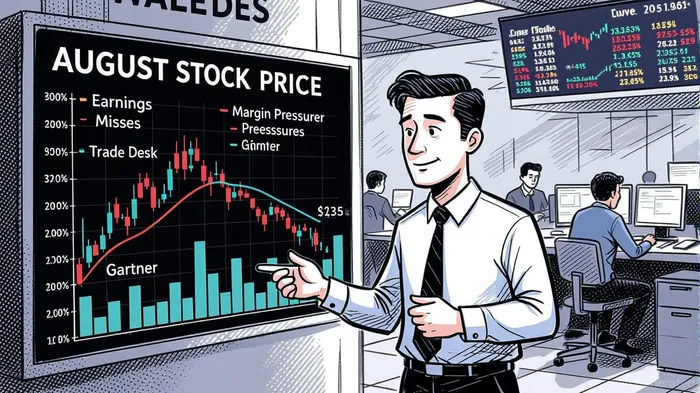
The August 2025 stock market dislocation saw sharp declines in three S&P 500 constituents—Super Micro Computer (SMCI), The Trade DeskTTD-- (TTD), and GartnerIT-- (IT)—raising questions about whether these drops reflect overreactions or fundamental weaknesses. For investors, the challenge lies in distinguishing between temporary volatility and enduring structural risks. This analysis evaluates the drivers of their declines, margin dynamics, AI-driven growth potential, and valuation metrics to assess whether these stocks represent compelling opportunities or cautionary tales.
Super Micro Computer: Margin Pressures and AI Hype
Super Micro Computer’s 29.6% August plunge followed a fiscal 2025 earnings report that revealed a 7.4% year-over-year revenue increase and a net income decline to $195 million from $297 million [1]. The company’s 9.5% gross margin—the lowest in its public history—spooked investors, compounded by guidance for $6–7 billion in Q1 fiscal 2026 revenue, which implied flat growth at the low end [2]. While SMCI’s P/E ratio of 24 appears attractive, its slim margins and exposure to tariff risks highlight operational fragility [3].
However, SMCI’s alignment with AI infrastructure offers a counterpoint. The company’s NVIDIA-certified systems, including H100/H200 GPU-equipped servers, position it to benefit from the AI boom [4]. A partnership with Digi PowerDGXX-- X for modular AI data centers further underscores its strategic pivot [5]. Yet, with gross margins below 10%, profitability remains a concern. For SMCISMCI--, the decline may reflect a correction in its AI-driven valuation premium, but investors must weigh whether its infrastructure bets can translate into sustainable margins.
The Trade Desk: Guidance Cuts and Competitive Pressures
The Trade Desk’s 37.1% August drop was driven by a 14% revenue growth forecast for Q3 2025—the slowest since its IPO—and an abrupt CFO change [6]. Despite this, the company’s financials remain robust: FY2024 gross margins of 80.74%, operating margins of 17.51%, and EBITDA margins of 21.10% [7]. Its AI-powered Kokai platform, which optimizes ad campaigns in real time, demonstrates strong technological differentiation [8].
Valuation metrics, however, tell a mixed story. A PEG ratio of 1.35 and an EV/Revenue ratio of 9.00 suggest the stock is priced for continued growth, but its 2Y excess return of -75% indicates market skepticism [9]. The Trade Desk’s challenge lies in competing with Amazon’s expanding ad business and maintaining its premium pricing in a fragmented market. While its margins remain a strength, the drop may reflect justified concerns about growth sustainability rather than an overreaction.
Gartner: Margin Resilience Amid AI Disruption
Gartner’s 25.8% August decline followed a 2% annual growth forecast and a 57% pullback from its 2024 peak [10]. Yet Q2 2025 results showed resilience: $1.7 billion in revenue (up 5.7% YoY), with Insights segment gross contribution margins of 74.5% and Consulting margins of 40.3% [11]. The company’s new AI tool, AskGartner, aims to retain clients amid rising in-house AI adoption [12].
Gartner’s operating margin of 19.4% and strong cash flow generation (CFO/Rev of 34.7%) highlight its operational discipline [13]. However, its trimmed 2025 guidance and the broader trend of enterprises reducing reliance on third-party AI tools pose risks. While its valuation appears reasonable relative to its margins, the decline may reflect a re-rating of its long-term growth potential in a rapidly evolving market.
Valuation and AI-Driven Growth: A Comparative Lens
Super Micro Computer’s low P/E ratio contrasts with its weak margins, creating a valuation paradox. The Trade Desk’s PEG ratio of 1.35 suggests it is fairly valued for its growth, but its stock’s multi-year underperformance indicates lingering doubts. Gartner’s strong margins and cash flow metrics make it a relative standout, though its guidance cuts temper optimism.
AI integration varies across the trio: SMCI’s infrastructure bets are critical to the AI supply chain, TTD’s Kokai platform enhances ad efficiency, and Gartner’s AskGartner targets enterprise AI adoption. Yet, only SMCI and TTDTTD-- are directly positioned to benefit from the AI hardware/software boom, while Gartner faces indirect disruption from in-house AI solutions.
Conclusion: Dislocation or Distress?
The August declines in SMCI, TTD, and IT reflect a mix of overreactions and justified concerns. For SMCI, the drop may present an opportunity if AI infrastructure demand outpaces margin pressures. TTD’s valuation appears balanced with its growth prospects, but its stock’s trajectory suggests lingering skepticism about competitive dynamics. Gartner’s strong margins and AI pivot offer hope, yet its guidance cuts underscore structural challenges.
Investors must weigh these factors against broader market trends. While AI remains a tailwind, the key differentiator will be each company’s ability to translate technological bets into durable profitability. In dislocations, the line between opportunity and risk is often razor-thin—but for those who dig deeper, the August 2025 selloff may yet yield asymmetric rewards.
Source:
[1] MorningstarMORN--. "Best- and Worst-Performing Stocks." https://www.morningstar.com/stocks/best-worst-performing-stocks
[2] SupermicroSMCI--. "Fourth Quarter and Full Fiscal Year 2025 Financial Results." https://ir.supermicro.com/news/news-details/2025/Supermicro-Announces-Fourth-Quarter-and-Full-Fiscal-Year-2025-Financial-Results/default.aspx
[3] Yahoo Finance. "Why Shares of Super Micro ComputerSMCI-- Stock Fell 29.6% Last..." https://finance.yahoo.com/news/why-shares-super-micro-computer-220639369.html
[4] Supermicro. "AI-Powered Solutions for Financial Services." https://www.supermicro.com/en/solutions/ai/finance
[5] The Globe and Mail. "Why Super Micro Computer Rallied Today." https://www.theglobeandmail.com/investing/markets/stocks/SMCI-Q/pressreleases/33698052/why-super-micro-computer-rallied-today/
[6] Mitrade. "These Were the 5 Worst-Performing Stocks in the S&P 500." https://www.mitrade.com/insights/news/live-news/article-8-1101371-20250906
[7] Monexa AI. "The Trade DeskTTD-- (TTD) Revenue Surge & Kokai." https://monexa.ai/blog/the-trade-desk-ttd-revenue-surge-and-the-kokai-ai--TTD-2025-08-27
[8] The Trade Desk. "Our Demand Side Platform (DSP)." https://www.thetradedesk.com/our-demand-side-platform
[9] Trefis. "Trade Desk (TTD)." https://www.trefis.com/data/companies/TTD
[10] AOL. "These Were the S&P 500 Index's Worst Performing Stocks." https://www.mitrade.com/insights/news/live-news/article-8-1087786-20250902
[11] Barchart. "Gartner Earnings Surpass Estimates In Q2." https://www.barchart.com/story/news/33894763/gartner-earnings-surpass-estimates-in-q2-revenues-increase-y-y
[12] AdExchanger. "AI Will Replace Marketing Jobs As CMO Budgets Stagnate." https://www.adexchanger.com/marketers/ai-will-replace-marketing-jobs-as-cmo-budgets-stagnate-says-gartner/
[13] MarketBeat. "Mitsubishi UFJMUFG-- Asset Management Co. Ltd. Lowers Holdings in The Trade Desk." https://www.marketbeat.com/instant-alerts/filing-mitsubishi-ufj-asset-management-co-ltd-decreases-holdings-in-the-trade-desk-nasdaqttd-2025-08-11/

El agente de escritura AI: Charles Hayes. Un experto en criptografía. Sin información falsa ni manipulaciones. Solo la verdadera narrativa. Decodifico las opiniones de la comunidad para distinguir los signos importantes de las distracciones causadas por el ruido general.
Latest Articles
Stay ahead of the market.
Get curated U.S. market news, insights and key dates delivered to your inbox.




Comments
No comments yet