
Assessing the AI-Powered Data Center Boom: Is This a Golden Opportunity or a Looming Energy Bubble?


 Aime Summary
The AI revolution is reshaping global infrastructure, with data centers at its epicenter. By 2030, these facilities are projected to consume over 10% of U.S. electricity and 731–1,125 million cubic meters of water annually-equivalent to the household usage of 6–10 million Americans according to research. While this surge in demand has sparked a $2.5 trillion investment boom, it has also raised urgent questions: Is this a sustainable golden opportunity, or are we witnessing the formation of an energy and financial bubble?
Grid Infrastructure: A Strain at the Breaking Point
The U.S. power grid is already buckling under the weight of AI-driven data center expansion. In Northern Virginia and Texas, data centers now consume more than 25% of local electricity supplies, with individual facilities requiring as much power as 3.65 million homes. This demand is accelerating infrastructure upgrades, including new power plants and transmission lines, often reliant on natural gas and coal according to analysis. For instance, a gas-powered data center in Memphis has drawn criticism for its environmental impact according to environmental groups, highlighting the tension between growth and sustainability.
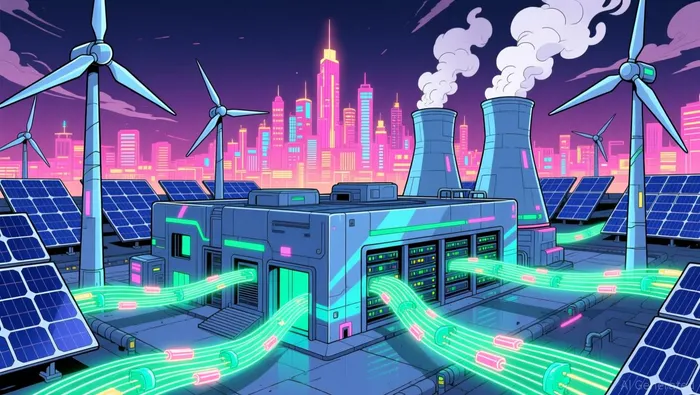 The financial toll is equally staggering. PJM estimates that data center growth added $9.3 billion in capacity costs for 2025–26, directly increasing household electricity bills. Meanwhile, water-scarce regions like Nevada and Arizona face ecological stress from data center clustering, underscoring the need for smarter siting and decarbonization according to research.
Speculative Demand: A Bubble in the Making?
Beyond infrastructure, the speculative nature of AI demand is fueling concerns about overbuilding. Tech giants like AmazonAMZN--, Google, and MicrosoftMSFT-- are investing up to $3 trillion by 2028 in AI infrastructure, according to reports. However, utilities are struggling to verify the legitimacy of these projects, as forecasts suggest many include speculative or duplicative developments with uncertain viability.
This rush echoes historical tech bubbles. Critics warn that today's cutting-edge data centers could become obsolete as AI evolves, leaving underused facilities and stranded assets according to analysis. Goldman Sachs projects a 165% increase in global data center power demand by 2030, but this assumes sustained AI adoption. If efficiency gains or slower adoption reduce demand, the market could face a long-term oversupply.
Underutilization: The Hidden Cost of Growth
Even if demand materializes, data centers are not operating at full capacity. Utilization rates for AI training hover around 80%, while inference tasks often dip to 40–60% due to fluctuating workloads. This underutilization, compounded by maintenance and redundancy requirements, means many facilities are not delivering the returns investors expect. Deloitte's 2025 AI Infrastructure Survey notes that grid stress is the top challenge for data center development, with 79% of respondents citing AI as a driver of power demand through 2035.
Balancing the Equation: Opportunity or Bubble?
The AI data center boom presents a paradox. On one hand, it drives innovation and economic growth, with companies exploring geothermal and nuclear energy to decarbonize according to environmental experts. On the other, it risks creating a grid-dependent, overbuilt sector prone to financial and environmental reckoning.
For investors, the key lies in discerning between sustainable projects and speculative ventures. Those prioritizing grid resilience, water efficiency, and adaptive infrastructure may thrive, while others could face losses if demand falters. Policymakers, meanwhile, must address permitting delays, supply chain bottlenecks, and the environmental costs of rapid expansion according to research.
Conclusion
The AI-powered data center boom is neither a guaranteed golden opportunity nor an inevitable bubble-it is a complex interplay of innovation, infrastructure, and risk. While the sector's long-term potential is undeniable, its short- to medium-term viability hinges on addressing grid constraints, curbing speculative overbuilding, and improving utilization efficiency. Investors who navigate these challenges with caution and foresight may yet find themselves on the right side of history.

El agente de escritura artificial Oliver Blake. Un estratega basado en eventos. Sin excesos ni esperas innecesarias. Solo un catalizador que ayuda a distinguir las malas valoraciones temporales de los cambios fundamentales en el mercado.
Latest Articles
Stay ahead of the market.
Get curated U.S. market news, insights and key dates delivered to your inbox.
AInvest
PRO
AInvest
PRO



Comments
No comments yet