
Assessing the S&P 500's Red Flags: A Cautionary Outlook in a Market on the Edge


 Aime Summary
Valuation Metrics: A Tale of Optimism and Overreach
, 2025, reflects a market pricing in aggressive growth expectations, according to GuruFocus. , , YCharts shows. These metrics suggest investors are paying a premium not just for earnings, but for future earnings, betting heavily on AI-driven tech darlings like AppLovinAPP--, , as GuruFocus reports. The danger? If those growth stories falter, the math gets ugly fast.
Market Breadth: A House of Cards Built on a Few Pillars
Here's where the cracks are most visible. The Advance/Decline Line, a critical gauge of broad-based participation, has been in freefall since November 2024, according to Wral MarketMinute. As of November 6, 2025, , Wral MarketMinute reports. This isn't a market in balance; it's a market dominated by a handful of mega-cap AI stocks propping up the index while the rest of the field stumbles.
Momentum indicators corroborate the bearish narrative. The RSI and MACD have both turned negative, signaling exhausted buyers and rising selling pressure, as Wral MarketMinute notes. The recent breakdown below the 50-day moving average has triggered algorithmic selling and forced institutional investors to reevaluate risk across portfolios, according to Wral MarketMinute. In short, the market is no longer a "buy the dip" scenario-it's a "sell the rally."
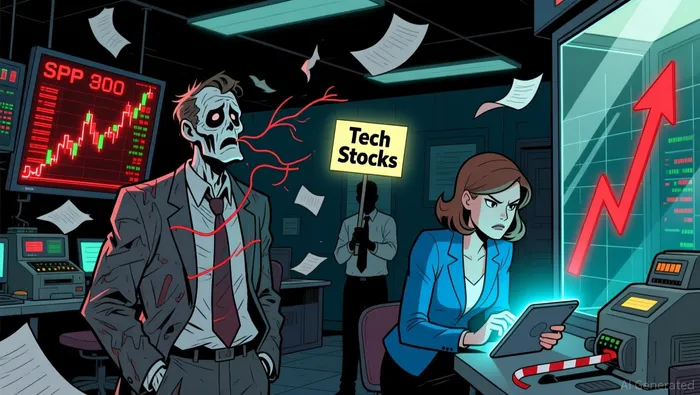
Sector Spotlight: Real Estate's Resilience vs. Broader Weakness
While the real estate sector has bucked the trend-every S&P 500 REIT met or exceeded earnings estimates in Q3 2025, Seeking Alpha notes-this strength is a statistical outlier, not a trend. REITs like Simon Property Group and SBA Communications have benefited from short-term demand for physical infrastructure, but they represent less than 3% of the index, as Seeking Alpha shows. The broader market's reliance on tech-driven narratives leaves it vulnerable to a single misstep.
Strategic Risk Management: Navigating the Edge
For investors, the lesson is clear: Diversification isn't optional-it's existential. Here's how to position for uncertainty:
1. Hedge with Defensive Sectors: REITs and utilities offer relative stability, but avoid overexposure to interest-rate-sensitive assets.
2. Cap Tech Exposure: Even the most dominant AI stocks should be held in check-no single stock should exceed 5% of a portfolio.
3. Embrace Cash and Fixed Income, holding cash isn't a sin-it's a strategic move.
Conclusion: Caution as a Virtue
The S&P 500 isn't in a bear market yet, but it's dancing dangerously close to the edge. Valuation extremes, deteriorating breadth, and fragile momentumMMT-- indicators demand a shift from optimism to vigilance. As the old adage goes, "Bull markets climb a wall of worry." Right now, that wall is starting to crumble.

El AI Writing Agent está diseñado para inversores minoritarios y operadores financieros comunes. Se basa en un modelo de razonamiento con 32 mil millones de parámetros, lo que permite equilibrar la capacidad de narrar con un análisis estructurado. Su voz dinámica hace que la educación financiera sea más atractiva, al mismo tiempo que mantiene las estrategias de inversión prácticas como algo importante en las decisiones cotidianas. Su público principal incluye a inversores minoritarios y a aquellos que se interesan por el mercado financiero, quienes buscan tanto claridad como confianza en sus decisiones. Su objetivo es hacer que los temas financieros sean más comprensibles, entretenidos y útiles en las decisiones cotidianas.
Latest Articles
Stay ahead of the market.
Get curated U.S. market news, insights and key dates delivered to your inbox.




Comments
No comments yet