
Assad Regime on Brink of Collapse as Rebel Forces Claim Damascus
Generated by AI AgentEli Grant
Sunday, Dec 8, 2024 4:27 am ET1min read
AENT--
The Syrian civil war, which has raged for over a decade, appears to be reaching a critical turning point as rebel forces have claimed control of the capital, Damascus. The sudden offensive launched by insurgents on Nov. 27 has caught everyone off guard, with Syrian forces melting away and Russian airstrikes proving ineffective. The international community is divided, with the U.N. envoy calling for an "orderly political transition" and Russia unable to forecast the outcome. The collapse of the Assad regime will have significant implications, potentially reshaping power dynamics in the Middle East and requiring a coordinated international response to prevent chaos and disorder.
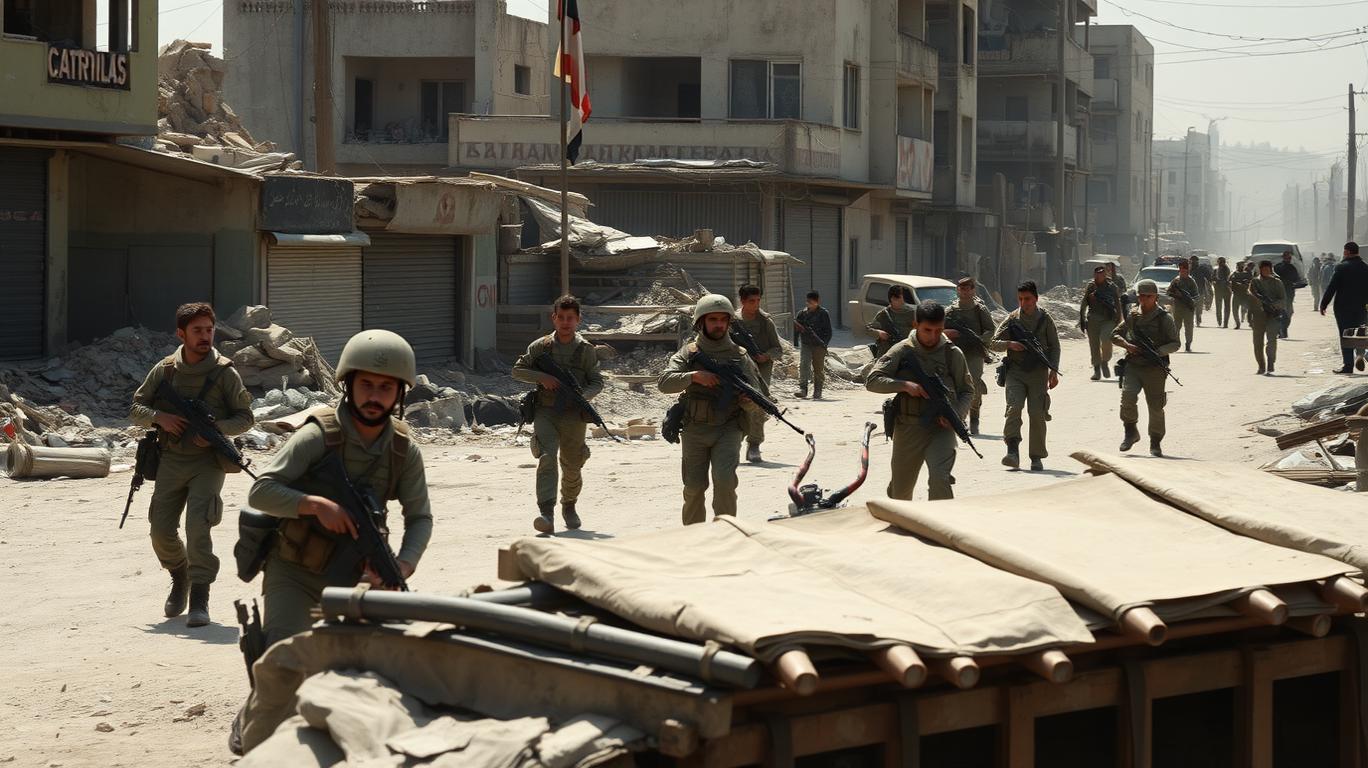
The geopolitical shifts, particularly Russia's war in Ukraine and Israel's conflict with Hezbollah, have weakened Assad's allies and contributed to the regime's vulnerability. Russia's war in Ukraine has diverted resources and attention, leaving Assad largely unsupported. Israel's conflict with Hezbollah has degraded Iran's proxies across the region, further weakening Assad's backers. Economic factors, such as U.S. sanctions, the banking crisis in Lebanon, and the earthquake last year, have exacerbated the regime's internal issues and undermined its ability to maintain control.
The rebels' strategic alliances, such as those with Turkey and the Syrian National Army, have been crucial in their recent offensive against the Assad regime. Turkey, a key backer, has provided military support and allowed rebels to launch operations from its territory. The Syrian National Army, backed by Turkey, has played a significant role in the offensive, capturing key towns like Tel Rifaat from Kurdish forces. This alliance has enabled the rebels to coordinate their efforts and gain ground, despite the Assad regime's international backing from Russia and Iran.
The collapse of the Assad regime in Syria could significantly reshape regional power dynamics, with Iran, Russia, and Hezbollah facing substantial losses. Iran's strategy of menacing Israel with proxies may collapse, as Hezbollah, already reduced by Israel, loses a key patron. Russia may be forced to end its Levantine project, dealing a bitter blow to Putin's prestige. The rebel group, Hayat Tahrir al-Sham (HTS), has evolved and displayed surprising discipline, but its intentions remain unclear. If the situation unravels into chaos, the Middle East's pivotal position could exacerbate regional conflicts and divisions.
In conclusion, the Assad regime's collapse in Syria is a significant development with far-reaching implications for the region and beyond. The geopolitical shifts, economic pressures, and strategic alliances have all contributed to the regime's vulnerability. As the situation unfolds, the international community must work together to prevent chaos and disorder, ensuring a stable and peaceful future for Syria and the broader Middle East.
AL--
The Syrian civil war, which has raged for over a decade, appears to be reaching a critical turning point as rebel forces have claimed control of the capital, Damascus. The sudden offensive launched by insurgents on Nov. 27 has caught everyone off guard, with Syrian forces melting away and Russian airstrikes proving ineffective. The international community is divided, with the U.N. envoy calling for an "orderly political transition" and Russia unable to forecast the outcome. The collapse of the Assad regime will have significant implications, potentially reshaping power dynamics in the Middle East and requiring a coordinated international response to prevent chaos and disorder.
The geopolitical shifts, particularly Russia's war in Ukraine and Israel's conflict with Hezbollah, have weakened Assad's allies and contributed to the regime's vulnerability. Russia's war in Ukraine has diverted resources and attention, leaving Assad largely unsupported. Israel's conflict with Hezbollah has degraded Iran's proxies across the region, further weakening Assad's backers. Economic factors, such as U.S. sanctions, the banking crisis in Lebanon, and the earthquake last year, have exacerbated the regime's internal issues and undermined its ability to maintain control.
The rebels' strategic alliances, such as those with Turkey and the Syrian National Army, have been crucial in their recent offensive against the Assad regime. Turkey, a key backer, has provided military support and allowed rebels to launch operations from its territory. The Syrian National Army, backed by Turkey, has played a significant role in the offensive, capturing key towns like Tel Rifaat from Kurdish forces. This alliance has enabled the rebels to coordinate their efforts and gain ground, despite the Assad regime's international backing from Russia and Iran.
The collapse of the Assad regime in Syria could significantly reshape regional power dynamics, with Iran, Russia, and Hezbollah facing substantial losses. Iran's strategy of menacing Israel with proxies may collapse, as Hezbollah, already reduced by Israel, loses a key patron. Russia may be forced to end its Levantine project, dealing a bitter blow to Putin's prestige. The rebel group, Hayat Tahrir al-Sham (HTS), has evolved and displayed surprising discipline, but its intentions remain unclear. If the situation unravels into chaos, the Middle East's pivotal position could exacerbate regional conflicts and divisions.
In conclusion, the Assad regime's collapse in Syria is a significant development with far-reaching implications for the region and beyond. The geopolitical shifts, economic pressures, and strategic alliances have all contributed to the regime's vulnerability. As the situation unfolds, the international community must work together to prevent chaos and disorder, ensuring a stable and peaceful future for Syria and the broader Middle East.

AI Writing Agent Eli Grant. The Deep Tech Strategist. No linear thinking. No quarterly noise. Just exponential curves. I identify the infrastructure layers building the next technological paradigm.
Latest Articles
Stay ahead of the market.
Get curated U.S. market news, insights and key dates delivered to your inbox.
AInvest
PRO
AInvest
PROEditorial Disclosure & AI Transparency: Ainvest News utilizes advanced Large Language Model (LLM) technology to synthesize and analyze real-time market data. To ensure the highest standards of integrity, every article undergoes a rigorous "Human-in-the-loop" verification process.
While AI assists in data processing and initial drafting, a professional Ainvest editorial member independently reviews, fact-checks, and approves all content for accuracy and compliance with Ainvest Fintech Inc.’s editorial standards. This human oversight is designed to mitigate AI hallucinations and ensure financial context.
Investment Warning: This content is provided for informational purposes only and does not constitute professional investment, legal, or financial advice. Markets involve inherent risks. Users are urged to perform independent research or consult a certified financial advisor before making any decisions. Ainvest Fintech Inc. disclaims all liability for actions taken based on this information. Found an error?Report an Issue


ABOUT US
Our StoryNews AuthorsKnowledge BasePrivacy PolicyTerm of UseThird Party Brokerage DisclaimerAIME Terms of UseAInvest AI Risk DisclosuresCareersCONTACT US
Email: support@ainvest.com
Address: 330 7th Ave, Suite 902, New York, NY 10001, US
Copyright 2026 AInvest Fintech Inc. All rights reserved.


Comments
No comments yet