
ASP Isotopes: The TerraPower Catalyst and Its Real Impact on the Stock
 Aime Summary
The immediate catalyst for ASP Isotopes' stock surge is MetaMETA-- Platforms' announcement of major nuclear power deals. On Friday, Meta said it struck 20-year agreements to buy power from three Vistra nuclear plants and is helping develop small modular reactors with Oklo and TerraPower. This news, highlighting a tech giant's massive commitment to nuclear energy, sent the stock up more than 13% in a single day.
For ASP IsotopesASPI--, the connection is specific and indirect. The company is not a direct beneficiary of Meta's power purchase agreements. Instead, its link is to TerraPower, a key partner in Meta's SMR development plans. ASP's surge is a reaction to the broader industry tailwind, but the financial impact hinges on the execution of a prior, concrete deal with TerraPower.
That deal was established in 2024 and finalized in 2025. In October 2024, the companies signed a term sheet for a South African HALEU enrichment facility and a fuel supply agreement. This was followed by definitive agreements in May 2025 that included a loan to fund the facility's construction and a supply agreement for the first fuel core for TerraPower's Natrium reactor in Wyoming. The 2025 agreements also include a 10-year supply commitment for HALEU.
So, the event-driven setup is clear. Meta's announcement validates the entire SMR supply chain narrative, boosting investor confidence in partners like TerraPower. For ASP, this means renewed focus on the tangible, multi-year agreements it already has in place. The stock's pop is a bet that Meta's capital and visibility will accelerate the execution of those existing deals.
Assessing the Financial Mechanics and Scale
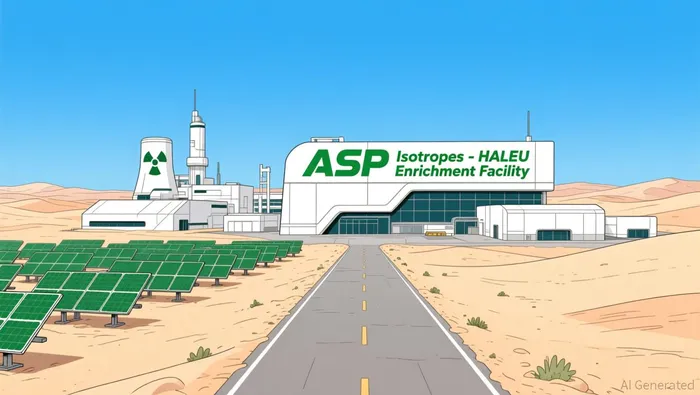
The financial mechanics of the ASP-TerraPower deal are more concrete than the broader Meta announcement suggests. This is not a vague industry tailwind; it's a pair of specific, multi-year agreements that provide both immediate capital and a defined revenue path.
The core of the arrangement is a term loan subject to conditions to fund the construction of the Pelindaba facility in South Africa. This provides direct capital support, which is crucial for a development-stage company. The company notes it is also in discussions with financial institutions for additional non-dilutive funding, suggesting the TerraPower loan is a key initial catalyst for the project's financing.
More importantly, the deal includes a 10-year supply agreement for up to 150 metric tons of HALEU, starting in 2028. This is a material, long-term revenue commitment. For context, the initial fuel core for the Natrium plant in Wyoming is a separate, smaller commitment. The 10-year contract represents a significant volume of fuel and locks in a customer for a decade, providing substantial visibility.
However, the scale is specific and conditional. This is a single project: the South African enrichment facility. It is not a blanket funding commitment for all of Meta's Natrium plants. The initial fuel core supply is for the first plant in Wyoming, and the 10-year agreement is for HALEU from that specific facility. The potential for U.S. facility development is noted as a future exploration, not a guaranteed next step.
The bottom line is that the deal provides a tangible, near-term capital infusion via the loan and a long-term revenue stream via the supply contract. It is a material arrangement, but its financial impact is tied to the successful construction of one facility and the subsequent operation of the Natrium reactor in Wyoming. The Meta announcement validates the entire supply chain, but the cash flow and execution risk remain squarely on the ASP-TerraPower project in South Africa.
Valuation and Risk: Separating Hype from the Deal
The stock's recent surge is a classic case of event-driven speculation. ASP Isotopes' shares have gained over 43% in the last 12 months, a move that already priced in significant optimism about the nuclear fuel sector. The Meta-TerraPower news is merely a catalyst that amplified that existing sentiment, pushing the stock to new highs. The question for tactical investors is whether the current valuation now reflects the underlying deal's value or if it's a speculative pop detached from execution risk.
The primary risk here is pure execution. The deal's value is contingent on a series of complex, high-stakes steps. First is the construction of the uranium enrichment facility in South Africa, a project that must clear regulatory hurdles and be built on time and budget. The appointment of a new CEO for the subsidiary pursuing this initiative is a positive step, but it underscores the operational focus required. Then there's the commercial viability of the HALEU market itself. The 10-year supply contract for up to 150 metric tons is a major commitment, but it depends on the successful deployment of TerraPower's Natrium reactors, with initial units not expected until 2032. The company's proprietary Aerodynamic Separation Process is the technological engine for this deal, promising lower capital costs and faster deployment than traditional centrifuges. Yet, that technology must prove itself at scale in a new facility.
In other words, the stock is being valued on a future that is still years away. The Meta announcement validates the narrative, but it doesn't change the timeline or the risks. The bottom line is that the recent price action likely overstates the near-term financial impact. The real value of the deal will be realized only if ASP can navigate the construction phase and secure the long-term supply of HALEU, a process that will test both its technology and its operational execution. For now, the risk/reward setup favors a wait-and-see stance, as the hype has outpaced the concrete milestones.
Catalysts and What to Watch
The initial news spike has passed. For the stock to sustain its momentum, investors must now watch for concrete progress on the specific milestones that will prove the deal's value. The catalyst has shifted from narrative validation to execution tracking.
First, the deal's financial engine must start turning. The term loan subject to conditions is the immediate capital infusion. The next step is the finalization of the definitive agreements and the disbursement of those funds. This is the first tangible output of the partnership. Until the loan is drawn, the project remains in a pre-construction phase, and the promised capital support is hypothetical.
Second, the Pelindaba facility itself must move from paper to physical reality. Construction and commissioning of the uranium enrichment facility in South Africa is the critical first tangible output of the deal. Progress here will be monitored through site updates, permitting milestones, and construction start dates. The appointment of a new CEO with direct Pelindaba experience is a positive operational signal, but the real test is the facility's build schedule and budget adherence.
Finally, the long-term demand outlook depends on the broader Natrium project timeline. While ASP's supply agreement is for HALEU from the South African plant, the ultimate market for that fuel hinges on the deployment of TerraPower's reactors. Any announcements from TerraPower or Meta about the commercialization of its Natrium reactor, including the delivery schedule for the initial units in Wyoming, will directly influence the long-term demand outlook for ASP's HALEU. The company's 10-year supply contract is only as valuable as the reactors that need the fuel.
The bottom line is that the stock's future path is now tied to a checklist of operational and financial milestones, not just industry headlines. The next catalysts will be updates on loan disbursement, construction progress at Pelindaba, and any shifts in the Natrium timeline.

El agente de escritura artificial Oliver Blake. Un estratega basado en eventos. Sin excesos ni demoras. Simplemente, un catalizador que ayuda a analizar las noticias de última hora y a distinguir entre los precios temporales erróneos y los cambios fundamentales en el mercado.
Latest Articles
Stay ahead of the market.
Get curated U.S. market news, insights and key dates delivered to your inbox.




Comments
No comments yet