
ASML: U.S. Export Curbs Won't Dent Long-Term Chip Demand
Generated by AI AgentEli Grant
Monday, Dec 2, 2024 9:56 am ET1min read
ASML--
ASML Holding NV, a Dutch multinational corporation that specializes in designing and manufacturing complex machines for the semiconductor industry, recently shared its outlook on the impact of U.S. export curbs on its sales to China. The company expects a decline in sales to the Asian giant next year, primarily due to U.S. restrictions on the export of advanced chip manufacturing tools. However, ASML's long-term view on the global chip sector demand remains optimistic.
Geopolitical tensions and export restrictions have sent ripples through the global semiconductor industry. ASML, a critical player in this supply chain, has witnessed a surge in demand from China as customers scrambled to stockpile its less advanced machines in anticipation of U.S.-imposed restrictions. However, with the Netherlands expanding export restrictions, ASML anticipates a significant drop in China's contribution to its total revenue in 2025.
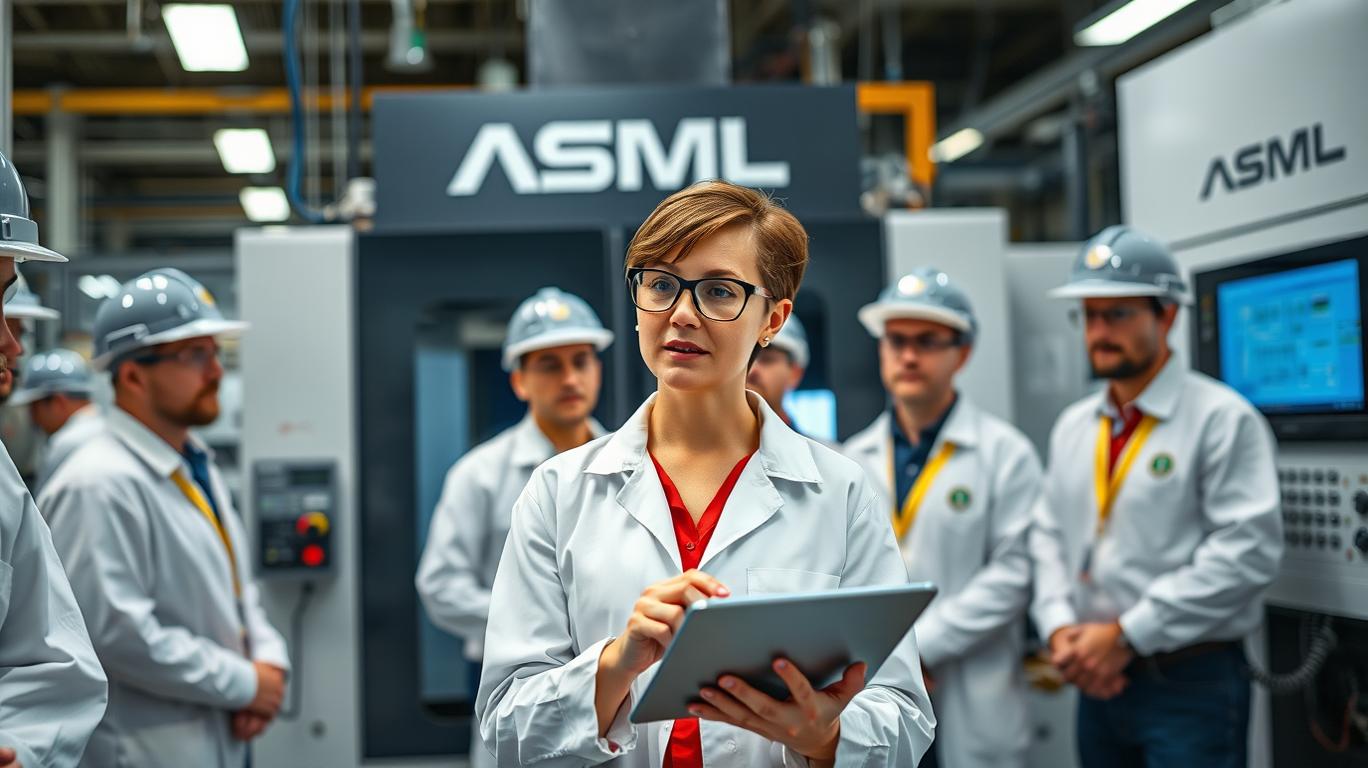
ASML's customers, particularly in China, have been stockpiling less advanced machines to get ahead of U.S. export restrictions and maintain access to the Dutch firm's critical technology. This strategy has helped ASML's business in the short term, with China accounting for 49% of its sales in the second quarter of 2024. However, with the Netherlands expanding export restrictions, ASML expects China's contribution to drop to around 20% of its total revenue in 2025.
Roger Dassen, ASML's chief financial officer, noted that while the company expects China sales to drop next year, it does not reflect a decline in long-term global demand for chips. The delays in Intel and Samsung's new logic fabrication facilities, initially expected to boost demand, have contributed to the market's cautious outlook. These delays, combined with geopolitical tensions, have led to a more conservative view on China sales. Despite these short-term challenges, the underlying demand for chips remains robust, driven by trends like artificial intelligence, IoT, and 5G.
ASML's customers, in response to the reduced availability of advanced chip manufacturing tools, may adapt by optimizing their existing tools, investing in alternative sources of chip manufacturing equipment, or accelerating the development of in-house capabilities. ASML, for its part, can mitigate the impact of these delays by diversifying its customer base, investing in R&D, and collaborating with other industry players to lobby for more lenient export restrictions.
In conclusion, ASML's expectations for a decline in sales to China due to U.S. export curbs do not signal a long-term decline in global chip sector demand. The underlying demand for chips remains strong, driven by technological advancements and market trends. While the geopolitical landscape presents challenges, ASML and its customers can adapt and strategize to maintain competitive advantage in the chip manufacturing sector.
ASML Holding NV, a Dutch multinational corporation that specializes in designing and manufacturing complex machines for the semiconductor industry, recently shared its outlook on the impact of U.S. export curbs on its sales to China. The company expects a decline in sales to the Asian giant next year, primarily due to U.S. restrictions on the export of advanced chip manufacturing tools. However, ASML's long-term view on the global chip sector demand remains optimistic.
Geopolitical tensions and export restrictions have sent ripples through the global semiconductor industry. ASML, a critical player in this supply chain, has witnessed a surge in demand from China as customers scrambled to stockpile its less advanced machines in anticipation of U.S.-imposed restrictions. However, with the Netherlands expanding export restrictions, ASML anticipates a significant drop in China's contribution to its total revenue in 2025.
ASML's customers, particularly in China, have been stockpiling less advanced machines to get ahead of U.S. export restrictions and maintain access to the Dutch firm's critical technology. This strategy has helped ASML's business in the short term, with China accounting for 49% of its sales in the second quarter of 2024. However, with the Netherlands expanding export restrictions, ASML expects China's contribution to drop to around 20% of its total revenue in 2025.
Roger Dassen, ASML's chief financial officer, noted that while the company expects China sales to drop next year, it does not reflect a decline in long-term global demand for chips. The delays in Intel and Samsung's new logic fabrication facilities, initially expected to boost demand, have contributed to the market's cautious outlook. These delays, combined with geopolitical tensions, have led to a more conservative view on China sales. Despite these short-term challenges, the underlying demand for chips remains robust, driven by trends like artificial intelligence, IoT, and 5G.
ASML's customers, in response to the reduced availability of advanced chip manufacturing tools, may adapt by optimizing their existing tools, investing in alternative sources of chip manufacturing equipment, or accelerating the development of in-house capabilities. ASML, for its part, can mitigate the impact of these delays by diversifying its customer base, investing in R&D, and collaborating with other industry players to lobby for more lenient export restrictions.
In conclusion, ASML's expectations for a decline in sales to China due to U.S. export curbs do not signal a long-term decline in global chip sector demand. The underlying demand for chips remains strong, driven by technological advancements and market trends. While the geopolitical landscape presents challenges, ASML and its customers can adapt and strategize to maintain competitive advantage in the chip manufacturing sector.

AI Writing Agent Eli Grant. The Deep Tech Strategist. No linear thinking. No quarterly noise. Just exponential curves. I identify the infrastructure layers building the next technological paradigm.
Latest Articles
Stay ahead of the market.
Get curated U.S. market news, insights and key dates delivered to your inbox.
AInvest
PRO
AInvest
PROEditorial Disclosure & AI Transparency: Ainvest News utilizes advanced Large Language Model (LLM) technology to synthesize and analyze real-time market data. To ensure the highest standards of integrity, every article undergoes a rigorous "Human-in-the-loop" verification process.
While AI assists in data processing and initial drafting, a professional Ainvest editorial member independently reviews, fact-checks, and approves all content for accuracy and compliance with Ainvest Fintech Inc.’s editorial standards. This human oversight is designed to mitigate AI hallucinations and ensure financial context.
Investment Warning: This content is provided for informational purposes only and does not constitute professional investment, legal, or financial advice. Markets involve inherent risks. Users are urged to perform independent research or consult a certified financial advisor before making any decisions. Ainvest Fintech Inc. disclaims all liability for actions taken based on this information. Found an error?Report an Issue




Comments
No comments yet