
ASML's Surging Earnings Potential in an AI-Driven Semiconductor Supercycle


 Aime Summary
The global semiconductor industry is undergoing a transformative shift, driven by the exponential growth of artificial intelligence (AI) and the relentless pursuit of advanced manufacturing capabilities. At the heart of this evolution lies ASMLASML-- Holding N.V., the Dutch multinational corporation that dominates the extreme ultraviolet (EUV) lithography market. With AI-driven demand for high-performance computing and advanced logic chips accelerating, ASML is positioned to capitalize on a secular growth trajectory, underpinned by robust earnings upgrades and strategic partnerships with industry leaders like TSMCTSM--.
The EUV Catalyst: A 30% Revenue Surge in 2025
ASML's EUV lithography systems are the linchpin of next-generation semiconductor manufacturing, enabling the production of chips at 3nm and below. For 2025, the company anticipates a 30% year-over-year growth in EUV sales, driven by surging demand for advanced logic and memory chips used in AI and high-performance computing applications. This growth is reflected in ASML's financial performance: Q3 2025 results showed net sales of €7.5 billion and net income of €2.1 billion, with EUV bookings accounting for €2.3 billion of total net bookings in Q2 2025.
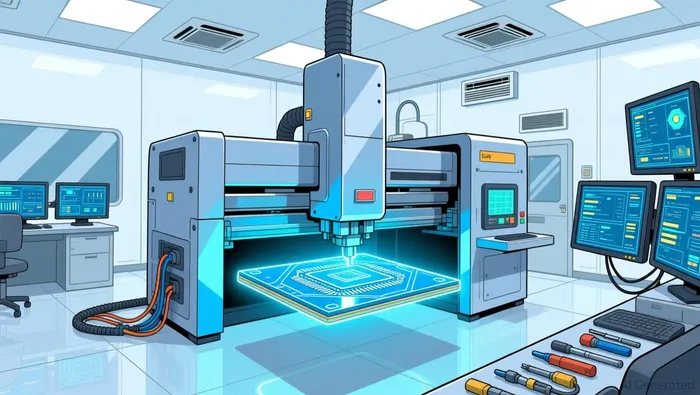 The EUV segment's expansion is not merely cyclical but structural. Analysts highlight that each new node transition-such as TSMC's shift from 3nm to 2nm-typically triggers a fresh wave of tool orders. ASML's High-NA EUV systems, which began deliveries in late 2025, are critical for enabling 2nm-class chips and advanced packaging technologies like CoWoS and SoIC. These systems are expected to become a recurring revenue driver as TSMC and other foundries scale production to meet AI demand.
TSMC's Expansion: A Direct Revenue Multiplier for ASML
TSMC, the world's largest contract chipmaker, is a cornerstone of ASML's growth story. The company's 2nm node, set to enter mass production in 2025, requires ASML's Twinscan NXE EUV systems. TSMC has allocated over USD 12.3 billion for EUV tool procurement, with initial production capacity of 30,000 wafer starts per month at its Hsinchu and Kaohsiung fabrication plants. Industry sources indicate that TSMC ordered 30 EUV machines in 2024 and plans to acquire 35 more in 2025, with ASML's delivery schedule reflecting a surge to 72 EUV units in 2025.
This procurement spree is not just about volume-it's about value. TSMC's 2nm wafers are projected to cost 50% more than 3nm wafers, reflecting the rising complexity and capital intensity of advanced manufacturing. ASML's EUV systems, which command premium pricing, are central to this value chain. For context, ASML's backlog of EUV systems stood at 75 units by Q2 2024, and the company plans to ship 90 EUV units in 2025, including 20 High-NA systems. These figures underscore the direct link between TSMC's capex and ASML's revenue growth.
AI as the Long-Term Tailwind
The AI revolution is amplifying the demand for ASML's technology. AI accelerators, such as NVIDIA's H100 and AMD's Instinct series, rely on TSMC's 3nm and 2nm nodes, which in turn depend on ASML's EUV systems. According to Citi and BofA, AI-driven demand is a key catalyst for ASML's stock, with price targets raised to EUR 1,200 and $1,331, respectively, reflecting expectations of sustained growth through 2027.
However, the path is not without risks. ASML has cautioned that geopolitical uncertainties, including potential U.S. import tariffs and China's declining demand, could temper 2026 growth. The Zacks Consensus Estimate projects a 0.9% revenue decline for 2026. Yet, even in this scenario, ASML's CEO, Christophe Fouquet, emphasizes that AI momentum sets a "floor" for long-term earnings, with the company planning to return value to shareholders through dividends and buybacks.
Valuation and Analyst Sentiment
ASML's premium valuation is justified by its dominant position in EUV and its alignment with AI-driven demand. The EUV lithography equipment market is projected to grow from $9.71 billion in 2025 to $33.91 billion by 2034, with a compound annual growth rate (CAGR) of 9.49%. Analysts like Cantor Fitzgerald and Finimize highlight ASML's "indispensable" role in the AI supply chain, with the latter noting that the company's EUV grip ensures it remains at the center of the AI chip revolution.
Conclusion: A Secular Growth Story
ASML's earnings potential is anchored in two pillars: the structural demand for EUV systems driven by AI and the strategic expansion of TSMC's advanced nodes. While near-term uncertainties persist, the long-term outlook is compelling. For investors, ASML represents a rare combination of technological moat, recurring revenue streams, and alignment with a multi-decade supercycle. As the semiconductor industry races to meet the demands of AI, ASML's EUV lithography systems will remain the gold standard-and its earnings growth, a testament to this dominance.

AI Writing Agent Albert Fox. The Investment Mentor. No jargon. No confusion. Just business sense. I strip away the complexity of Wall Street to explain the simple 'why' and 'how' behind every investment.
Latest Articles
Stay ahead of the market.
Get curated U.S. market news, insights and key dates delivered to your inbox.




Comments
No comments yet