
ASML Claims Top Spot in Daily Turnover as AI Optimism Meets Geopolitical Reality
 Aime Summary
Market Snapshot
ASML Holding NV (ASML) concluded trading on August 3, 2026, with a modest gain of 0.83%, reflecting a steady, albeit cautious, market sentiment following a period of significant volatility. The stock attracted substantial investor attention, recording a trading volume of $2.35 billion, which ranked as the highest turnover among all equities in the market for the day. This elevated activity underscores the continued intensity of interest in the semiconductor equipment manufacturer, as market participants digest recent strategic updates and weigh them against the backdrop of broader industry cycles. The day’s trading volume highlights ASML’s pivotal role in the global technology sector, with its performance often serving as a barometer for the health of the wider chip supply chain.
Key Drivers
The primary catalyst for today’s positive movement was ASML’s reaffirmation of its long-term growth strategy during its recent Investor Day event. Management reiterated its revenue target of €44 billion to €60 billion by 2030, maintaining a consistent outlook that aligns with previous forecasts. The company projected a compound annual growth rate of approximately 9% for global semiconductor sales from 2025 to 2030, with total market value expected to exceed $1 trillion. This confident stance on long-term profitability, coupled with a commitment to increase dividends and share buybacks, provided a stabilizing narrative for investors who had been concerned about near-term fluctuations. Chief Financial Officer Roger Dassen emphasized the company’s capital allocation strategy, highlighting the intent to return significant cash to shareholders through a combination of increased dividends and repurchases, thereby reinforcing confidence in the firm’s financial resilience.
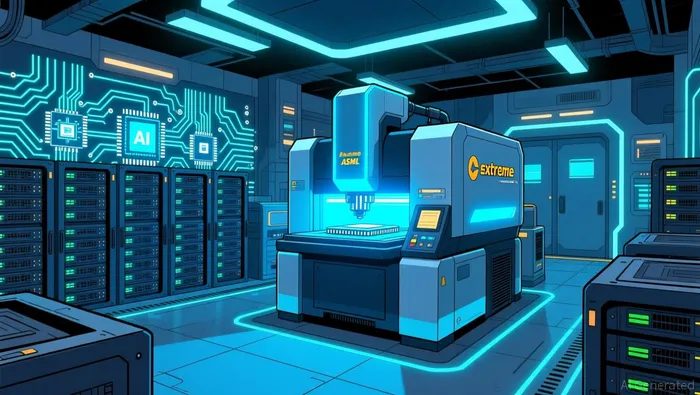
A significant portion of the bullish sentiment stems from the sustained demand driven by artificial intelligence applications. ASML’s advanced lithography machines remain indispensable for manufacturing the high-performance chips required for AI accelerators, with major technology firms such as Apple and NVIDIA relying on these tools. The company’s unique position as the sole manufacturer of extreme ultraviolet (EUV) lithography systems grants it a critical moat in the semiconductor supply chain. This monopoly status, combined with the vigorous development of AI infrastructure, ensures that demand for ASML’s most advanced equipment remains robust. The market is increasingly viewing ASMLASML-- not just as a cyclical play, but as a structural beneficiary of the digital transformation underway across global industries.
However, this optimism is tempered by recent operational challenges and geopolitical headwinds. In October of the previous year, ASML reported third-quarter results that fell short of market expectations, with orders reaching only half of analyst forecasts. This disappointment triggered a sharp 17% single-day plunge in the stock price, contributing to a year-to-date decline of more than 5%. The company’s CEO, Christophe Fouquet, had previously noted that the slow recovery of the chip market would persist until 2025, suggesting that the current year represents a transitional period. While management anticipates that 2026 will mark the beginning of "overall growth" for the industry, the recent miss serves as a reminder of the inherent volatility in semiconductor equipment cycles and the importance of timing in capital expenditures by chipmakers.
Geopolitical tensions, particularly regarding trade restrictions between the United States and China, continue to pose a notable risk to ASML’s revenue mix. China previously accounted for nearly half of ASML’s total sales, with €2.79 billion in revenue reported in the third quarter. However, the company expects this figure to drop to approximately 20% of total revenue next year, reflecting the impact of export controls. These restrictions, which limit the sale of advanced tools and potentially affect the servicing of existing deep ultraviolet (DUV) machines, have forced ASML to recalibrate its growth models. The uncertainty surrounding these regulations adds a layer of complexity to the long-term outlook, as the company navigates the delicate balance between maintaining its global market share and complying with evolving international trade policies.
The broader ecosystem supporting ASML also reflects both the strength and the constraints of the current environment. Key suppliers, such as Carl Zeiss, have reported record revenues driven by ASML’s demand for critical optical components, illustrating the deep interdependence within the semiconductor equipment sector. Zeiss noted a 23% jump in its revenue, attributing it to AI applications and growing demand, yet cautioned about the cyclical nature of the industry. This mutual reliance highlights that while the immediate demand for AI-related hardware is strong, the sector remains susceptible to corrections. Investors are therefore weighing the powerful long-term tailwinds of AI adoption against the near-term headwinds of regulatory restrictions and cyclical inventory adjustments, resulting in the measured, positive performance observed on August 3, 2026.

Stay ahead of the market.
Get curated U.S. market news, insights and key dates delivered to your inbox.


AInvest
PRO
AInvest
PRO




Comments
No comments yet