
Asian Stocks Cautious US Dollar Drops 10% Amid Trump-Powell Tensions
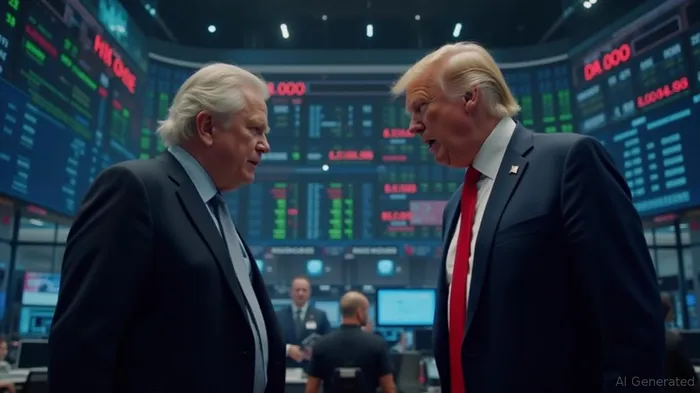
The world market is exercising a degree of caution in the wake of investors who are preparing to face possible volatility. This follows US President Donald Trump's criticism of Federal Reserve Chairman Jerome Powell and the prevailing economic jeopardies in the unfolding Israel-Iran conflict. This has brought out a strange combination of reluctance in the stock market in Asia and the steep drop in the value of the American dollar.
The Asian stock market, gauged through the MSCIMSCI-- Asia-Pacific index, has been keeping a mildly bullish course. This implies the stalling of any higher gains or losses. Investors here continue monitoring new developments in the Middle East to the extent that there has been a ceasefire between Iran and Israel, even though it is temporary. Economic uncertainty brought in play by the prevailing geopolitical crisis and an array of other global market issues, such as monetary policy and future tariffs by the United States. This has resulted in indecisiveness in incurring new risks in the market.
One of the biggest trends seen in the world markets could be the disastrous fall of the U.S. dollar. The dollar has declined to multi-year lows of 10% against various major currencies such as the euro, Swiss franc, and yen. This can be mainly blamed on the political and economic uncertainty of Trump’s public remarks against the Federal Reserve Chairman Jerome Powell. The comments by Trump concerning Powell and the future prospect of a further tariff agreement due on 9 July have cast doubts on the way in which the United States’ monetary policy will evolve. Such worries have forced down the dollar as the markets await the potential alteration in interest rate policies of the Federal Reserve. The euro this week turned to its highest mark since late 2021, at a range of $1.1719 to $1.1819.
Bond markets have not been spared either, as yields on the U.S. 2-year Treasuries are declining to about 3.76%. This is in response to speculations that the Federal Reserve will start to reduce its interest rates in July, and the 25% probability of a rate cut is priced in. A fall in rates is usually a sign that investors are worried about economic growth. Traders are pricing in the possibility of easing of monetary policy to offset any adverse effects of the slowing economy.
Oil prices have been rather steady, though maintaining an average of between $67-$68 per barrel. The stability of these prices can be described by the fact that tension in the Middle East has been relieved. In that, the probability of the global oil supply chains being hampered has been minimized. Regardless of the current geopolitical instability, the oil market is not as weak as it could be due to the ideology that any meaningful production and trade disturbances could be offset in the short term.
Asian stocks exhibited caution and the U.S. dollar weakened following President Trump's criticism of Federal Reserve Chair Jerome Powell. The geopolitical tensions and economic uncertainties contributed to the hesitant market sentiment. Trump's remarks, where he described Powell as "terrible" for not lowering interest rates sharply, added to the market's unease. Powell, on the other hand, maintained a cautious stance, emphasizing the need for a careful approach to policy adjustments.
The U.S. dollar's decline was notable, reaching multi-year lows as investors reacted to Trump's comments and the potential for Fed rate cuts. The dollar's weakness was further exacerbated by the ongoing trade deals and geopolitical tensions, which kept investors on edge. The selling pressure on the dollar intensified after reports suggested that Trump had considered replacing Powell, adding to the market's volatility.
The cautious sentiment in Asian markets was evident as investors assessed the implications of Trump's criticism and the potential impact on monetary policy. The geopolitical tensions, particularly the standoff between Israel and Iran, also played a role in keeping investors cautious. The U.S.-brokered ceasefire between the two countries provided some relief, but the overall market sentiment remained hesitant.
The U.S. dollar's decline was particularly pronounced against the Japanese yen, with the dollar sinking to its lowest level since March 2022. The Trump-Powell standoff and the bets on Fed rate cuts contributed to the dollar's weakness, as investors sought safer havens in the face of uncertainty. The Japanese yen, known for its safe-haven status, benefited from the dollar's decline, trading near its strongest levels in recent months.
The market's reaction to Trump's criticism of Powell highlighted the sensitivity of investors to changes in monetary policy. Powell's cautious approach, which contrasts with Trump's calls for lower interest rates, has created a divide that has kept markets on edge. The potential for further rate cuts, as suggested by some analysts, adds to the uncertainty, as investors try to gauge the Fed's next move.
The overall market sentiment remained cautious, with investors closely monitoring developments in the Middle East and the ongoing trade negotiations. The geopolitical tensions and economic uncertainties have created a challenging environment for markets, with investors seeking clarity on the direction of monetary policy and the potential impact on global economies. The U.S. dollar's weakness and the hesitant sentiment in Asian markets reflect the broader uncertainty that has gripped financial markets in recent weeks.

Stay ahead of the market.
Get curated U.S. market news, insights and key dates delivered to your inbox.


AInvest
PRO
AInvest
PRO



Comments
No comments yet