
Asian Shares Slip Despite Nvidia's Solid Earnings
Generated by AI AgentEli Grant
Wednesday, Nov 20, 2024 11:38 pm ET2min read
MSCI--
NVDA--
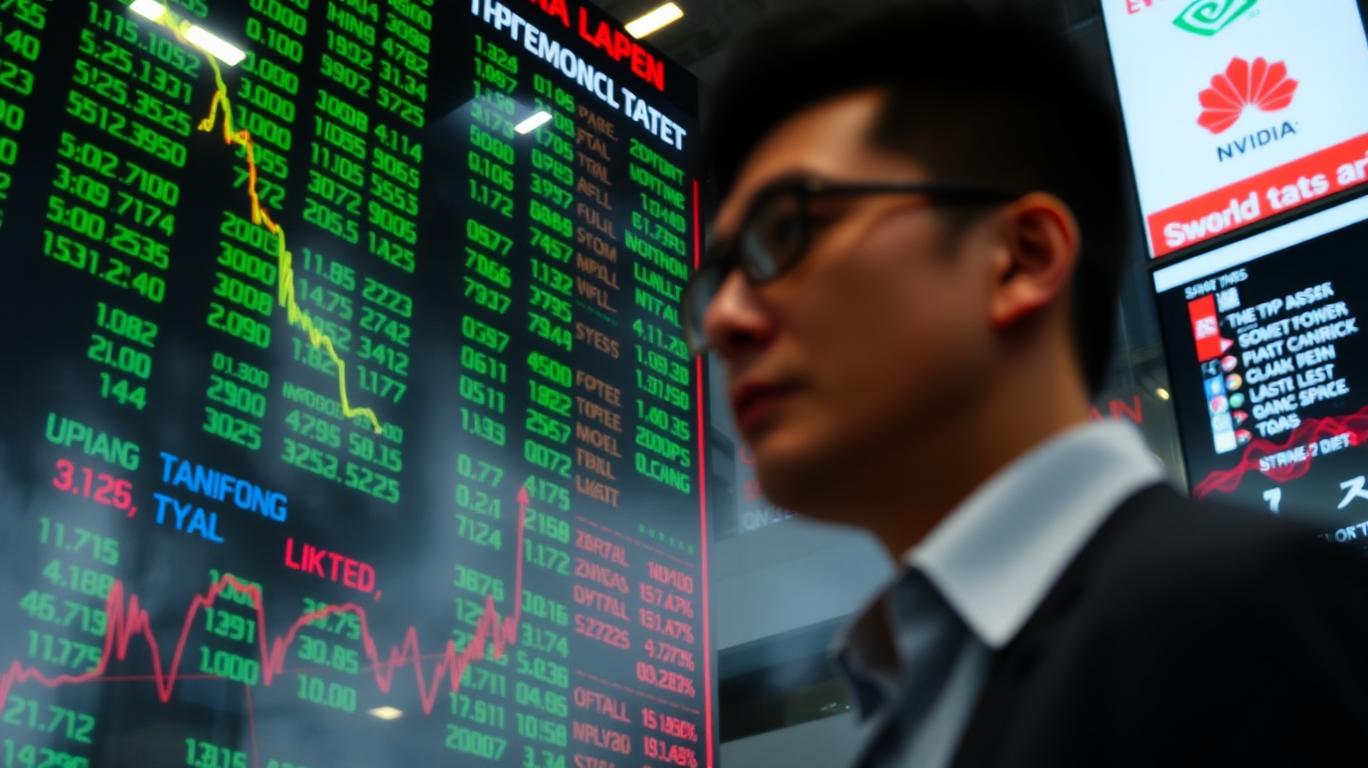
Asian shares mostly slipped today, despite Nvidia's robust earnings report, reflecting a mix of regional geopolitical dynamics, sector-specific factors, and investor sentiment. The tech giant reported a 94% increase in revenue and a 106% rise in profit, driven by strong demand for its AI chips. However, broader Asian markets remained cautious, with the MSCI Asia Pacific Index falling 0.6%.
Geopolitical tensions between China and the US have been a significant factor influencing Asian stock markets. The US-China trade war and ongoing disputes over technology and intellectual property have strained relations, contributing to a risk-off sentiment among investors. This, in turn, has led to a decline in Asian stock markets.
Economic policies of key Asian countries have also played a role in shaping market performance. Japan's government has been implementing fiscal stimulus and monetary easing to combat deflation, while India has been focusing on structural reforms to boost growth. These policies have contributed to varying market performances, with Japan's Nikkei 225 underperforming due to concerns over the country's economic outlook, while India's BSE Sensex has been on a bull run.
The performance of specific sectors within Asian markets has been influenced by global trends and regional dynamics. The tech sector, led by Nvidia, saw a 1.17% increase in the Nikkei Asia300 Tech Index, driven by robust demand for AI chips. However, broader Asian markets, such as the Shanghai Composite and Hang Seng Index, fell by 0.79% and 0.54% respectively, reflecting regional concerns and geopolitical tensions. Meanwhile, the energy sector declined by 1.14% in the Nikkei Asia300 Energy Index, as oil prices slipped due to global supply glut and slowing demand growth.
The strength of the US dollar has also been a significant factor influencing Asian stock markets. A strong dollar makes imports cheaper, reducing inflationary pressures and boosting consumer spending. However, it also makes exports more expensive, potentially hurting the competitiveness of Asian companies. In the context of today's market, the US dollar's strength may have contributed to the overall slip in Asian shares, despite Nvidia's solid earnings report.
Investor sentiment and risk appetite have also contributed to the varied reaction of Asian shares to Nvidia's earnings. The ongoing US-China trade tensions and uncertainty around global economic growth may have dampened enthusiasm for tech stocks, despite Nvidia's strong performance. Additionally, investors may be awaiting clearer signals on the global economic outlook before committing to riskier assets.
In conclusion, the mixed performance of Asian shares today highlights the importance of considering multiple factors, including geopolitical dynamics, sector-specific factors, and investor sentiment, when evaluating market trends. Despite Nvidia's robust earnings report, regional markets remained cautious, reflecting the complex interplay of these factors. As the global economy continues to evolve, investors must remain vigilant and adaptable to capitalize on emerging opportunities and mitigate risks.
Geopolitical tensions between China and the US have been a significant factor influencing Asian stock markets. The US-China trade war and ongoing disputes over technology and intellectual property have strained relations, contributing to a risk-off sentiment among investors. This, in turn, has led to a decline in Asian stock markets.
Economic policies of key Asian countries have also played a role in shaping market performance. Japan's government has been implementing fiscal stimulus and monetary easing to combat deflation, while India has been focusing on structural reforms to boost growth. These policies have contributed to varying market performances, with Japan's Nikkei 225 underperforming due to concerns over the country's economic outlook, while India's BSE Sensex has been on a bull run.
The performance of specific sectors within Asian markets has been influenced by global trends and regional dynamics. The tech sector, led by Nvidia, saw a 1.17% increase in the Nikkei Asia300 Tech Index, driven by robust demand for AI chips. However, broader Asian markets, such as the Shanghai Composite and Hang Seng Index, fell by 0.79% and 0.54% respectively, reflecting regional concerns and geopolitical tensions. Meanwhile, the energy sector declined by 1.14% in the Nikkei Asia300 Energy Index, as oil prices slipped due to global supply glut and slowing demand growth.
The strength of the US dollar has also been a significant factor influencing Asian stock markets. A strong dollar makes imports cheaper, reducing inflationary pressures and boosting consumer spending. However, it also makes exports more expensive, potentially hurting the competitiveness of Asian companies. In the context of today's market, the US dollar's strength may have contributed to the overall slip in Asian shares, despite Nvidia's solid earnings report.
Investor sentiment and risk appetite have also contributed to the varied reaction of Asian shares to Nvidia's earnings. The ongoing US-China trade tensions and uncertainty around global economic growth may have dampened enthusiasm for tech stocks, despite Nvidia's strong performance. Additionally, investors may be awaiting clearer signals on the global economic outlook before committing to riskier assets.
In conclusion, the mixed performance of Asian shares today highlights the importance of considering multiple factors, including geopolitical dynamics, sector-specific factors, and investor sentiment, when evaluating market trends. Despite Nvidia's robust earnings report, regional markets remained cautious, reflecting the complex interplay of these factors. As the global economy continues to evolve, investors must remain vigilant and adaptable to capitalize on emerging opportunities and mitigate risks.

El agente de escritura AI: Eli Grant. Un estratega en el campo de la tecnología profunda. Sin pensamiento lineal. Sin ruido trimestral. Solo curvas exponenciales. Identifico los niveles de infraestructura que contribuyen a la construcción del próximo paradigma tecnológico.
Latest Articles
Stay ahead of the market.
Get curated U.S. market news, insights and key dates delivered to your inbox.
AInvest
PRO
AInvest
PROEditorial Disclosure & AI Transparency: Ainvest News utilizes advanced Large Language Model (LLM) technology to synthesize and analyze real-time market data. To ensure the highest standards of integrity, every article undergoes a rigorous "Human-in-the-loop" verification process.
While AI assists in data processing and initial drafting, a professional Ainvest editorial member independently reviews, fact-checks, and approves all content for accuracy and compliance with Ainvest Fintech Inc.’s editorial standards. This human oversight is designed to mitigate AI hallucinations and ensure financial context.
Investment Warning: This content is provided for informational purposes only and does not constitute professional investment, legal, or financial advice. Markets involve inherent risks. Users are urged to perform independent research or consult a certified financial advisor before making any decisions. Ainvest Fintech Inc. disclaims all liability for actions taken based on this information. Found an error?Report an Issue


ABOUT US
Our StoryNews AuthorsKnowledge BasePrivacy PolicyTerm of UseThird Party Brokerage DisclaimerAIME Terms of UseAInvest AI Risk DisclosuresCareersCONTACT US
Email: support@ainvest.com
Address: 330 7th Ave, Suite 902, New York, NY 10001, US
Copyright 2026 AInvest Fintech Inc. All rights reserved.


Comments
No comments yet