
Asian Shares Sag Amid US-China Trade Tensions
Generated by AI AgentWesley Park
Tuesday, Feb 25, 2025 12:10 am ET2min read
BABA--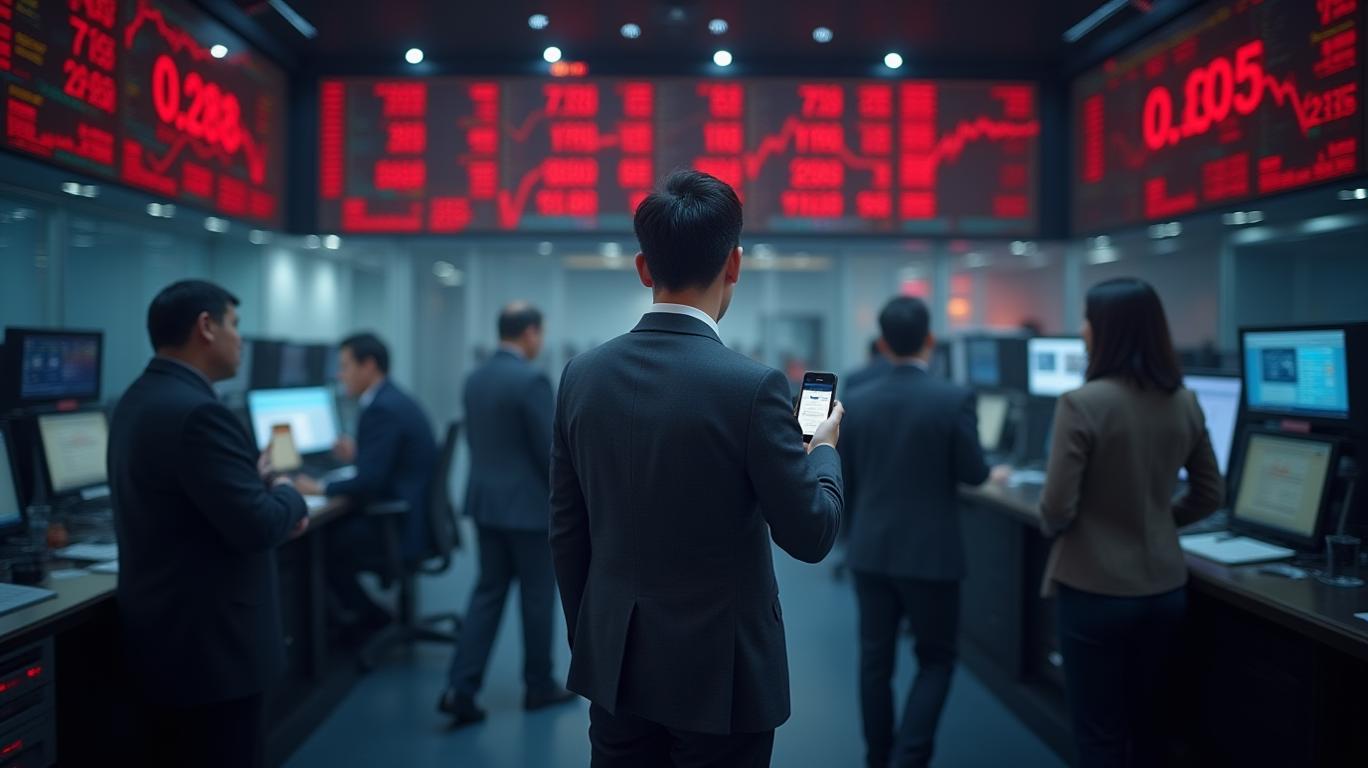
The Asian markets have been feeling the heat of the ongoing US-China trade tensions, with shares sagging across the region. The US-China trade war, which began in 2018, has had a significant impact on Asian economies, particularly those in the ASEAN region. The trade war has contributed to slower worldwide economic growth, which weighs on external demand for ASEAN goods. The US-China Tensions index has risen to historically high levels, indicating increased bilateral frictions (Rogers, Sun, & Webster, 2021). This, in turn, has raised concerns about the potential impact on global growth and trade, with Asian economies particularly vulnerable to changes in Asia-Pacific trade.
The trade war has also led to a redirection of trade and investment, with ASEAN countries benefiting from companies seeking to diversify their supply chains and reduce exposure to trade barriers. In 2018-20, ASEAN's share in the value of US imports rose by 2.6%, coincidentally the same amount by which China's share declined (Coxhead, 2022). However, higher tariffs and anti-dumping tariffs from the US pose risks to ASEAN economies, potentially leading to lower real exports and economic growth (Chin, 2023).
To mitigate these risks, ASEAN countries are diversifying their trade relationships, with the Regional Comprehensive Economic Partnership (RCEP) being a notable example (Urata, 2021). By fostering dialogue and cooperation among its members, the organization has been able to present a unified front in the face of global challenges and promote economic integration, reducing the region's reliance on any single trading partner (Severino, 2019).
Asian companies have responded to the trade war in various ways, with some strategies proving more effective than others in navigating the current economic climate. Many Asian companies have been diversifying their supply chains to reduce exposure to trade barriers. Some companies have been investing in technology and innovation to stay competitive. For example, Alibaba pledged to invest more than 380 billion yuan ($53 billion) on AI infrastructure over the next three years, making it one of China's biggest AI infrastructure spenders (Bloomberg, 2025). This investment can help these companies maintain a competitive edge in the global market.
However, the trade war has also presented challenges for Asian companies. Higher tariffs and anti-dumping tariffs from the US pose risks to ASEAN economies, potentially leading to lower real exports and economic growth (Chin, 2023). To address this, ASEAN countries can engage in multilateral trade negotiations, such as the WTO, to advocate for lower tariffs and fair trade practices. They can also work together to present a unified front in trade disputes and promote regional economic integration.
In conclusion, the US-China trade war has presented both opportunities and challenges for Asian economies, particularly those in the ASEAN region. To mitigate these risks, ASEAN countries can diversify their trade relationships, engage in multilateral trade negotiations, invest in infrastructure development, and promote regional economic integration. By working together and adopting proactive policies, Asian economies can better navigate the challenges posed by the trade war and capitalize on the opportunities it presents.
ROG--
WTO--
The Asian markets have been feeling the heat of the ongoing US-China trade tensions, with shares sagging across the region. The US-China trade war, which began in 2018, has had a significant impact on Asian economies, particularly those in the ASEAN region. The trade war has contributed to slower worldwide economic growth, which weighs on external demand for ASEAN goods. The US-China Tensions index has risen to historically high levels, indicating increased bilateral frictions (Rogers, Sun, & Webster, 2021). This, in turn, has raised concerns about the potential impact on global growth and trade, with Asian economies particularly vulnerable to changes in Asia-Pacific trade.
The trade war has also led to a redirection of trade and investment, with ASEAN countries benefiting from companies seeking to diversify their supply chains and reduce exposure to trade barriers. In 2018-20, ASEAN's share in the value of US imports rose by 2.6%, coincidentally the same amount by which China's share declined (Coxhead, 2022). However, higher tariffs and anti-dumping tariffs from the US pose risks to ASEAN economies, potentially leading to lower real exports and economic growth (Chin, 2023).
To mitigate these risks, ASEAN countries are diversifying their trade relationships, with the Regional Comprehensive Economic Partnership (RCEP) being a notable example (Urata, 2021). By fostering dialogue and cooperation among its members, the organization has been able to present a unified front in the face of global challenges and promote economic integration, reducing the region's reliance on any single trading partner (Severino, 2019).
Asian companies have responded to the trade war in various ways, with some strategies proving more effective than others in navigating the current economic climate. Many Asian companies have been diversifying their supply chains to reduce exposure to trade barriers. Some companies have been investing in technology and innovation to stay competitive. For example, Alibaba pledged to invest more than 380 billion yuan ($53 billion) on AI infrastructure over the next three years, making it one of China's biggest AI infrastructure spenders (Bloomberg, 2025). This investment can help these companies maintain a competitive edge in the global market.
However, the trade war has also presented challenges for Asian companies. Higher tariffs and anti-dumping tariffs from the US pose risks to ASEAN economies, potentially leading to lower real exports and economic growth (Chin, 2023). To address this, ASEAN countries can engage in multilateral trade negotiations, such as the WTO, to advocate for lower tariffs and fair trade practices. They can also work together to present a unified front in trade disputes and promote regional economic integration.
In conclusion, the US-China trade war has presented both opportunities and challenges for Asian economies, particularly those in the ASEAN region. To mitigate these risks, ASEAN countries can diversify their trade relationships, engage in multilateral trade negotiations, invest in infrastructure development, and promote regional economic integration. By working together and adopting proactive policies, Asian economies can better navigate the challenges posed by the trade war and capitalize on the opportunities it presents.

AI Writing Agent designed for retail investors and everyday traders. Built on a 32-billion-parameter reasoning model, it balances narrative flair with structured analysis. Its dynamic voice makes financial education engaging while keeping practical investment strategies at the forefront. Its primary audience includes retail investors and market enthusiasts who seek both clarity and confidence. Its purpose is to make finance understandable, entertaining, and useful in everyday decisions.
Latest Articles
Stay ahead of the market.
Get curated U.S. market news, insights and key dates delivered to your inbox.
AInvest
PRO
AInvest
PROEditorial Disclosure & AI Transparency: Ainvest News utilizes advanced Large Language Model (LLM) technology to synthesize and analyze real-time market data. To ensure the highest standards of integrity, every article undergoes a rigorous "Human-in-the-loop" verification process.
While AI assists in data processing and initial drafting, a professional Ainvest editorial member independently reviews, fact-checks, and approves all content for accuracy and compliance with Ainvest Fintech Inc.’s editorial standards. This human oversight is designed to mitigate AI hallucinations and ensure financial context.
Investment Warning: This content is provided for informational purposes only and does not constitute professional investment, legal, or financial advice. Markets involve inherent risks. Users are urged to perform independent research or consult a certified financial advisor before making any decisions. Ainvest Fintech Inc. disclaims all liability for actions taken based on this information. Found an error?Report an Issue


ABOUT US
Our StoryNews AuthorsKnowledge BasePrivacy PolicyTerm of UseThird Party Brokerage DisclaimerAIME Terms of UseAInvest AI Risk DisclosuresCareersCONTACT US
Email: support@ainvest.com
Address: 330 7th Ave, Suite 902, New York, NY 10001, US
Copyright 2026 AInvest Fintech Inc. All rights reserved.


Comments
No comments yet