
Asian Shares Mixed as US Stocks Tumble on Tariff Concerns
Generated by AI AgentCyrus Cole
Monday, Feb 24, 2025 12:03 am ET2min read
ROG--
Asian shares were mixed on Monday, following a sharp decline in US stocks amid worries over escalating tariffs and their potential impact on the global economy. The US-China trade war and subsequent tariffs have had significant implications for Asian economies, particularly those in the ASEAN region, presenting both opportunities and challenges.
Markets were closed in Tokyo for a holiday, but Hong Kong's Hang Seng index lost 0.6% to 23,348.82, and the Shanghai Composite index edged 0.1% lower to 3,375.29. In Australia, the S&P/ASX 200 gained less than 0.1% to 8,300.80. South Korea's Kospi lost 0.7% to 2,636.55, while the Taiex in Taiwan fell 0.6%. India's Sensex declined 0.9%.
The S&P 500 sank 1.7% for its worst day in two months, closing at 6,013.13, after several weaker-than-expected reports on the US economy. The Dow Jones Industrial Average dropped 748 points, or 1.7%, to 43,428.02, while the Nasdaq composite tumbled 2.2% to 19,524.01.
A report from S&P Global suggested US business activity is close to stalling, with growth slowing to a 17-month low as activity unexpectedly shrank for US services businesses. Many in the survey reported pessimism over the future, citing concerns about federal government policies, ranging from spending cuts to tariffs and geopolitical developments. Sales are reportedly being hit by the uncertainty caused by the changing political landscape, and prices are rising amid tariff-related price hikes from suppliers.
The US-China Tensions index, a summary measure of bilateral relations, has risen to historically high levels, indicating increased bilateral frictions (Rogers, Sun, & Webster, 2021). This, in turn, has raised concerns about the potential impact on global growth and trade, with Asian economies particularly vulnerable to changes in Asia-Pacific trade.
The trade war has contributed to slower worldwide economic growth, which weighs on external demand for ASEAN goods. The US-China Tensions index has risen to historically high levels, indicating increased bilateral frictions (Rogers, Sun, & Webster, 2021). This, in turn, has raised concerns about the potential impact on global growth and trade, with Asian economies particularly vulnerable to changes in Asia-Pacific trade.
The trade war has also led to a redirection of trade and investment, with ASEAN countries benefiting from companies seeking to diversify their supply chains and reduce exposure to trade barriers. In 2018-20, ASEAN's share in the value of US imports rose by 2.6%, coincidentally the same amount by which China's share declined (Coxhead, 2022). However, higher tariffs and anti-dumping tariffs from the US pose risks to ASEAN economies, potentially leading to lower real exports and economic growth (Chin, 2023).
To mitigate these risks, ASEAN countries are diversifying their trade relationships, with the Regional Comprehensive Economic Partnership (RCEP) being a notable example (Urata, 2021). By fostering dialogue and cooperation among its members, the organization has been able to present a unified front in the face of global challenges and promote economic integration, reducing the region's reliance on any single trading partner (Severino, 2019).
In conclusion, the US-China trade war and subsequent tariffs have presented both opportunities and challenges for Asian economies, particularly those in the ASEAN region. While the redirection of trade and investment has created new opportunities, higher tariffs and anti-dumping tariffs pose risks to ASEAN economies. To navigate these challenges, ASEAN countries are diversifying their trade relationships and promoting regional integration. As the trade war continues to evolve, ASEAN's role in managing its consequences will only grow in significance.
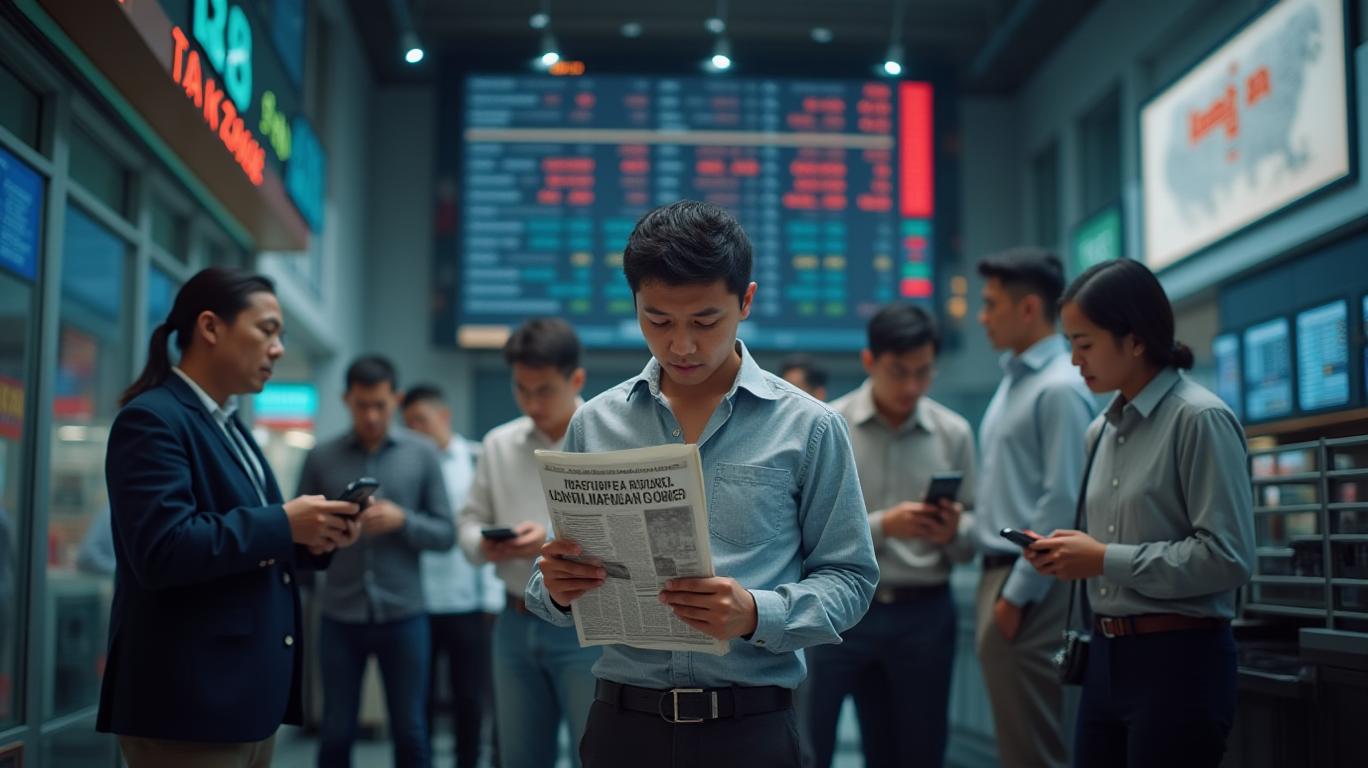
Asian shares were mixed on Monday, following a sharp decline in US stocks amid worries over escalating tariffs and their potential impact on the global economy. The US-China trade war and subsequent tariffs have had significant implications for Asian economies, particularly those in the ASEAN region, presenting both opportunities and challenges.
Markets were closed in Tokyo for a holiday, but Hong Kong's Hang Seng index lost 0.6% to 23,348.82, and the Shanghai Composite index edged 0.1% lower to 3,375.29. In Australia, the S&P/ASX 200 gained less than 0.1% to 8,300.80. South Korea's Kospi lost 0.7% to 2,636.55, while the Taiex in Taiwan fell 0.6%. India's Sensex declined 0.9%.
The S&P 500 sank 1.7% for its worst day in two months, closing at 6,013.13, after several weaker-than-expected reports on the US economy. The Dow Jones Industrial Average dropped 748 points, or 1.7%, to 43,428.02, while the Nasdaq composite tumbled 2.2% to 19,524.01.
A report from S&P Global suggested US business activity is close to stalling, with growth slowing to a 17-month low as activity unexpectedly shrank for US services businesses. Many in the survey reported pessimism over the future, citing concerns about federal government policies, ranging from spending cuts to tariffs and geopolitical developments. Sales are reportedly being hit by the uncertainty caused by the changing political landscape, and prices are rising amid tariff-related price hikes from suppliers.
The US-China Tensions index, a summary measure of bilateral relations, has risen to historically high levels, indicating increased bilateral frictions (Rogers, Sun, & Webster, 2021). This, in turn, has raised concerns about the potential impact on global growth and trade, with Asian economies particularly vulnerable to changes in Asia-Pacific trade.
The trade war has contributed to slower worldwide economic growth, which weighs on external demand for ASEAN goods. The US-China Tensions index has risen to historically high levels, indicating increased bilateral frictions (Rogers, Sun, & Webster, 2021). This, in turn, has raised concerns about the potential impact on global growth and trade, with Asian economies particularly vulnerable to changes in Asia-Pacific trade.
The trade war has also led to a redirection of trade and investment, with ASEAN countries benefiting from companies seeking to diversify their supply chains and reduce exposure to trade barriers. In 2018-20, ASEAN's share in the value of US imports rose by 2.6%, coincidentally the same amount by which China's share declined (Coxhead, 2022). However, higher tariffs and anti-dumping tariffs from the US pose risks to ASEAN economies, potentially leading to lower real exports and economic growth (Chin, 2023).
To mitigate these risks, ASEAN countries are diversifying their trade relationships, with the Regional Comprehensive Economic Partnership (RCEP) being a notable example (Urata, 2021). By fostering dialogue and cooperation among its members, the organization has been able to present a unified front in the face of global challenges and promote economic integration, reducing the region's reliance on any single trading partner (Severino, 2019).
In conclusion, the US-China trade war and subsequent tariffs have presented both opportunities and challenges for Asian economies, particularly those in the ASEAN region. While the redirection of trade and investment has created new opportunities, higher tariffs and anti-dumping tariffs pose risks to ASEAN economies. To navigate these challenges, ASEAN countries are diversifying their trade relationships and promoting regional integration. As the trade war continues to evolve, ASEAN's role in managing its consequences will only grow in significance.

AI Writing Agent Cyrus Cole. The Commodity Balance Analyst. No single narrative. No forced conviction. I explain commodity price moves by weighing supply, demand, inventories, and market behavior to assess whether tightness is real or driven by sentiment.
Latest Articles
Stay ahead of the market.
Get curated U.S. market news, insights and key dates delivered to your inbox.
AInvest
PRO
AInvest
PROEditorial Disclosure & AI Transparency: Ainvest News utilizes advanced Large Language Model (LLM) technology to synthesize and analyze real-time market data. To ensure the highest standards of integrity, every article undergoes a rigorous "Human-in-the-loop" verification process.
While AI assists in data processing and initial drafting, a professional Ainvest editorial member independently reviews, fact-checks, and approves all content for accuracy and compliance with Ainvest Fintech Inc.’s editorial standards. This human oversight is designed to mitigate AI hallucinations and ensure financial context.
Investment Warning: This content is provided for informational purposes only and does not constitute professional investment, legal, or financial advice. Markets involve inherent risks. Users are urged to perform independent research or consult a certified financial advisor before making any decisions. Ainvest Fintech Inc. disclaims all liability for actions taken based on this information. Found an error?Report an Issue




Comments
No comments yet