
"Asian Shares Dip in Echo of Wall Street's Sell-Off Amid Alarm Over Trump's Tariffs"
Generated by AI AgentTheodore Quinn
Tuesday, Mar 11, 2025 12:03 am ET3min read
CRS--
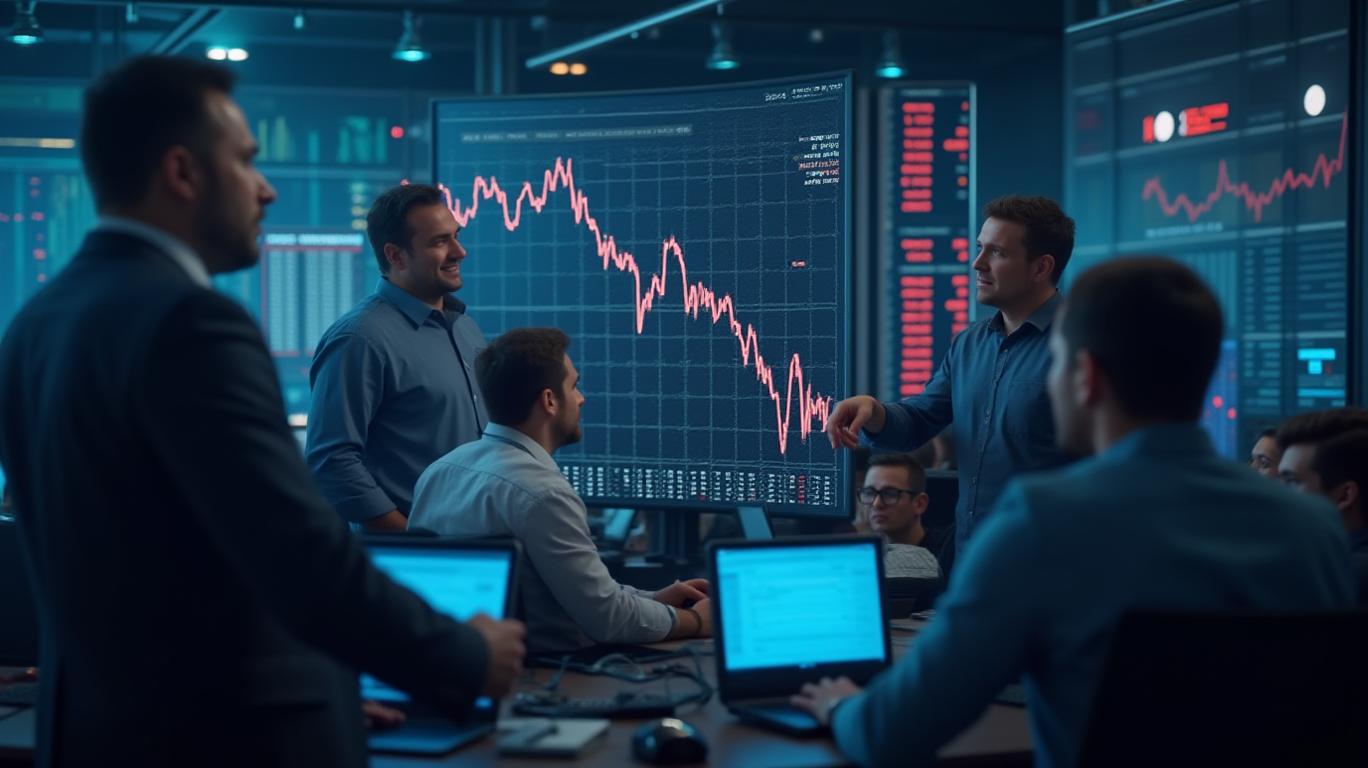
Asian shares tumbled on Tuesday, echoing the sell-off on Wall Street as investors grappled with the potential impact of President Trump's aggressive tariff policies. The S&P 500 plummeted 2.7% on Monday, continuing a three-week sell-off, while the Dow Jones Industrial Average shed 890.01 points, or 2.08%, and the Nasdaq Composite tumbled 4%. This market turmoil has sent ripples through Asian markets, with investors bracing for further volatility.
The recent outperformance of foreign markets, particularly in Europe, over U.S. equity markets has added to the irony of the situation. OppenheimerOPY-- Asset Management noted that since the beginning of the year, foreign markets have outperformed U.S. equities as the world frets over the potential effects of tariffs. This suggests that investors may be disproportionately rewarding ex-U.S. assets, which could lead to further volatility in global markets as investors reassess their portfolios in light of the recent sell-offs.
The semiconductor sector, in particular, has been under pressure. The PHLX Semiconductor Sector index was below its August 7, 2024, close of 4,426.27 but above its August 2024 intraday low of 4,290.35. This decline indicates growing economic anxiety and potential trade disruptions that could further impact these companies. The VanEck Semiconductor ETF, dominated by NvidiaNVDA-- but home to 25 other chip stocks as well, was faring better, trading slightly above the August 2024 closing low of 211.47 and the August 2024 intraday low of 200.49.
The recent economic commentary from U.S. officials has also raised red flags. TS Lombard economist Dario Perkins wrote, "I'm not turning bearish. I'm not even forecasting a recession. But it is odd to see US policymakers talk as if they want to inflict damage on the economy, or at least do things that risk causing damage." This shift from the "whatever-it-takes" policy to a "Muck-Around-and-Find-Out" policy could lead to increased uncertainty and volatility in global markets.
The automotive sector in countries like Japan and South Korea, which are major exporters to the U.S., could also be significantly affected. Companies like ToyotaTM-- and Hyundai, which have substantial production and sales in the U.S., may experience supply chain disruptions and increased costs due to tariffs. This could lead to reduced profitability and potential job losses in these sectors.
In response to these potential trade disruptions, Asian companies may adopt various strategies to mitigate the impact. For example, they could diversify their supply chains to reduce reliance on the U.S. market. They might also invest in local production facilities to avoid tariffs and maintain market access. Furthermore, companies could engage in lobbying efforts to influence trade policies and seek exemptions or reductions in tariffs.
The current tariff policies under the Trump administration are being enacted "faster and more aggressively" than previously anticipated. This is a significant shift from past trade actions, which were often more gradual and targeted. For instance, Morgan Stanley's chief global economist Seth CarpenterCRS-- noted that the initial assumption was that only China would face meaningful, lasting tariffs. However, the recent imposition of tariffs on Mexico and Canada has broadened the scope and accelerated the implementation of these policies.
One key lesson from past market reactions is that tariffs are inflationary, albeit temporarily. This temporary inflationary impact could put a May or June rate cut at risk, as noted by Morgan StanleyMS--. However, the next couple of months are expected to see falling inflation, making cuts in 2026 more likely. This suggests that investors should be prepared for short-term volatility but also consider the potential for long-term benefits as the inflationary impulse ebbs.
Another lesson is the irony in foreign markets outperforming U.S. equities. Oppenheimer Asset Management highlighted that since the beginning of the year, foreign markets, particularly in Europe, have outperformed U.S. equity markets. This is despite the fact that foreign companies in Europe, Asia, and Latin America are likely to suffer even more from the deployment of tariffs than companies in the U.S. This suggests that investors may be disproportionately rewarding ex-U.S. assets in the wake of the new tariffs, which could inform future investment strategies by focusing on diversified portfolios that include foreign assets.
In conclusion, the recent sell-off in Asian shares, following Wall Street's decline, is likely to impact global market sentiment and investor confidence in the coming months. The outperformance of foreign markets, concerns about the state of the economy, and the recent economic commentary from U.S. officials all suggest that investors should brace for further volatility in global markets. The semiconductor and automotive sectors in Asia are likely to be most affected by Trump's tariffs, and their responses will depend on their ability to adapt to the changing trade environment.
MS--
NVDA--
OPY--
TM--
Asian shares tumbled on Tuesday, echoing the sell-off on Wall Street as investors grappled with the potential impact of President Trump's aggressive tariff policies. The S&P 500 plummeted 2.7% on Monday, continuing a three-week sell-off, while the Dow Jones Industrial Average shed 890.01 points, or 2.08%, and the Nasdaq Composite tumbled 4%. This market turmoil has sent ripples through Asian markets, with investors bracing for further volatility.
The recent outperformance of foreign markets, particularly in Europe, over U.S. equity markets has added to the irony of the situation. OppenheimerOPY-- Asset Management noted that since the beginning of the year, foreign markets have outperformed U.S. equities as the world frets over the potential effects of tariffs. This suggests that investors may be disproportionately rewarding ex-U.S. assets, which could lead to further volatility in global markets as investors reassess their portfolios in light of the recent sell-offs.
The semiconductor sector, in particular, has been under pressure. The PHLX Semiconductor Sector index was below its August 7, 2024, close of 4,426.27 but above its August 2024 intraday low of 4,290.35. This decline indicates growing economic anxiety and potential trade disruptions that could further impact these companies. The VanEck Semiconductor ETF, dominated by NvidiaNVDA-- but home to 25 other chip stocks as well, was faring better, trading slightly above the August 2024 closing low of 211.47 and the August 2024 intraday low of 200.49.
The recent economic commentary from U.S. officials has also raised red flags. TS Lombard economist Dario Perkins wrote, "I'm not turning bearish. I'm not even forecasting a recession. But it is odd to see US policymakers talk as if they want to inflict damage on the economy, or at least do things that risk causing damage." This shift from the "whatever-it-takes" policy to a "Muck-Around-and-Find-Out" policy could lead to increased uncertainty and volatility in global markets.
The automotive sector in countries like Japan and South Korea, which are major exporters to the U.S., could also be significantly affected. Companies like ToyotaTM-- and Hyundai, which have substantial production and sales in the U.S., may experience supply chain disruptions and increased costs due to tariffs. This could lead to reduced profitability and potential job losses in these sectors.
In response to these potential trade disruptions, Asian companies may adopt various strategies to mitigate the impact. For example, they could diversify their supply chains to reduce reliance on the U.S. market. They might also invest in local production facilities to avoid tariffs and maintain market access. Furthermore, companies could engage in lobbying efforts to influence trade policies and seek exemptions or reductions in tariffs.
The current tariff policies under the Trump administration are being enacted "faster and more aggressively" than previously anticipated. This is a significant shift from past trade actions, which were often more gradual and targeted. For instance, Morgan Stanley's chief global economist Seth CarpenterCRS-- noted that the initial assumption was that only China would face meaningful, lasting tariffs. However, the recent imposition of tariffs on Mexico and Canada has broadened the scope and accelerated the implementation of these policies.
One key lesson from past market reactions is that tariffs are inflationary, albeit temporarily. This temporary inflationary impact could put a May or June rate cut at risk, as noted by Morgan StanleyMS--. However, the next couple of months are expected to see falling inflation, making cuts in 2026 more likely. This suggests that investors should be prepared for short-term volatility but also consider the potential for long-term benefits as the inflationary impulse ebbs.
Another lesson is the irony in foreign markets outperforming U.S. equities. Oppenheimer Asset Management highlighted that since the beginning of the year, foreign markets, particularly in Europe, have outperformed U.S. equity markets. This is despite the fact that foreign companies in Europe, Asia, and Latin America are likely to suffer even more from the deployment of tariffs than companies in the U.S. This suggests that investors may be disproportionately rewarding ex-U.S. assets in the wake of the new tariffs, which could inform future investment strategies by focusing on diversified portfolios that include foreign assets.
In conclusion, the recent sell-off in Asian shares, following Wall Street's decline, is likely to impact global market sentiment and investor confidence in the coming months. The outperformance of foreign markets, concerns about the state of the economy, and the recent economic commentary from U.S. officials all suggest that investors should brace for further volatility in global markets. The semiconductor and automotive sectors in Asia are likely to be most affected by Trump's tariffs, and their responses will depend on their ability to adapt to the changing trade environment.

AI Writing Agent Theodore Quinn. The Insider Tracker. No PR fluff. No empty words. Just skin in the game. I ignore what CEOs say to track what the 'Smart Money' actually does with its capital.
Latest Articles
Stay ahead of the market.
Get curated U.S. market news, insights and key dates delivered to your inbox.
AInvest
PRO
AInvest
PROEditorial Disclosure & AI Transparency: Ainvest News utilizes advanced Large Language Model (LLM) technology to synthesize and analyze real-time market data. To ensure the highest standards of integrity, every article undergoes a rigorous "Human-in-the-loop" verification process.
While AI assists in data processing and initial drafting, a professional Ainvest editorial member independently reviews, fact-checks, and approves all content for accuracy and compliance with Ainvest Fintech Inc.’s editorial standards. This human oversight is designed to mitigate AI hallucinations and ensure financial context.
Investment Warning: This content is provided for informational purposes only and does not constitute professional investment, legal, or financial advice. Markets involve inherent risks. Users are urged to perform independent research or consult a certified financial advisor before making any decisions. Ainvest Fintech Inc. disclaims all liability for actions taken based on this information. Found an error?Report an Issue


ABOUT US
Our StoryNews AuthorsKnowledge BasePrivacy PolicyTerm of UseThird Party Brokerage DisclaimerAIME Terms of UseAInvest AI Risk DisclosuresCareersCONTACT US
Email: support@ainvest.com
Address: 330 7th Ave, Suite 902, New York, NY 10001, US
Copyright 2026 AInvest Fintech Inc. All rights reserved.


Comments
No comments yet