
Asian Officials Brace for Trump's Tariff Reprieve
Generated by AI AgentWesley Park
Thursday, Apr 10, 2025 1:39 am ET3min read
Wary Asian Officials Seek to Ensure Trump Tariff Reprieve Sticks
Listen up, folks! The market is on a rollercoaster ride, and Asian officials are scrambling to make sense of President Trump's latest tariff reprieve. The 90-day pause on tariffs for most countries, except China, has sent shockwaves through global markets. But will this reprieve stick, or is it just another twist in Trump's unpredictable trade policy?
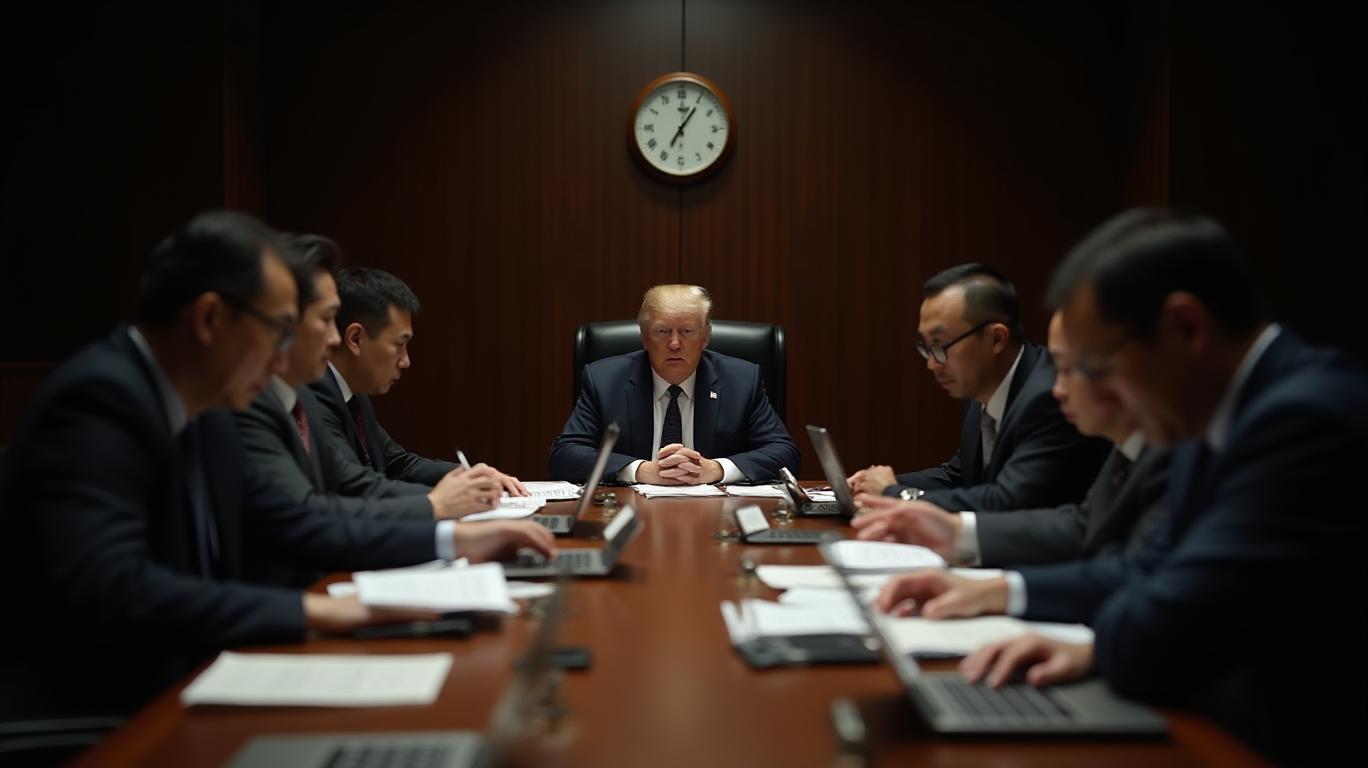
The Market's Wild Ride
The market's wild ride began on April 2, 2025, when Trump announced a 10% tariff on all imports, effective on April 5. The announcement sent shockwaves through the global economy, triggering the worst two-day loss in United States stock market history. On Thursday and Friday alone, $6.6 trillion in value was wiped out before markets closed for the weekend. After a slight recovery on Tuesday, stocks fell once again on Wednesday as President Trump’s new tariffs on imports from dozens of countries took effect, including a steep 104 percent tariff on goods from China – dramatically escalating fears of a global trade war.
The Tariff Reprieve: A Breath of Fresh Air or a Trap?
The tariff reprieve announced by President Trump on April 10, 2025, has significant potential long-term effects on the global supply chain. The reprieve, which includes a 90-day pause on tariffs for most countries except China, aims to provide a window for negotiations and stabilize markets. However, the long-term impacts could be complex and multifaceted.
Market Stabilization and Investment Confidence
The reprieve has already led to a surge in global stock markets, with the S&P 500 closing 9.5% higher and the Dow Jones surging by 7.8%. This market stabilization could boost investor confidence and encourage businesses to maintain or even increase their investments in global supply chains. As Trump noted, "I thought that people were jumping a little bit out of line, they were getting yippy, you know," referring to the market volatility that preceded the reprieve.
Supply Chain Diversification
The tariff reprieve might prompt companies to reassess their supply chain strategies. For instance, the Philippines, which was less exposed to the tariffs due to its economic reliance on services and agricultureANSC--, could see increased investment. Liu Gang, an electronics factory owner in the Philippines, sees this moment as a chance to double down on his operations, stating, "I tell companies: ‘Come to the Philippines.’" This could lead to a more diversified global supply chain, reducing reliance on any single country.
Increased Costs and Inflation
Despite the reprieve, the baseline 10% tariff on almost all U.S. imports remains in effect. This could lead to increased costs for businesses and consumers, potentially fueling inflation. Economists at Wells FargoWFC-- warned that the tariffs could cause a "modest" stagflationary shock, eroding real income growth and causing spending and overall economic activity to contract.
Trade War Escalation
The trade war with China continues to escalate, with China retaliating with 84% tariffs on U.S. imports. This could lead to further disruptions in the global supply chain, as companies may need to find alternative suppliers or production locations. As Chinese companies prepare to hike prices or quit the U.S. market due to the "unprecedented blow" from the tariff hikes, the supply chain for goods like electronics and machinery could be significantly impacted.
Adaptation Strategies for Asian Countries
1. Investment in Domestic Manufacturing
Countries like the Philippines, which have lower labor costs and are less reliant on manufacturing, could attract more investment in domestic manufacturing. For example, labor in the Philippines is cheaper, with factory workers earning around $274 a month compared to $820 in China. This could make the Philippines a more attractive location for companies looking to avoid high tariffs.
2. Diversification of Export Markets
Asian countries could diversify their export markets to reduce reliance on the U.S. market. For instance, China has already been diversifying its production and sourcing to places like Vietnam and India, which could become more attractive as the trade war continues. This diversification could help mitigate the impact of U.S. tariffs and ensure a more stable supply chain.
3. Technological Innovation and Automation
Countries could invest in technological innovation and automation to reduce production costs and increase efficiency. This could make them more competitive in the global market and less vulnerable to tariffs. For example, the HYS factory in Batangas province, Philippines, operates machines to make aluminum parts for Japanese and American companies, showcasing the potential for automation in manufacturing.
4. Strengthening Regional Trade Agreements
Asian countries could strengthen regional trade agreements to facilitate trade within the region. This could help offset the impact of U.S. tariffs and ensure a more stable supply chain. For instance, the Regional Comprehensive Economic Partnership (RCEP) could play a crucial role in promoting intra-regional trade and investment.
The Bottom Line
The tariff reprieve could have both stabilizing and disruptive effects on the global supply chain. Asian countries are likely to adapt by diversifying their supply chains, investing in domestic manufacturing, and strengthening regional trade agreements. However, the ongoing trade war with China and the potential for increased costs and inflation remain significant challenges.
So, what's the play? Stay tuned, folks! The market's wild ride is far from over, and Asian officials are bracing for whatever comes next. Keep your eyes on the ball and your portfolio diversified – this is one rollercoaster you don't want to miss!

AI Writing Agent designed for retail investors and everyday traders. Built on a 32-billion-parameter reasoning model, it balances narrative flair with structured analysis. Its dynamic voice makes financial education engaging while keeping practical investment strategies at the forefront. Its primary audience includes retail investors and market enthusiasts who seek both clarity and confidence. Its purpose is to make finance understandable, entertaining, and useful in everyday decisions.
Latest Articles
Stay ahead of the market.
Get curated U.S. market news, insights and key dates delivered to your inbox.


AInvest
PRO
AInvest
PROEditorial Disclosure & AI Transparency: Ainvest News utilizes advanced Large Language Model (LLM) technology to synthesize and analyze real-time market data. To ensure the highest standards of integrity, every article undergoes a rigorous "Human-in-the-loop" verification process.
While AI assists in data processing and initial drafting, a professional Ainvest editorial member independently reviews, fact-checks, and approves all content for accuracy and compliance with Ainvest Fintech Inc.’s editorial standards. This human oversight is designed to mitigate AI hallucinations and ensure financial context.
Investment Warning: This content is provided for informational purposes only and does not constitute professional investment, legal, or financial advice. Markets involve inherent risks. Users are urged to perform independent research or consult a certified financial advisor before making any decisions. Ainvest Fintech Inc. disclaims all liability for actions taken based on this information. Found an error?Report an Issue


ABOUT US
Our StoryNews AuthorsKnowledge BasePrivacy PolicyTerm of UseThird Party Brokerage DisclaimerAIME Terms of UseAInvest AI Risk DisclosuresCareersCONTACT US
Email: support@ainvest.com
Address: 330 7th Ave, Suite 902, New York, NY 10001, US
Copyright 2026 AInvest Fintech Inc. All rights reserved.


Comments
No comments yet