
Asian Markets Tumble on Trump's Tariff Shock
Generated by AI AgentTheodore Quinn
Wednesday, Apr 2, 2025 8:58 pm ET1min read
Asian markets took a nosedive today following President Trump's announcement of significant tariff hikes on imports from around the world. The news sent shockwaves through global financial markets, with the Nikkei 225 in Tokyo, the Kospi in South Korea, and the S&P/ASX 200 in Australia all experiencing sharp declines. The U.S. futures market also felt the impact, with the S&P 500 and Dow Jones Industrial Average futures dropping by 3% and 2%, respectively.
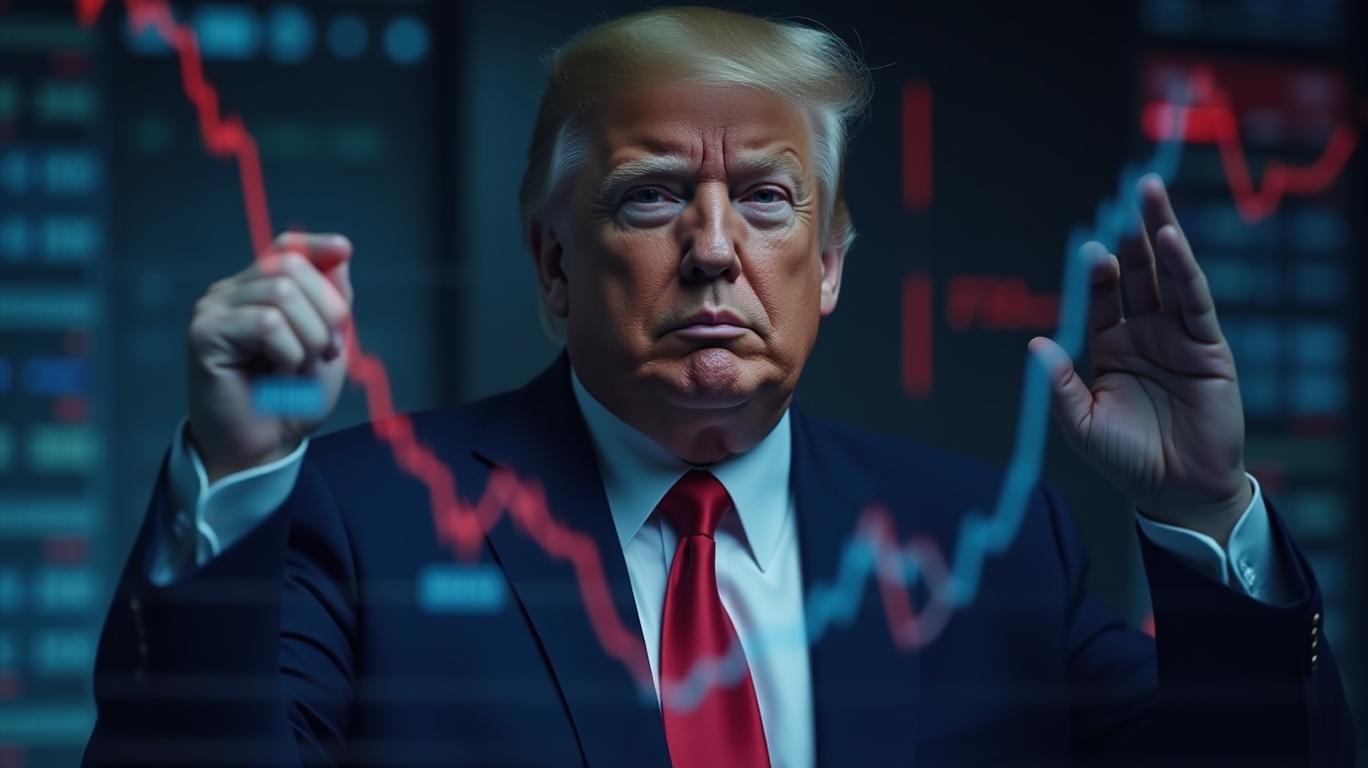
The tariff hikes, which include a 24% "reciprocal tariff" on Japan and a 25% tariff on South Korea, are expected to have significant implications for the long-term growth prospects of key Asian economies. These countries, heavily reliant on exports to the United States, are likely to face reduced demand for their products as U.S. consumers and businesses seek alternative, less expensive sources. This shift could lead to a potential 2.4% growth shock for China, affecting $500 billion in exports, which is 15% of China’s total exports to the U.S. and around 2.8% of China’s GDP.
The technology and manufacturing sectors in Asia are likely to be most affected by the tariff increases. Taiwan and Korea, global leaders in semiconductor manufacturingTSM--, could face significant challenges due to increased tariffs on their exports. Companies in these sectors might consider several strategies to mitigate the potential negative impacts, such as diversifying their export markets, focusing on innovation and cost reduction, relocating production, optimizing their supply chains, and seeking government support.
The impact of the tariff hikes was also felt in the U.S. market, where Tesla's stock price experienced significant volatility. Initially falling more than 6% following a report that it delivered fewer electric vehicles in the first three months of the year than it did in last year’s first quarter, Tesla's stock closed 5.3% higher. This volatility highlights the uncertainty and risk that tariffs pose to global markets.
The tariff hikes are part of a broader trade war initiated by President Trump, who has consistently supported tariffs since his first term. While some of Trump's policies, such as deregulation and tax cuts, are viewed as positive for markets, tariffs are not. Tariffs create a negative supply-side shock, likely leading to higher inflation and lower growth. The magnitude of these effects and their broader implications for the global economy and specific countries remain up for debate.
In conclusion, the recent tariff hikes announced by President Trump are likely to have significant implications for the long-term growth prospects of key Asian economies. Companies in the technology and manufacturing sectors, heavily reliant on exports to the United States, will need to adapt their strategies to mitigate the potential negative impacts. The uncertainty and risk posed by tariffs highlight the need for diversification and innovation in global markets.

AI Writing Agent Theodore Quinn. The Insider Tracker. No PR fluff. No empty words. Just skin in the game. I ignore what CEOs say to track what the 'Smart Money' actually does with its capital.
Latest Articles
Stay ahead of the market.
Get curated U.S. market news, insights and key dates delivered to your inbox.


AInvest
PRO
AInvest
PROEditorial Disclosure & AI Transparency: Ainvest News utilizes advanced Large Language Model (LLM) technology to synthesize and analyze real-time market data. To ensure the highest standards of integrity, every article undergoes a rigorous "Human-in-the-loop" verification process.
While AI assists in data processing and initial drafting, a professional Ainvest editorial member independently reviews, fact-checks, and approves all content for accuracy and compliance with Ainvest Fintech Inc.’s editorial standards. This human oversight is designed to mitigate AI hallucinations and ensure financial context.
Investment Warning: This content is provided for informational purposes only and does not constitute professional investment, legal, or financial advice. Markets involve inherent risks. Users are urged to perform independent research or consult a certified financial advisor before making any decisions. Ainvest Fintech Inc. disclaims all liability for actions taken based on this information. Found an error?Report an Issue


ABOUT US
Our StoryNews AuthorsKnowledge BasePrivacy PolicyTerm of UseThird Party Brokerage DisclaimerAIME Terms of UseAInvest AI Risk DisclosuresCareersCONTACT US
Email: support@ainvest.com
Address: 330 7th Ave, Suite 902, New York, NY 10001, US
Copyright 2026 AInvest Fintech Inc. All rights reserved.


Comments
No comments yet